Author: Liew Hui Ling

  • Malaysia Day Class

    Malaysia Day Class

    What does Malaysia Day mean to you?

    It may be a question that demands only a few seconds to answer that is burning in patriotism, or it may demand reciting a definition you have learned from reading somewhere. For the stateless children – more specifically, students in Iskul – they will exchange glances, totally clueless, or maybe they will stare back at you, lifting their shoulder claiming they have no idea. Well, they do not even know their birth date, the number 16-9 means absolutely nothing unless it is a monetary value.

    For Ee Chia and me, we are eager to want to celebrate the day because we feel that it is important for the stateless children to feel belonged to a country, although they do not own citizenship anywhere. We want them to feel safe and secured residing in Omadal, where most of them were born. We even imagine learning our national anthem with them! Ambitious much, we had to reset our expectations later.

    Weeks prior to our arrival, we had assigned our Mastal Arikik to plan the special class with the intention to share with our Iskul students the history behind the date and why is it an important lesson for us to know. However, when we arrived on the island, we realised that even our Mastal Arikik – Malaysian students attending Malaysian schools are yet to be aware of the history behind the date. Imagine our surprise. To our comfort, one of the Mastal Arikik do know that it is the day Malaysia is formed but no further details. I realised how late in our education path that we only learned of our country’s history – in Form 5 or the last year of our secondary education. My immediate question was how can we teach our little teachers the history in the shortest time and how can we then translate that in the simplest way to the understanding of our students?

    Malaysia Day is held on 16 September every year to commemorate the establishment of the Malaysian federation on the same date in 1963. It marked the joining together of Malaya, North Borneo (now Sabah), Singapore and Sarawak to form Malaysia. That was the message we decided to convey during the class.

    Mastal Arikiks were assigned to draw two Malaysia’s maps labelled with 14 states in Malaysia while Ee Chia and I crafted a simple and short way to present the history behind Malaysia Day which we assigned our Mastal Arikik the main roles.

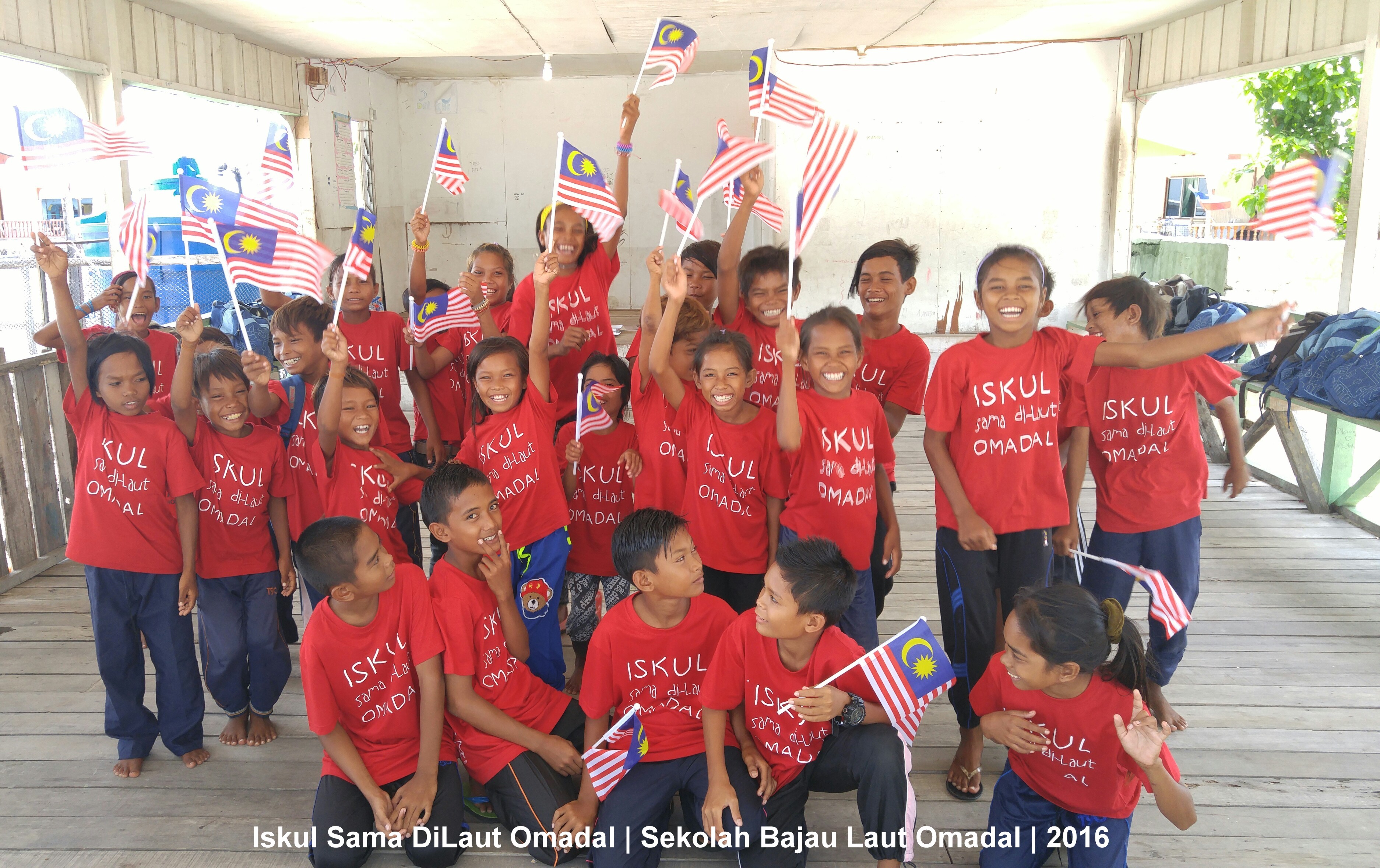
    Our students arrived very early on the morning of the Malaysia Day, eager to attend to class. Ee Chia and I are even more excited as we present them their first Iskul t-shirt that morning. That smile on their face! What a way to start a morning! They were all quickly changed and were dressed in an enthusiastic red for the Malaysia Day class.

    We began our class by singing our Iskul song followed by marking attendance. The class was simple, to teach them the obvious – date of the Malaysia Day, 16 September 1963. Following that, we invited our Mastal Arikik to present the short sketch to illustrate what happened that day. In that sketch, we also taught them new words such as Malaya, Semenanjung, Sabah, Sarawak, and Singapura. After that, our Mastal Arikik showed Malaysia maps and verbally introduces the 14 states in Malaysia, word by word to our students. All work and no play make learning exceptionally dull. We concluded the Malaysia Day class by distributing Malaysia’s flag and having our students learn to draw our flag. We have also provided our student meal after class as a celebration of Malaysia Day as well as acknowledging their efforts in learning that day.

    We are really happy to have the class that day. Their eagerness to learn, their enthusiasm to complete their flags first – those were precious moments that touched our hearts at end of the day. Learning is only rewarding if one takes learning beyond knowledge; it is one’s attitude to learning that takes the lessons beyond. One thing for sure, we do expect our Mastal Arikik to be preparing the Malaysia Day class next year.


    For more photos, go here.
  • Iskul Anniversary & Award Day Celebration

    Iskul Anniversary & Award Day Celebration

    [et_pb_section bb_built=”1″ fullwidth=”on” specialty=”off”][et_pb_fullwidth_post_title _builder_version=”3.0.66″ title=”on” meta=”on” author=”on” date=”on” categories=”on” comments=”on” featured_image=”on” featured_placement=”below” parallax_effect=”on” parallax_method=”on” text_orientation=”left” text_color=”dark” text_background=”off” border_style=”solid” text_bg_color=”rgba(0,0,0,0.65)” /][/et_pb_section][et_pb_section bb_built=”1″][et_pb_row][et_pb_column type=”4_4″][et_pb_text _builder_version=”3.0.66″ background_layout=”light” text_orientation=”left” border_style=”solid”]

    Schools celebrate students in dozens of different ways. They celebrate students’ creativity, academics and attendance. Every student is looking forward to the day as they will have their names called and they will walk with their head held high towards the stage to receive their award. Not for me. In my school days, Awards Day is only for the excellent and the talented. For an average student like me, the next opportunity to walk up to the stage during the ceremony is to be part of the organising committee and I signed up for it.

    As I was writing this essay, I found many debates online about celebrating students in Awards Day. Regardless if the award was recognising grades or talents, students compete to receive an invitation card to bring home to their parents. Awards Day became a pride and vanity day, so to speak.

    Now an adult, I have a different view. Awards Day does not just recognise grades and talents, but it should compliment values and attitude. Yet, how do we measure values and attitude? How do we scale them? In a world where competition awards few people on the backs of many, and where rewards and resources are conferred inequitably, it is understandable that children associate awards with a system that reinforces self-worth by naming winners and losers. I was brought up on a numeric scale of grades achieved in school, and now working with a vague idea in mind to stop that culture from taking its roots in Iskul.

    Iskul Sama DiLaut Omadal (Iskul) proudly marked their first anniversary since the project which started in August 2015. Iskul’s milestone belongs to everyone, namely our students, our Mastal Arikik, our Headmistress, and our donors. Therefore, it is only apt that we celebrate the time and effort they have invested in Iskul. We recognise our student’s attendance to class and we recognise their effort in learning, although unfortunately through grades for now. We recognise our Mastal Arikik’s time and effort to teach. We recognise our Headmistress who multitasks between home, community, environment and Iskul. In short, Iskul wants to recognise and award everyone for being part of the making of Iskul for the past one year.

    Awards Day is usually associated with collecting certificates and this is where we learn our first lesson. For stateless children who are just learning to read and write in Iskul, their first reaction when they received the certificate was to confirm with us if the certificate will prevent them from getting caught by the enforcement officers when they are in town. It breaks our hearts. The fear and the insecurity in their daily lives were all displayed. For us urban dwellers, certificates proved our credibility, for these stateless children, the only certificate they even encounter before is a legal document that prevents them from being deported to the Philippines, an unfamiliar place to them for they are considered as illegal immigrants in Malaysia. We learn very quickly that Iskul’s vision to provide them basic literacy has just expanded.

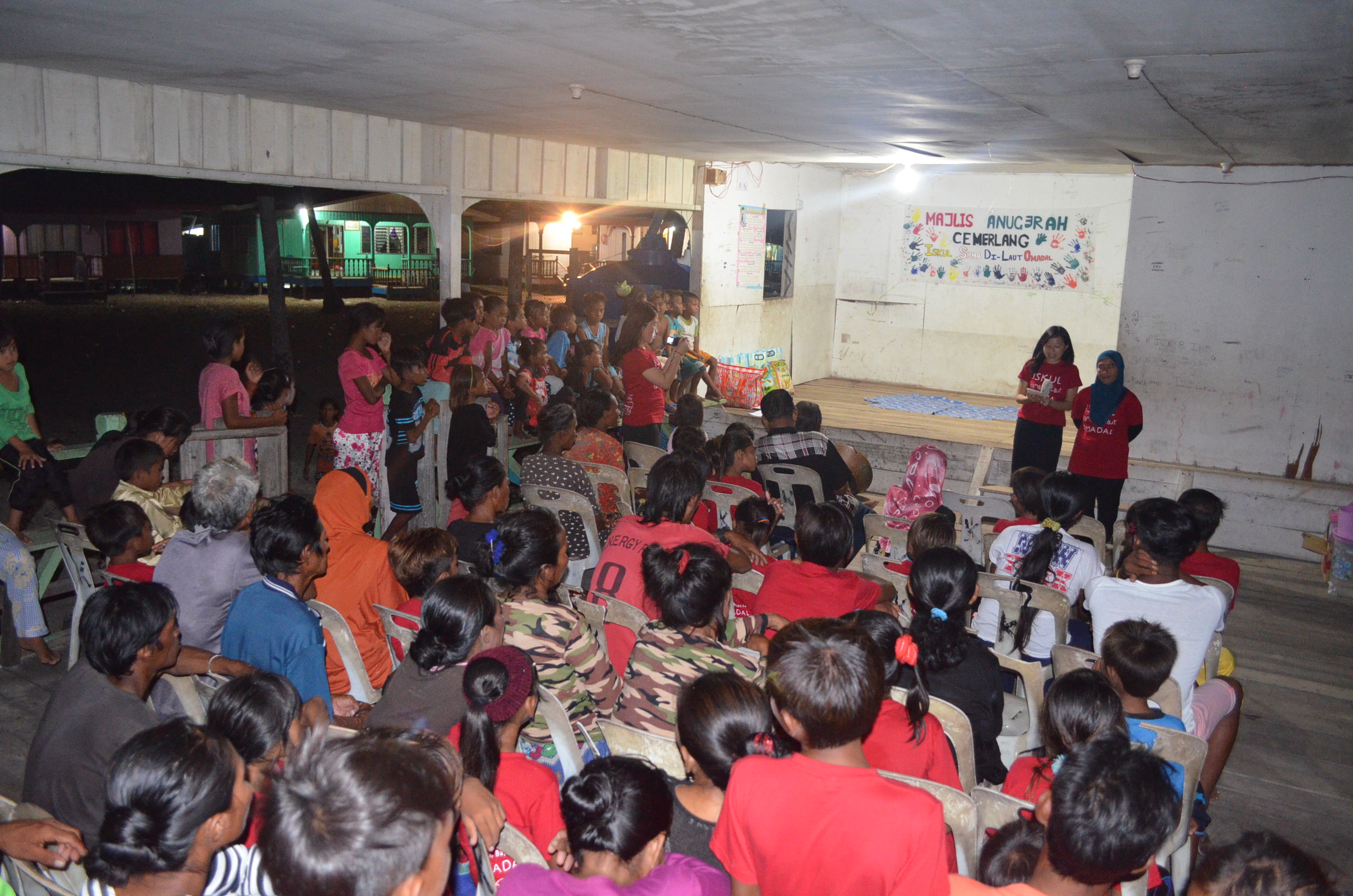
    During the Awards Day, we had invited our student’s parents to witness the historical moment when their child walks up to the stage to receive a certificate of enrolment from the Head of Omadal Hujung village. I felt teary to see our students walked up the stage when their names together with their parent’s were called – imagine the emotions their parents experience hearing their names called. We took the extra mile to also acknowledge the parents of three top students who did well in examinations as we called them up to the stage to receive food ration as an award. We had been told that the parents of these three children took the extra miles to ensure their children who are enrolled in Iskul to not miss a lesson. Some even forbid their child from following them fishing in the sea if the day after is a weekend because they want their children to go to Iskul and learn to read and write. Therefore, Iskul feels that their parents play a huge role in their child’s achievements as well.

    In Iskul, we do not want to just recognise those that excel in specific areas; we want to recognise EACH student for the areas in which he/she excels. For that reason, Iskul looks forward to developing the appropriate syllabus that will cater to the development of moral values in our Mastal Arikik and our students as well as their livelihood skills to allow them to help improve their family’s income.

    Following the Awards Day, we received more requests from other parents who would like to enrol their children to Iskul. Regardless of their motivation, we are pleased to know that we have made aware of opportunities for the stateless community to be literate and Iskul is given a chance to provide that. Hence, Iskul has great ambition to build a house on stilts that can function as classroom spaces for our students and ensure a conducive environment for learning. Currently, they are conducting their classes in the kitchen space of our Headmistress, sidewalk next to one of our Mastal Arikik’s home and in a worn-out community hall (that also poses some danger when lesson takes place).

    In our long-term vision, Iskul wants to build a culture where everyone feels special in their very unique way. We want our students to feel proud being a Bajau Laut community yet should not sit still obliging to the societal perception where the absence of citizenship will hinder them from breaking away from it. Having the thought in mind, Iskul looks forward to receiving volunteer tutors who would like to spend time in Iskul to instil the important value of self-acceptance in this community, especially the children.

    In a nutshell, first year anniversary and Awards Day marks another chapter in developing and fine-tuning our operation in Iskul from empowering our Mastal Arikik in teaching to bringing the world closer to our students as well as encouraging good neighbourliness between Malaysian and stateless community living in the vicinity of the same area, especially in Omadal Island. Iskul wants to be a space where we bridge the marginalised community to the world.

    https://www.facebook.com/pg/iskulsamadilautomadal/photos/?tab=album&album_id=958244297631710

    In case you miss this:

    The Beginnings of Iskul
    The First Annual Assessment
    [/et_pb_text][/et_pb_column][/et_pb_row][/et_pb_section]