Category: School Activity

  • Students’ Progress Evaluation (2015-2018)

    3 January 2020

    We analysed the progress and impact of the 16 students who have joined Iskul since the inception for 3 consecutive years from 2015-2018. The 16 students were given Test 1 on Sept 2016, Test 2 eight months after, followed by Test 3, a year later (March 2018). Assumptions made for this analysis are:

    • There were a minimum of 2 hours per class, 2 classes per week
    • Students’ attendance is at an average of 70% 

    Using these assumptions and data, according to national school days (5 hours/class, 5 days/week), they attended about 70 days or 14 weeks (less than 4 months) of school over the past three years.

    Overall, we are pleased with the result considering that the actual time our 16 students spent on a normal schooling period is just less than 4 months. Based on our observation, Iskul students have mastered basic numeracy, however, they are still mostly weak in the Bahasa Malaysia language, although most of them have no problem understanding and engage in basic conversation in Bahasa Malaysia. The greatest outcome is that two of our students from this test have now become Mastal Arikik (MA) to teach the new batch of students.

    From the result, we noticed the shift in students’ progress when we provide teaching camps to our MAs to improve their teaching quality and when we find SPM graduates to teach. We also like to note that the involvement of our Headmistress in teaching demonstrated that students learned faster. 

    In a nutshell, we found that MAs with better results can teach better and have better skills in transferring knowledge to the students, although it is not as efficient as having an adult/qualified teacher to conduct the teaching. 

    Moving forward, Iskul aims to:

    • focus on language mastery
    • consult a language (BM) teacher
    • create a learning-enabled environment
    • employ an adult teacher

    Iskul feels strongly that if the children do not continue practising what they learned, they will forget as time passes and it would be a waste. Therefore, for the graduating students, Iskul hopes to create programme(s) to encourage the students to continue learning and contribute to Iskul long-term. 

    The analysis’ results are divided into three parts:

    • Result 1: The basic evaluation criteria used during Test 1 for all three tests
    • Result 2: Further evaluation on Mathematics in Test 3
    • Result 3: Further evaluation on Bahasa Malaysia in Test 3

    Result 1: The basic evaluation criteria used during Test 1 for all three tests
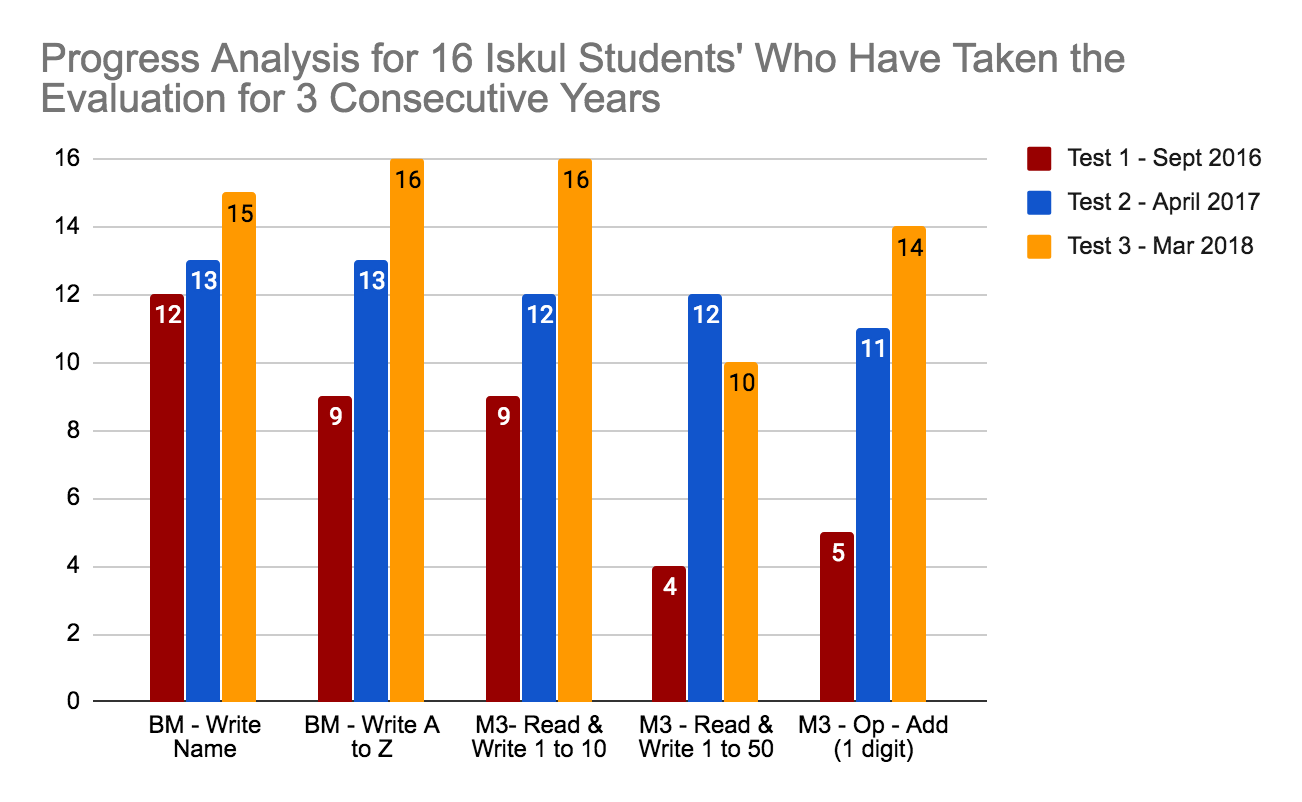
    Graph 1. Progress Analysis for 16 Iskul Students who have taken the Evaluation for 3 Consecutive Years

    As shown in Graph 1, there is a steady increase in the number of students who can perform all five basic criteria of assessment from Test 1 to Test 3.

    By Test 3, all 16 students can write A to Z and read and write number 1 to 10. All except for 1 can write his/her own name. Those who can do simple 1 digit addition increased by 19% to 14 students from Test 2. Oddly, two students digress from being able to write the number 1-50 to only 1-20. Further investigation reveals that their attendance is an average of 60%.

    Result 2: Further evaluation of Mathematics in Test 3

    In the further evaluation of Mathematics, the students were tested on how many digits they can write and recognise, reading clock and questions related to addition, subtraction, multiplication and division.
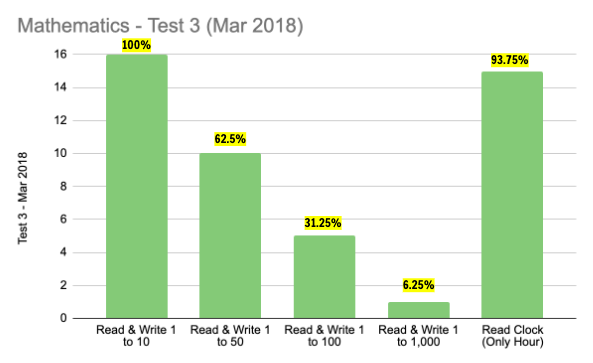
    Graph 2. Read and Write Number and Read Clock Result in Test 3

    Graph 2 shows that all students can write the basic number from 1-10, while only 10 students can write from 1-50. Interestingly, 1 student can write up to 1,000 and 5 can write up to 100. With regards to reading time, about 94% of the students can read only up to the “hour” hand.
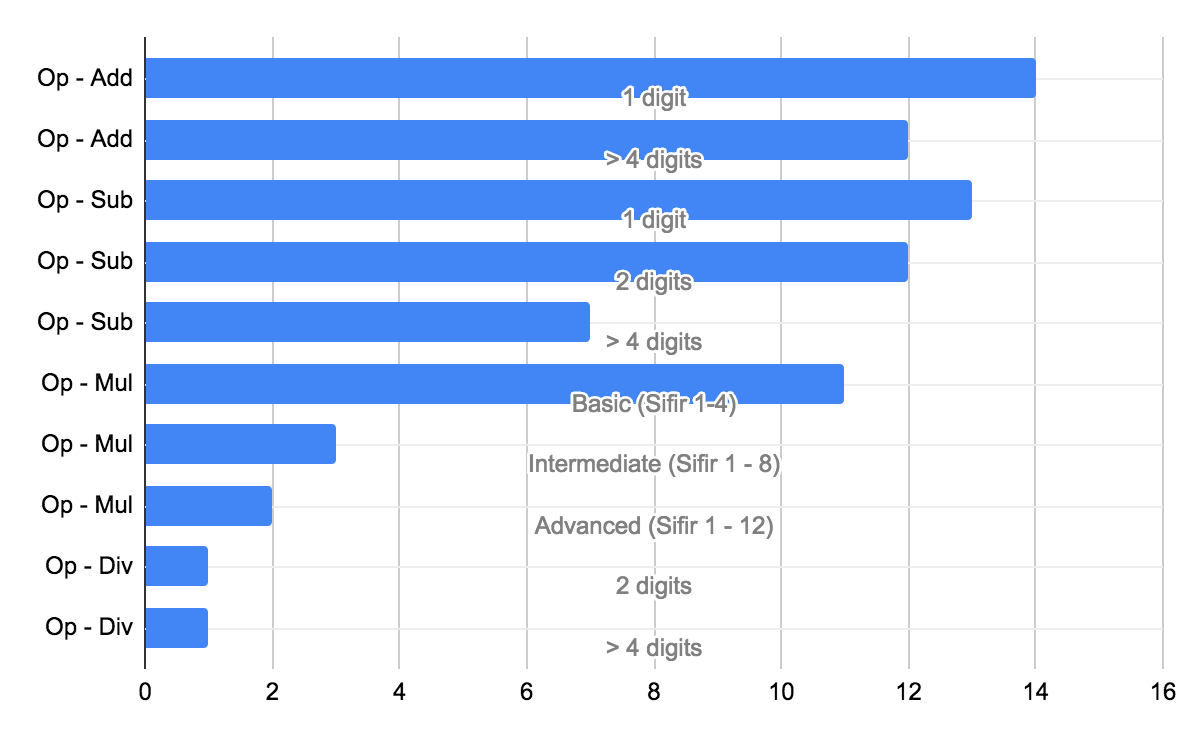
    Graph 3. Mathematical operations of addition, subtraction, multiplication  and division according to digits

    We’re delighted to note that more than 75% of our students can solve additional operation questions up to 4-digits. More than 70% of them can solve subtraction questions up to 2-digits while only 43% of them can do up to 4-digits. Furthermore, about half of them can memorise the multiplication table from 1 to 4. However, a majority of them are still unable to solve division problems. 

    Interestingly, one student has mastered the basic arithmetics – able to memorise multiplication table up to 12 and solve up to 4-digits division questions

    Result 3: Further evaluation on Bahasa Malaysia in Test 3

    Test 3 for Bahasa Malaysia evaluates students on two things: (1) recognising body parts and (2) recognising terms for family members.

    For the former, 10 of the students can identify the whole body parts while the remaining 6 are only able to identify “rambut”, “mata”, “hidung”, “kening”, “ibu jari”, “kaki”, “perut” and “dahi” only. (Refer to Graph 4)

    As for the latter, firstly only 10 students can recognise the term for parents. Secondly, more than six students who can recognise terms for close family members (i.e., parents and siblings). Finally, a average of 39% of our students able to recognise terms for extended family members (i.e., grandparents, relatives) (Refer to Graph 5)
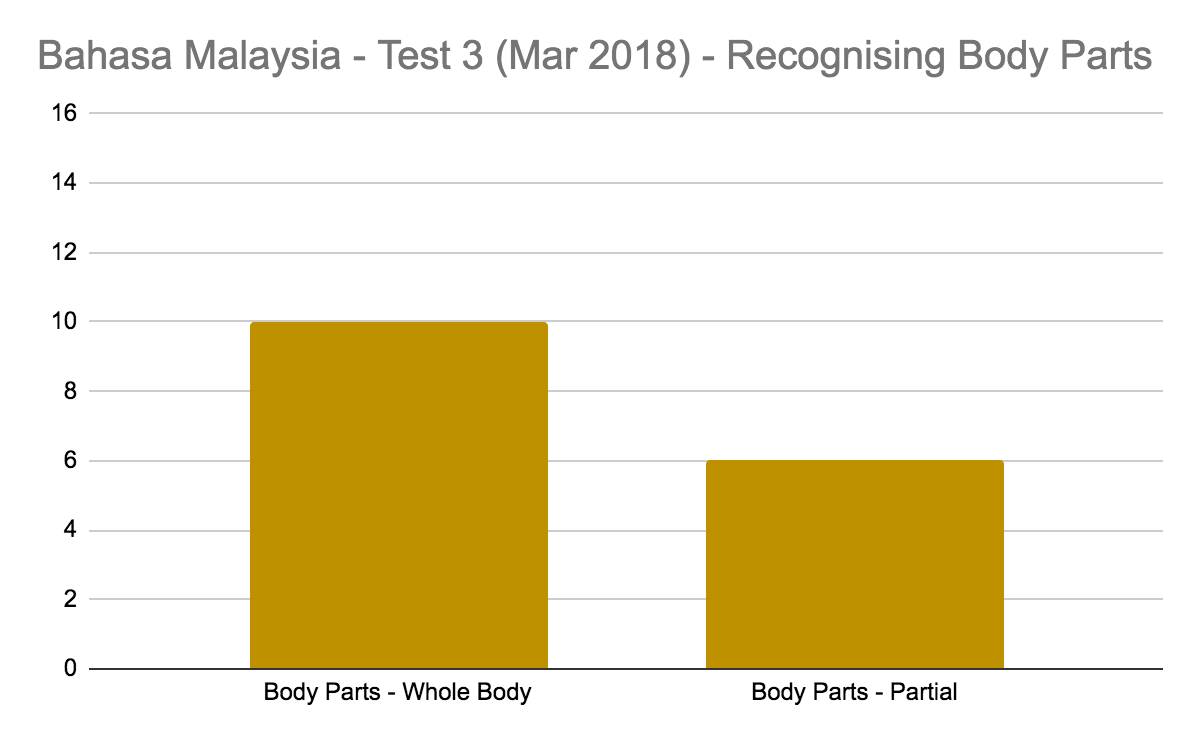
    Graph 4. The number of students who can recognise Body Parts in Test 3
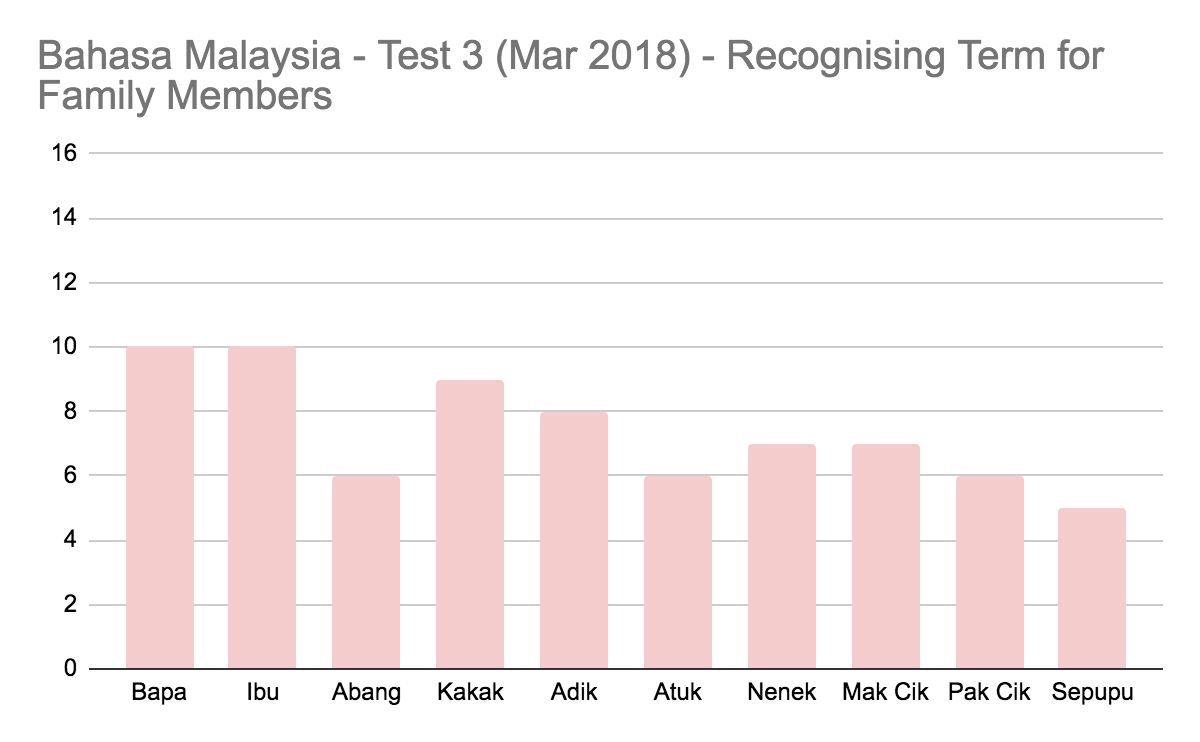
    Graph 5. The number of students who can recognise terms for family members in Test 3.

  • Iskul’s 1st Students’ Convocation & Mastal Arikik Appreciation Ceremony 2020

    The day has finally arrived! Iskul was able to throw a celebration to commemorate the progress our students have made since enrolled in our weekend classes in August 2015 – our very first Majlis Konvokesyen Pelajar dan Penghargaan Mastal Arikik Iskul Sama DiLaut Omadal 2020 (1st Students’ Convocation & Mastal Arikik Appreciation Ceremony 2020)!

    The first trial class in August 2015, sees a group of 15 children from the stateless Bajau Laut community of Omadal Island taken their very first momentous step to learn. The eagerness in these children to attain knowledge remains ever joyous, be it the pioneer batch or the recent new intake. They beamed at the thought of attending lessons and take pride in being known to attend lessons with Iskul. And that was the fuel for Iskul. In return, we want to celebrate their journey through this convocation ceremony!

    In order for us to be able to evaluate their progress upon graduation, we set a prerequisite that they must have completed or at least attempted the evaluation test for Bahasa Malaysia and Mathematics that we have prepared. A total of 18 students from the pioneer batch have come forth and took the challenge courageously. The reason why we said it was a brave step is that they have had almost one gap year where they did not attend to lessons in Iskul. This is because, in January 2019, Iskul lost two capable Field Coordinators and with no Mastal Arikik to carry out lessons, classes were put on hold. When Khairul returned in May 2019, he gathered a new intake of students and convinced two of the pioneer batch students to teach as Mastal Arikik. As 2019 progressed, lessons were conducted for the new intake of students. Since the pioneer batch students had learned the basics, they no longer want to attend classes.

    What surprised us most was to find out that some of the students continue to learn on their own effort despite no classes held for the year! Their performance in the evaluation tests testify their effort and further proved to us the potential these children have if only they were given the chance. Just a brief recap, January lost two Field Coordinators and no Mastal Arikik, which forced us to close the classes until we were able to gather the teachers again. It is estimated that from August 2015 to December 2018, they have only attended about 70 days or 14 weeks (less than 4 months) of school over the past three years! You may read about the detailed analysis of the evaluation here.

    It was a festive weekend as we hold Hari Sukan followed by the ceremony the day after. It took the whole team almost 2 weeks of preparation prior to the weekend. The invitation cards for parents have been delivered personally to the homes of students and Mastal Arikik, inviting them to witness the momentous ceremony for Iskul. For the first time, our students will be walking into a school compound and receiving their graduation certificate in a school hall. Iskul is very grateful to have Encik Budlaji, Principal of SK Pulau Omadal who has been encouraging and supportive in making this gift of experience to our students possible!

    The night after the Hari Sukan, the team gathered at Pondok Iskul to make the finishing decoration touch-up for the stage. The next morning, we gathered at SK Pulau Omadal to set up the venue for the 7.30 pm event. Our pioneer batch students have also helped to arrange the chairs for the invited guests.

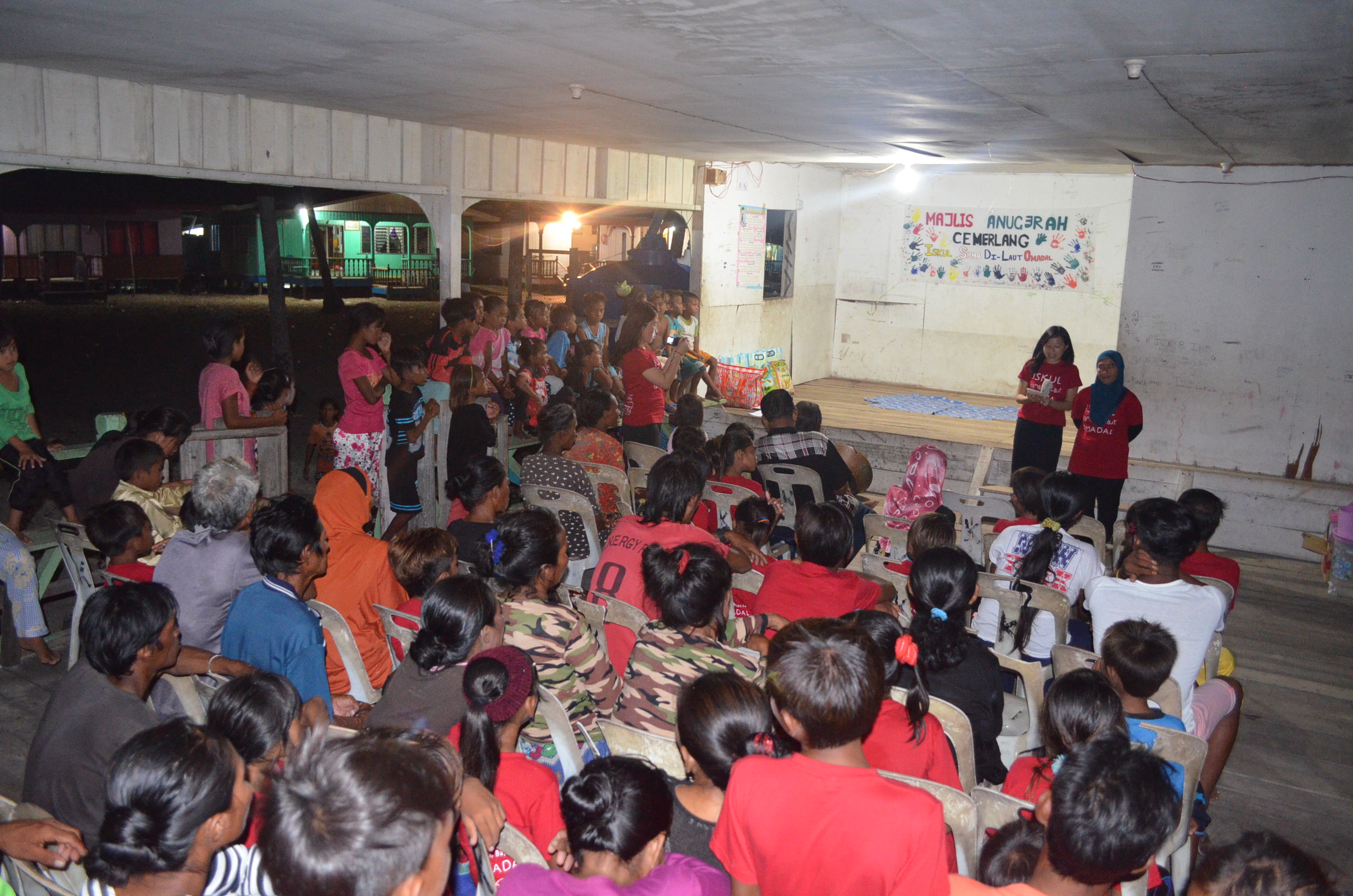
    On 23 February 2020, Iskul’s 1st Students’ Convocation & Mastal Arikik Appreciation Ceremony 2020 was graced by MPKK Pulau Omadal Hujung, Tn Hj Jimlan Panglima Sabtuhari, Headmaster of SK Pulau Omadal, Encik Budlaji Bin Tianggi, as well as our very own Headmistress, Pn Roziah Jalalid. Our Field Coordinator, Khairul Atim was the Masters of Ceremony (MC) for the ceremony. The parents have arrived earlier and were served with a simple meal before the ceremony began.

    The Principal of SK Pulau Omadal, Encik Budlaji Bin Tianggi complimented the initiative. He congratulated our students and encouraged our students not to feel inferior. Encik Budlaji further added that the school welcome the children as long as we all ensure that the school assets are taken care of.

    This inaugural ceremony was successfully organised in a spacious environment, many thanks to the willingness of the Headmaster of SK Pulau Omadal who allowed us to use their solar panel hall. Iskul presented our shirt to the Headmaster of SK Pulau Omadal to commemorate our first collaboration and we look forward to future joint activities!

    We are also very grateful to MPKK Tn Hj Jimlan for officiating our ceremony and as always encouraged our students and their parents to learn and be literate. As the fatherly figure to Iskul, he has always been watching over us and in his speech, he has never failed to remind our students to step away from glue-sniffing addiction and focus on learning.

    Besides celebrating our pioneer students who have successfully completed their basic (preschool) learning, we also celebrate their parents who had helped to ensure that they attend classes every weekend. We are very proud of our students and their parents for making learning a priority despite living in poverty! 

    During the event, our hearts warmed as we witnessed our student representative as well as currently one of our Mastal Arikik, Enidah courageously say a short sentence of gratitude in Bahasa Malaysia.

    Enidah also sang a song entitled, “Cinta Luar Biasa” during the closing performance. Oh, our hearts! 

    As the ceremony aptly named, it is also to acknowledge the effort and time invested by our Mastal Arikik (MA) over the years. They took time off their weekends to teach their friends from the stateless community. We have 10 MAs who have volunteered their time for Iskul and the stateless community. To conclude the ceremony, Izwan, representing our Mastal Arikik to perform a song in the closing.

    Moving forward, we hope to have them returning to learn as we work towards providing more advanced classes and/or other skills-building classes for them. Of course, we also hope to hold another convocation ceremony for the current intake, perhaps in a year or two!

  • Iskul’s Hari Sukan 2020

    A little #Throwback to sharing the Hari Sukan we organised prior to the convocation ceremony! It is our hope to continuously improve the relationship of the local community (local citizen and stateless) through such healthy gathering/competition. We have a total of 10 activities for parents (mothers) and children. Our Mastal Arikik (MA) and students participated in the activities too! It was very a hot day with little cloud to buffer the scorching sunray!

    Warm-up is important before sports activity begins. As so, for such important activity, Iskul’s Mastal Arikik (MA) and Field Coordinator Khairul lead the warm-up session. But as a matter of fact, all of us are pretty warmed up by the blazing hot sun even without the session!

    Activity #1: Lumba karung (pelajar) 
    Teams were to compete by running/jumping across a distance in a sack. Waves of laughter, lots of fun!

    Activity #2: Makan kuih (pelajar) 
    Members for each team are to finish a square biscuit. The facilitators check everyone’s mouth to ensure its swallowed before they can return to pass to the next member. What a rush! 

    Activity #3: Bawa Ping-pong Guna Sudu (pelajar)
    The teams were to work together to carry the ping-pong ball across to one another using spoon in their mouths. They can only pass the ping-pong using the spoon. The sudden gushes of wind was an added challenge we didn’t factor in for this race but we do welcome! 

    Activity #4: Pecah belon (pelajar) 
    Each member is to blow up and burst a balloon. They can of blow it up till it burst, OR hug it, squeeze under their armpits or sits on it. Sitting on it definitely the fastest!

    Activity #5: Hujan (pelajar) 
    Teams lined up to pass seawater from the front to the back over the top of their head. The last in the line is to fill the water into a water bottle. The bottle filled with most water wins!

    Activity #6: Semakin jauh, semakin sayang  (terbuka)
    Pairs are to throw and catch the water-filled balloons from one another without bursting it. It was a very precious moment indeed! 

    Activity #7: Lari dengan kelapa (ibu) 
    The moms who managed to participate in the activity had fun, running carrying two coconuts. The fastest to finish wins!

    There were lots of laughter, definitely lots of fun as we see the teams giving in their best for each round of activity! We hope to see more parents participating in our next activities.

    The Organising Team signs off till next time!

  • Sayangi Malaysiaku – Iskul Celebrates Malaysia Day 2019

    Iskul skipped a year of Malaysia Day celebration last year, so this year we celebrated it big! Our Mastal Arikik-turned-Field Coordinator Trainee, Khairul has been looking forward to leading the day with his planned fun activities for the children. This year’s celebration considers the interest of our students who wanted to have sukaneka activities.

    A day prior, Khairul and Mastal Arikik Sakinas and Delah gathered at Pondok Iskul to complete the final preparations for the celebration. They packed the gifts expected to be given out at the end of the event and also created a make-shift banner by designing on the whiteboard. The make-shift banner would also be signed off by the Ketua Kampung, Tn Hj Jimlan as a gimmick to officiate the Malaysia Day celebration tomorrow.

    On the morning of the celebration, we were greeted by over 50 enthusiastic children who are eager to participate in our activities. The leader of the respective five groups of tens was given a brief 10-minutes to get to know amongst their team members before they are ushered out into the football court for a quick warm-up before the planned activities.

    Activity 1: Field Bowling (Bowling Padang)
    Each member of respective groups is given a chance to roll a coconut towards the arranged water-filled plastic bottles about 2 metres away. The group that managed to knock off all bottles first proceed to the next round.

    Activity 2: Tug-of-War (Tarik Tali)
    Members of groups are lined up at both ends of the thick rope and upon the count of 1-2-3, they are to pull the rope as hard as they can to their end in order to win. Members who are young are advised to not participate as we are concerned about their safety during the activity. It was an intense competition as we see the determination and strengths the participants invested in throughout the activity. In addition to that, they are pulling on the sandy surface and the rising sun in the morning.

    Activity 3: Hanging Biscuits (Makan Kuih)
    This activity requires just a little bit of stretching for the feet for some. Square biscuits were tied over the top pole of the football goal post at slightly about 1.5 metres height from the ground. Each member was to take a bite off the hanging biscuit at one trip. The trick is that they are not allowed to use their hands to hold the swinging biscuits. Since the winner will be determined by how quickly the team finished the biscuit, each member will try to take as big a bite they can. It was a little tricky for young participants who could not reach the height. Nonetheless, we see that they tried by tipping their toes or jumping to get a bite!

    Activity 4: Burst the Balloons (Pecah Belon)
    The next fun activity requires the participant to blow a balloon and then burst it either by sitting on it or stepping on it. This activity demands the strength of the lung accompanied by the speed and a little technique to complete the task. The group that finished all 12 balloons in the shortest amount of time wins.

    Activity 5: Blow the Flour (Tiup Tepung)
    The last outdoor activity is to blow the flour and uncover hidden sweets underneath. Similar to Activity 3, the participants are not allowed to use their hands to uncover them. They are to blow the flour and upon uncovering a sweet, pick them using their teeth/mouth before returning to the group and tap the next member to proceed. It was the messiest activity but sportsmanship was observed as participants race against time to win.

    After a quick clean-up, the groups are gathered in Pondok Iskul for a light refreshment and rest before continuing with the final activities for the Malaysia Day and the closing ceremony. Our Headmistress, Kak Roziah prepared the light refreshment.

    Activity 6: Drawing & Colouring Session: “Sayangi Malaysiaku”
    For the drawing / colouring activity, Mastal Arikik helps to give out A4 papers and distribute colour pencils for sharing. The session requests the participants’ creativity and imagination as the theme is, “Sayangi Malaysiaku” for Malaysia Day celebration. Based on the theme given, the participants can draw and colour at least a Malaysia national flag or state’s flag for submission. The best drawings will be awarded.

    Upon submission from all participants, Ketua Kampung Tn Hj Jimlan arrived at Pondok Iskul to officiate the closing ceremony. Prior to the closing speech, all participants were requested to stand and sing ‘Negaraku’, ‘Sabah Tanahairku’ and Iskul school song. We observed that most of our students are still not familiar with both the national and state song, hence, we see that it was mostly sung by the children from the resident village. When it comes to Iskul song, our students sang them loud and proud. In such a short instance, we noticed the potential interaction in exchange from the children. It was a good reminder to teach our Iskul students our national song and state song to further instils their sense of belonging to this birth country.

    In his closing speech, he stressed again the importance of attending classes at Iskul consistently and reminded them to stay away from glue-sniffing.

    Activity 7: Dance (Mengalai)
    With the attendance of Ketua Kampung, we proceeded with the final activity of the Malaysia Day celebration as we have group representatives to dance – mengalai (a form of traditional ‘fingernail’ dance of the Bajau Laut ethnic). As an outlier, we have one group of young ladies performing Zumba! To our surprise, they were well-coordinated!

    The Zumba performance marked the end of fun-filled activity and winners were announced to come forward and receive their prizes from Ketua Kampung. As the closing ceremony ended, we noticed the group stayed back as prizes were fairly distributed among team members. We really hope such activity, though short, could start a friendship.

    “Home is where children find safety and security, where we find our identities, where citizenship starts. It usually starts with believing you’re part of a community, and that is essential to having a stable home.”

    Matthew Desmond

    As the saying goes, “it is the differences that unite us all,” we really hope to create an environment whereby the stateless community are included and integrated more wholesomely as one community rather than the current distinct two. As these stateless children were born in Omadal and grow up only knowing this island as home, we hope they find a sense of belonging and home here, in Omadal Island and here, in Malaysia.

  • Hari Sukaneka dan Majlis Anugerah Cemerlang 2018

    By the fourth quarter of 2018, Iskul is fortunate to have recruited a team of two field coordinators working hand-in-hand to manage the operation on the ground in Omadal Island, providing guidance to Mastal Arikik (MA) and giving support to our Headmistress.

    After some time of planning and preparation, Iskul coordinated the Hari Sukaneka & Majlis Anugerah Cemerlang on 30 December 2018, aptly marking the end of another year of learning and acknowledging everyone’s effort for the year. Our students (including our MAs) enjoyed sukaneka activities, thus, our Field Coordinators, Aida and Sikin planned a full-day event starting with sukaneka in the afternoon followed by awards ceremony at night.

    This blog entry would be slightly different as we will be extracting from the reports our Field Coordinators have put together. We wish to acknowledge the hard work they put into sharing the details of the day with us.

    Hang in there because this will be one of our longest posts yet! Nevertheless, we hope you will enjoy the post as much as we do!

    Hari Sukaneka Iskul 2018

    Hari Sukaneka Iskul Sama Dilaut Omadal telah berjaya dianjurkan pada 30 Disember 2018. Penganjurannya disambut baik oleh kesemua pihak yang terlibat. Tambahan lagi, objektif penganjuran Hari Sukaneka dapat dicapai dengan jayanya. Dua objektif utama penganjuran Hari Sukaneka Iskul adalah untuk (1) memberi latihan pelaksanaan program yang lebih strategik dalam kalangan pasukan pelaksana dan pelajar Iskul, dan (2) melahirkan hubungan baik dalam kalangan komuniti tempatan dan komuniti tidak bekewarganegaraan. Persiapan awal telah dilakukan sejak 29 Disember lagi oleh Penyelaras, MA dan dibantu oleh beberapa orang pelajar dan juga ahli komuniti kampung Pulau Omadal Selatan.

    Sepanjang pelaksanaan Hari Sukaneka Iskul, beberapa acara telah dilakukan dan peserta setiap acara adalah dari kalangan ibu bapa dan pelajar. Selain itu, pelajar Iskul bergotong royong membersihkan kawasan yang gelanggang selepas pelaksanaan program. Pelaksanaan Hari Sukaneka yang teratur ini memberi manfaat kepada semua pihak dan sekaligus hubungan baik antara dua pihak terjalin erat. Dan yang paling utama, hasil daripada penganjuran sukaneka dapat memberi suntikan semangat ingin belajar dan berdaya saing dalam kalangan pelajar Iskul.

    Jam 2.00ptg: Ibu bapa dan penjaga pelajar dijemput untuk turun aktiviti Hari Sukaneka Iskul. Aktiviti dijadualkan berlangsung pada jam 3.00ptg kerana air laut mula surut pada masa tersebut. Sekiranya dibuat awal atau dibuat pada masa air laut sedang pasang, ramai ibu bapa dan pelajar tidak dapat turun kerana ketiadaan bot. Pada masa yang sama, Penyelaras, MA dan sukarelawan dari Pulau Omadal bertungkus-lumus menyiapkan peralatan sukaneka di setiap stesen.

    Jam 3.00ptg: Hari Sukaneka Iskul dimulakan dengan penerangan ringkas berkenaan sukaneka, kemudian diteruskan dengan pembahagian kumpulan. Setiap peserta diikatkan riben pada pergelangan tangan mereka untuk memudahkan pembahagian kumpulan. Pembahagian kumpulan dilaksanakan oleh Pn.Roziah dan Aida. Semua peserta dibahagikan kepada 4 kumpulan iaitu merah, biru, hijau, dan kuning.

    Aktiviti 1: Isi Air Dalam Botol

    Dua orang peserta dari setiap kumpulan ditugaskan untuk mengisi air dalam botol menggunakan tin yang dilubangkan. Peserta dikehendaki berlari sepantas yang mereka boleh dalam masa 3 minit.

    Suasana meriah sorakan kepada kawan sepasukan untuk aktiviti mengisi air dalam botol.

    Aktiviti 2: Makan Biskut

    Biskut diikatkan pada tiang gol gelanggang, kemudian peserta perlu mencapai biskut tanpa menggunakan tangan. Peserta yang dibenarkan bermain adalah 3 orang setiap kumpulan dan permainan ini diperuntukkan masa 5 minit.

    Nampaknya kepanjangan tali yang digunakan untuk mengikat biskut merupakan cabaran untuk beberapa peserta untuk stesen ini!

    Aktiviti 3: Lari dalam Guni

    Dalam permainan ini, setiap kumpulan perlu menghantar dua orang wakil untuk bermain. Masa permainan adalah 6 minit. Peserta perlu berlari di dalam guni ke garisan penamat dalam tempoh masa yang singkat. Guni telah dipinjam oleh komuniti kampung Pulau Omadal.

    Nampak susah juga untuk berlari dalam guni yang kecil begitu!

    Aktiviti 4: Bowling Kelapa

    Permainan ini dimainkan oleh 3 orang peserta setiap kumpulan. Masa permainan adalah 4 minit. Peserta dibekalkan dengan kelapa dan dikehendaki membaling kelapa ke arah botol yang berisi air yang disusun dalam bentuk segitiga. Kumpulan menang dengan mengambil kira masa digunakan untuk menjatuhkan kesemua botol-botol tersebut.

    Aktiviti 5: Lari Sambut Baton

    Permainan ini dimainkan oleh 3 orang peserta dari setiap kumpulan. Peserta pertama perlu adalah dari kalangan ibu bapa atau penjaga manakala peserta kedua dan ketiga adalah dari kalangan pelajar. Setiap peserta perlu berlari untuk suatu jarak yang ditentukan dan kembali menyerahkan baton kepada rakan mereka seterusnya dalam masa 4 minit.

    Aktiviti 6: Futsal

    Permainan terakhir Hari Sukaneka Iskul adalah pertandingan futsal. Pasukan dari Kampung Hujung Omadal akan bertanding dengan Pasukan dari Kampung Bajau Laut Omadal. Had masa permainan adalah 5 minit setiap perlawanan. Permainan futsal disertai oleh 6 pasukan yang terdiri daripada 3 pasukan untuk kategori wanita dan 3 pasukan untuk kategori lelaki.

    Gotong-royong juga telah dilakukan sebelum semua peserta beredar pulang ke Pondok Iskul untuk berehat.

    Jam 5.00ptg: Sesi terakhir Hari Sukaneka Iskul adalah jamuan ringan. Menu jamuan adalah jus oren dan mee goreng yang disediakan oleh Puan Roziah (Guru Besar Iskul) dan penyediaannya dibantu oleh wakil PIBG iaitu Ibu kepada Manoel, dan Ibu kepada Mohd Akdam. Sebelum jamuan berakhir, kesemua peserta dan pelajar Iskul mengambil gambar kumpulan sebagai kenangan.

    Acara perasmian dan penyampaian hadiah ditangguhkan kepada sesi malam semasa Majlis Anugerah Cemerlang.

    Peperiksaan Akhir Tahun Sesi 2018

    Peperiksaan Akhir Tahun Sesi 2018 telah berlangsung pada 16 Disember 2018. Peperiksaan ini diadakan bertujuan untuk menguji akan tahap penguasaan 3M (Membaca, Menulis, Mengira) pelajar. Peperiksaan kali ini dihadiri oleh 18 orang pelajar Iskul. Mata pelajaran Bahasa Melayu dan Matematik adalah dua mata pelajaran yang perlu diuji. Kertas soalan disediakan sepenuhnya oleh Penyelaras Aida dan juga MA Noraida dan kertas soalan disediakan berdasarkan pelajaran yang sudah dipelajari oleh pelajar sebelum ini.

    Hasil daripada ujian tersebut hampir kesemua pelajar yang hadir dapat menjawab kehendak soalan. Namun begitu pelajar masih memerlukan latih tubi yang lebih lagi untuk meningkatkan penguasaan mereka dalam menguasai 3 kemahiran iaitu membaca, menulis dan mengira.

    Pelajar-pelajar Iskul sedang menumpukan perhatian menjawab kertas soalan yang telah diberikan.

    Majlis Anugerah Cemerlang 2018

    Jam 8.00mlm: Ucapan daripada Pengerusi JKK Kampung Pulau Omadal Hujung, Tn. Haji Jimlan Bin Sabtuhari.

    Ucapan alu-aluan dan perasmian Hari Sukaneka Iskul dan Majlis Anugerah Cemerlang disampaikan oleh Tn. Haji Jimlan Bin Haji Sabtuhari. Dalam ucapan beliau, beliau berterima kasih kepada urusetia Iskul kerana penganjuran program yang teratur. Hasilnya dapat dilihat selepas program iaitu ada gotong royong dilakukan. Sampah sekitar gelanggang terutamanya ditanam dalam pasir. Selain itu, dengan wujudnya Iskul, pelajar-pelajar Iskul tidak terpengaruh dengan tabiat hisap gam. Semua ini hasil didikan nilai-nilai murni di Iskul dan juga di rumah masing-masing. Harapan beliau agar pelajar dan juga seluruh warga yang tidak berwarganegaraan memanfaatkan sepenuhnya Iskul untuk menuntut ilmu agar dapat menjadi pelajar yang baik dan modal insan yang berguna di masa akan datang.

    Jam 8.10mlm: Tayangan video montaj Iskul

    Dua tayangan video telah disediakan oleh Penyelaras Aida. Video pertama menunjukkan sejarah penubuhan dan keadaan dalam Iskul, manakala video kedua menayangkan video sukaneka yang telah berlangsung pada petang tersebut. Pelajar dan ibu bapa teruja melihat gambar dan video klip mereka dalam tayangan tersebut dan mereka meminta agar aktiviti seperti ini kerap dianjurkan pada masa akan datang.

    Jam 8.30mlm: Penyampaian Hadiah untuk Sukaneka dan Penyampaian Anugerah Pelajar Cemerlang

    Penyampaian hadiah telah disempurnakan oleh JKK Kampung Pulau Omadal Hujung, Tn. Haji Jimlan Bin Haji Sabtuhari.

    Terdapat 3 orang pelajar setiap kelas yang diberi Anugerah Pelajar Cemerlang. Selain itu, Anugerah Pelajar Cemerlang Keseluruhan juga disediakan. Kesemua pelajar dinilai berdasarkan markah yang berjaya mereka perolehi semasa peperiksaan akhir tahun, kehadiran dan sahsiah yang baik dalam kelas.

    Pelajar cemerlang bagi Kelas Tahap 1
    Pelajar cemerlang bagi Kelas Tahap 2.
    Pelajar cemerlang bagi Kelas Tahap 3.
    Pelajar cemerlang bagi Kelas Tahap 4 dan Pelajar Cemerlang Keseluruhan.

    Majlis bersurai pada jam 9.00mlm.

  • Iskul introduces Mentor-Mentee Programme

    Iskul implemented the Mentor-Mentee program following the Strategic Planning Meeting in May 2018. Our Headmistress (Kak Roziah) and Field Coordinator, Aida meet with our ‘Mentor Pelajar’ (Mentor) to brainstorm how to kick-start the programme. This resulted in having four (4) Mentors to guide Level 1 and Level 2 (Pre-School levels) students from Monday to Wednesday in the Pondok Iskul for two hours daily. Each Mentor guides 3-4 students to revise lessons after the weekend classes. Mentors get an allowance of RM35 (for 3 days per week and 3 hours daily).

    However, the journey met many bumps along the way. We faced challenges mainly from both mentors and students. Overall, we only managed to conduct 9 classes between June to July. Despite having agreed to teach during the initial meeting, Mentors were noncommittal throughout. Only two Mentors attended nearly half of the classes while one Mentor attended twice and another one, once. Therefore, our FC had to teach instead. The initial lukewarm responses was also a result of some students’ refusal to be taught by their friends. A few students prefer to be taught by either the Mastal Arikik (MA) or the Field Coordinator (FC).  Students’ attendance was also poor, only less than 5 at the beginning.

    The Mentor-Mentee program may be a helpful method to give both students and mentors more time to learn and practice writing. It may work in the formal school setting in the city but it did not work in our community possibly due to various reasons. Firstly, our students and mentors live in a different reality than students who attend formal school. They need to work to help support their family. One of our Mentor had to miss classes because he was away at sea fishing with his family. He only managed to teach twice out of the 9 classes. Another mentor was busy washing clothes at one of the Omadal resident’s house during at least two of the classes. Despite that, this particular Mentor managed to attend 4 classes. Secondly, during the high tide, some of our Mentors couldn’t find transport (sampan/wooden boat) to go to Pondok Iskul. Hence they had to miss the class. Finally, the Mentors were shy to teach and took some time to warm up to the idea of speaking in front of a group.

    Despite the challenges, our 7th class and 8th class saw the attendance of 3 Mentors with at least 10 to 16 students. However, that did not last as the attendance dropped in the next class. Due to that, we decided to put this program on hold while we find ways to improve it.

  • Malaysia Day Class

    Malaysia Day Class

    What does Malaysia Day mean to you?

    It may be a question that demands only a few seconds to answer that is burning in patriotism, or it may demand reciting a definition you have learned from reading somewhere. For the stateless children – more specifically, students in Iskul – they will exchange glances, totally clueless, or maybe they will stare back at you, lifting their shoulder claiming they have no idea. Well, they do not even know their birth date, the number 16-9 means absolutely nothing unless it is a monetary value.

    For Ee Chia and me, we are eager to want to celebrate the day because we feel that it is important for the stateless children to feel belonged to a country, although they do not own citizenship anywhere. We want them to feel safe and secured residing in Omadal, where most of them were born. We even imagine learning our national anthem with them! Ambitious much, we had to reset our expectations later.

    Weeks prior to our arrival, we had assigned our Mastal Arikik to plan the special class with the intention to share with our Iskul students the history behind the date and why is it an important lesson for us to know. However, when we arrived on the island, we realised that even our Mastal Arikik – Malaysian students attending Malaysian schools are yet to be aware of the history behind the date. Imagine our surprise. To our comfort, one of the Mastal Arikik do know that it is the day Malaysia is formed but no further details. I realised how late in our education path that we only learned of our country’s history – in Form 5 or the last year of our secondary education. My immediate question was how can we teach our little teachers the history in the shortest time and how can we then translate that in the simplest way to the understanding of our students?

    Malaysia Day is held on 16 September every year to commemorate the establishment of the Malaysian federation on the same date in 1963. It marked the joining together of Malaya, North Borneo (now Sabah), Singapore and Sarawak to form Malaysia. That was the message we decided to convey during the class.

    Mastal Arikiks were assigned to draw two Malaysia’s maps labelled with 14 states in Malaysia while Ee Chia and I crafted a simple and short way to present the history behind Malaysia Day which we assigned our Mastal Arikik the main roles.

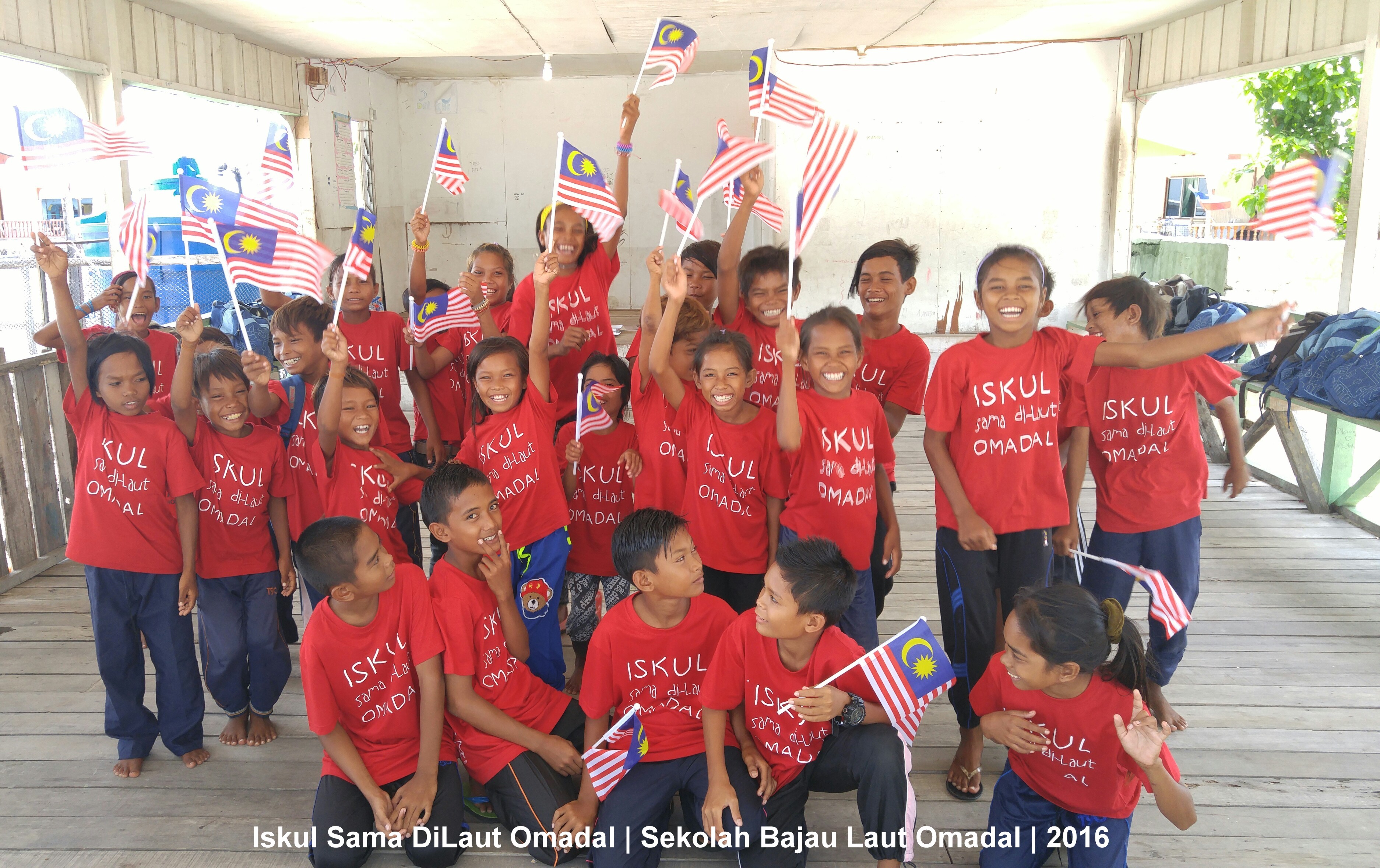
    Our students arrived very early on the morning of the Malaysia Day, eager to attend to class. Ee Chia and I are even more excited as we present them their first Iskul t-shirt that morning. That smile on their face! What a way to start a morning! They were all quickly changed and were dressed in an enthusiastic red for the Malaysia Day class.

    We began our class by singing our Iskul song followed by marking attendance. The class was simple, to teach them the obvious – date of the Malaysia Day, 16 September 1963. Following that, we invited our Mastal Arikik to present the short sketch to illustrate what happened that day. In that sketch, we also taught them new words such as Malaya, Semenanjung, Sabah, Sarawak, and Singapura. After that, our Mastal Arikik showed Malaysia maps and verbally introduces the 14 states in Malaysia, word by word to our students. All work and no play make learning exceptionally dull. We concluded the Malaysia Day class by distributing Malaysia’s flag and having our students learn to draw our flag. We have also provided our student meal after class as a celebration of Malaysia Day as well as acknowledging their efforts in learning that day.

    We are really happy to have the class that day. Their eagerness to learn, their enthusiasm to complete their flags first – those were precious moments that touched our hearts at end of the day. Learning is only rewarding if one takes learning beyond knowledge; it is one’s attitude to learning that takes the lessons beyond. One thing for sure, we do expect our Mastal Arikik to be preparing the Malaysia Day class next year.


    For more photos, go here.

  • Iskul Anniversary & Award Day Celebration

    Iskul Anniversary & Award Day Celebration

    [et_pb_section bb_built=”1″ fullwidth=”on” specialty=”off”][et_pb_fullwidth_post_title _builder_version=”3.0.66″ title=”on” meta=”on” author=”on” date=”on” categories=”on” comments=”on” featured_image=”on” featured_placement=”below” parallax_effect=”on” parallax_method=”on” text_orientation=”left” text_color=”dark” text_background=”off” border_style=”solid” text_bg_color=”rgba(0,0,0,0.65)” /][/et_pb_section][et_pb_section bb_built=”1″][et_pb_row][et_pb_column type=”4_4″][et_pb_text _builder_version=”3.0.66″ background_layout=”light” text_orientation=”left” border_style=”solid”]

    Schools celebrate students in dozens of different ways. They celebrate students’ creativity, academics and attendance. Every student is looking forward to the day as they will have their names called and they will walk with their head held high towards the stage to receive their award. Not for me. In my school days, Awards Day is only for the excellent and the talented. For an average student like me, the next opportunity to walk up to the stage during the ceremony is to be part of the organising committee and I signed up for it.

    As I was writing this essay, I found many debates online about celebrating students in Awards Day. Regardless if the award was recognising grades or talents, students compete to receive an invitation card to bring home to their parents. Awards Day became a pride and vanity day, so to speak.

    Now an adult, I have a different view. Awards Day does not just recognise grades and talents, but it should compliment values and attitude. Yet, how do we measure values and attitude? How do we scale them? In a world where competition awards few people on the backs of many, and where rewards and resources are conferred inequitably, it is understandable that children associate awards with a system that reinforces self-worth by naming winners and losers. I was brought up on a numeric scale of grades achieved in school, and now working with a vague idea in mind to stop that culture from taking its roots in Iskul.

    Iskul Sama DiLaut Omadal (Iskul) proudly marked their first anniversary since the project which started in August 2015. Iskul’s milestone belongs to everyone, namely our students, our Mastal Arikik, our Headmistress, and our donors. Therefore, it is only apt that we celebrate the time and effort they have invested in Iskul. We recognise our student’s attendance to class and we recognise their effort in learning, although unfortunately through grades for now. We recognise our Mastal Arikik’s time and effort to teach. We recognise our Headmistress who multitasks between home, community, environment and Iskul. In short, Iskul wants to recognise and award everyone for being part of the making of Iskul for the past one year.

    Awards Day is usually associated with collecting certificates and this is where we learn our first lesson. For stateless children who are just learning to read and write in Iskul, their first reaction when they received the certificate was to confirm with us if the certificate will prevent them from getting caught by the enforcement officers when they are in town. It breaks our hearts. The fear and the insecurity in their daily lives were all displayed. For us urban dwellers, certificates proved our credibility, for these stateless children, the only certificate they even encounter before is a legal document that prevents them from being deported to the Philippines, an unfamiliar place to them for they are considered as illegal immigrants in Malaysia. We learn very quickly that Iskul’s vision to provide them basic literacy has just expanded.

    During the Awards Day, we had invited our student’s parents to witness the historical moment when their child walks up to the stage to receive a certificate of enrolment from the Head of Omadal Hujung village. I felt teary to see our students walked up the stage when their names together with their parent’s were called – imagine the emotions their parents experience hearing their names called. We took the extra mile to also acknowledge the parents of three top students who did well in examinations as we called them up to the stage to receive food ration as an award. We had been told that the parents of these three children took the extra miles to ensure their children who are enrolled in Iskul to not miss a lesson. Some even forbid their child from following them fishing in the sea if the day after is a weekend because they want their children to go to Iskul and learn to read and write. Therefore, Iskul feels that their parents play a huge role in their child’s achievements as well.

    In Iskul, we do not want to just recognise those that excel in specific areas; we want to recognise EACH student for the areas in which he/she excels. For that reason, Iskul looks forward to developing the appropriate syllabus that will cater to the development of moral values in our Mastal Arikik and our students as well as their livelihood skills to allow them to help improve their family’s income.

    Following the Awards Day, we received more requests from other parents who would like to enrol their children to Iskul. Regardless of their motivation, we are pleased to know that we have made aware of opportunities for the stateless community to be literate and Iskul is given a chance to provide that. Hence, Iskul has great ambition to build a house on stilts that can function as classroom spaces for our students and ensure a conducive environment for learning. Currently, they are conducting their classes in the kitchen space of our Headmistress, sidewalk next to one of our Mastal Arikik’s home and in a worn-out community hall (that also poses some danger when lesson takes place).

    In our long-term vision, Iskul wants to build a culture where everyone feels special in their very unique way. We want our students to feel proud being a Bajau Laut community yet should not sit still obliging to the societal perception where the absence of citizenship will hinder them from breaking away from it. Having the thought in mind, Iskul looks forward to receiving volunteer tutors who would like to spend time in Iskul to instil the important value of self-acceptance in this community, especially the children.

    In a nutshell, first year anniversary and Awards Day marks another chapter in developing and fine-tuning our operation in Iskul from empowering our Mastal Arikik in teaching to bringing the world closer to our students as well as encouraging good neighbourliness between Malaysian and stateless community living in the vicinity of the same area, especially in Omadal Island. Iskul wants to be a space where we bridge the marginalised community to the world.

    https://www.facebook.com/pg/iskulsamadilautomadal/photos/?tab=album&album_id=958244297631710

    In case you miss this:

    The Beginnings of Iskul
    The First Annual Assessment
    [/et_pb_text][/et_pb_column][/et_pb_row][/et_pb_section]
  • Students’ Progress Evaluation after 1 Year (September 2016)


    The above table and chart only depicts the performance of 21 Iskul students based on written examinations drafted and evaluated with designated marks conducted in September 2016. Our observations shows that our students are able to enumerate the alphabets from A to Z and 1-50 eloquently.