Category: Stories

  • My first trip to Omadal Island

    My first trip to Omadal Island

    by Vince 

    During the summer break, My family and I went to Malaysia. We flew to Sabah state, then went to Omadal Island on July 17, 2022 by boat.

    I have heard stories about Bajau Laut (Sama DiLaut) ancestors who lived in the Coral Triangle (between Malaysia, Indonesia, and the Philippines) for generations but have received no recognition of citizenship from any of these countries.

    Some of the children that live in Omadal Island are stateless because both of their parents are undocumented. We were there to support Iskul,  a community school that offers basic education to these children. 

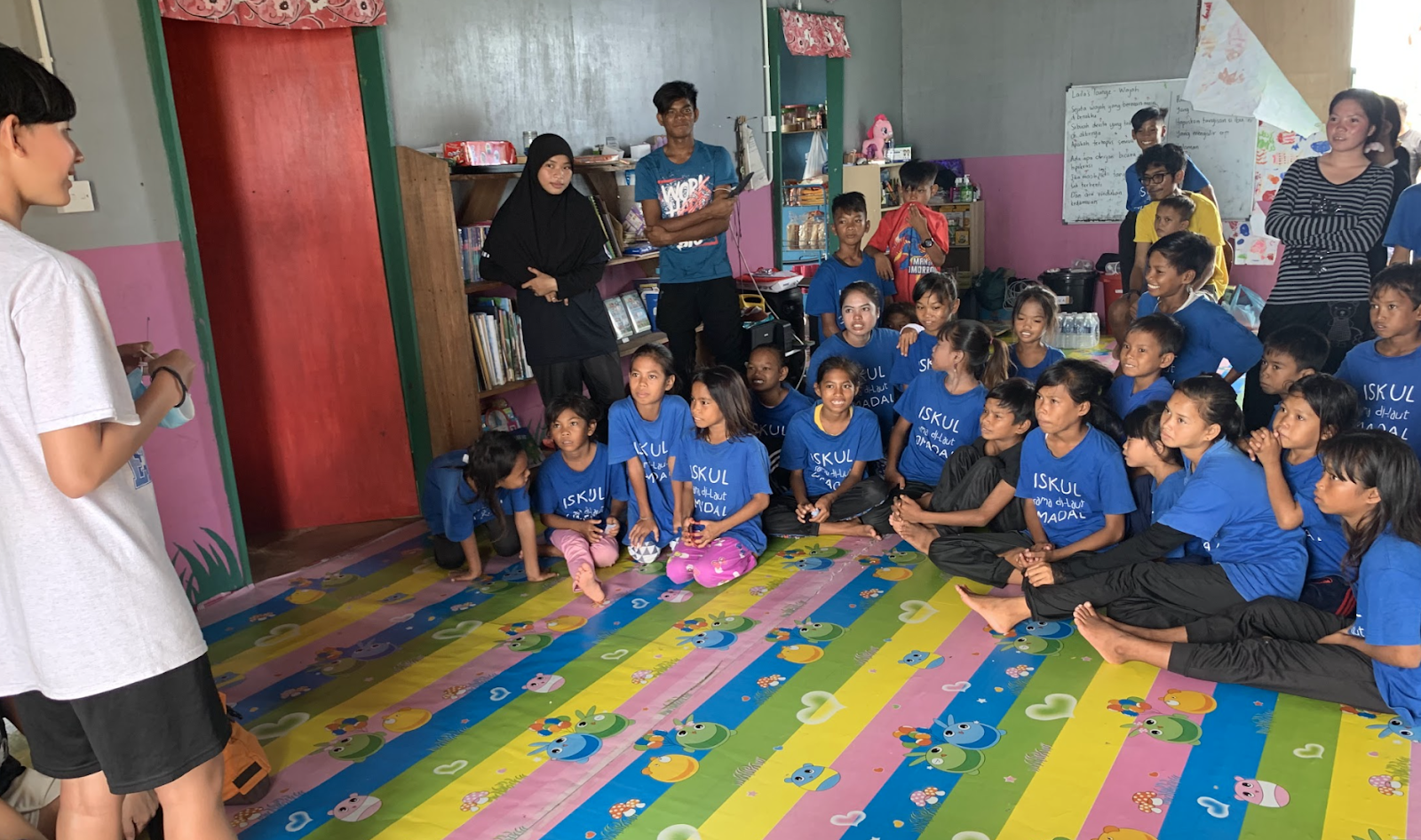
    After a forty five minutes boat ride to Omadal Island, we docked and saw the kids from Iskul school were waving at us from the school building! 

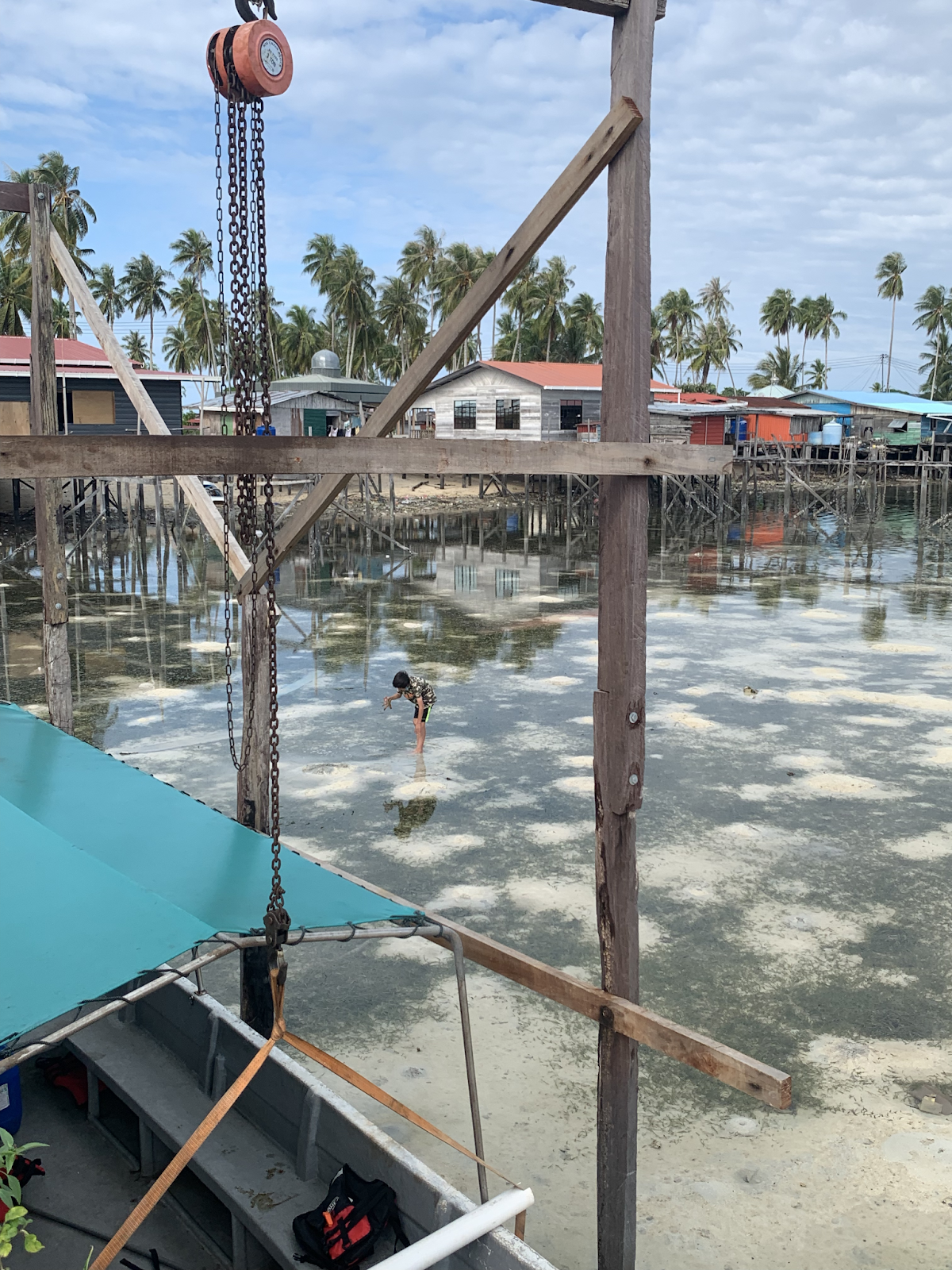
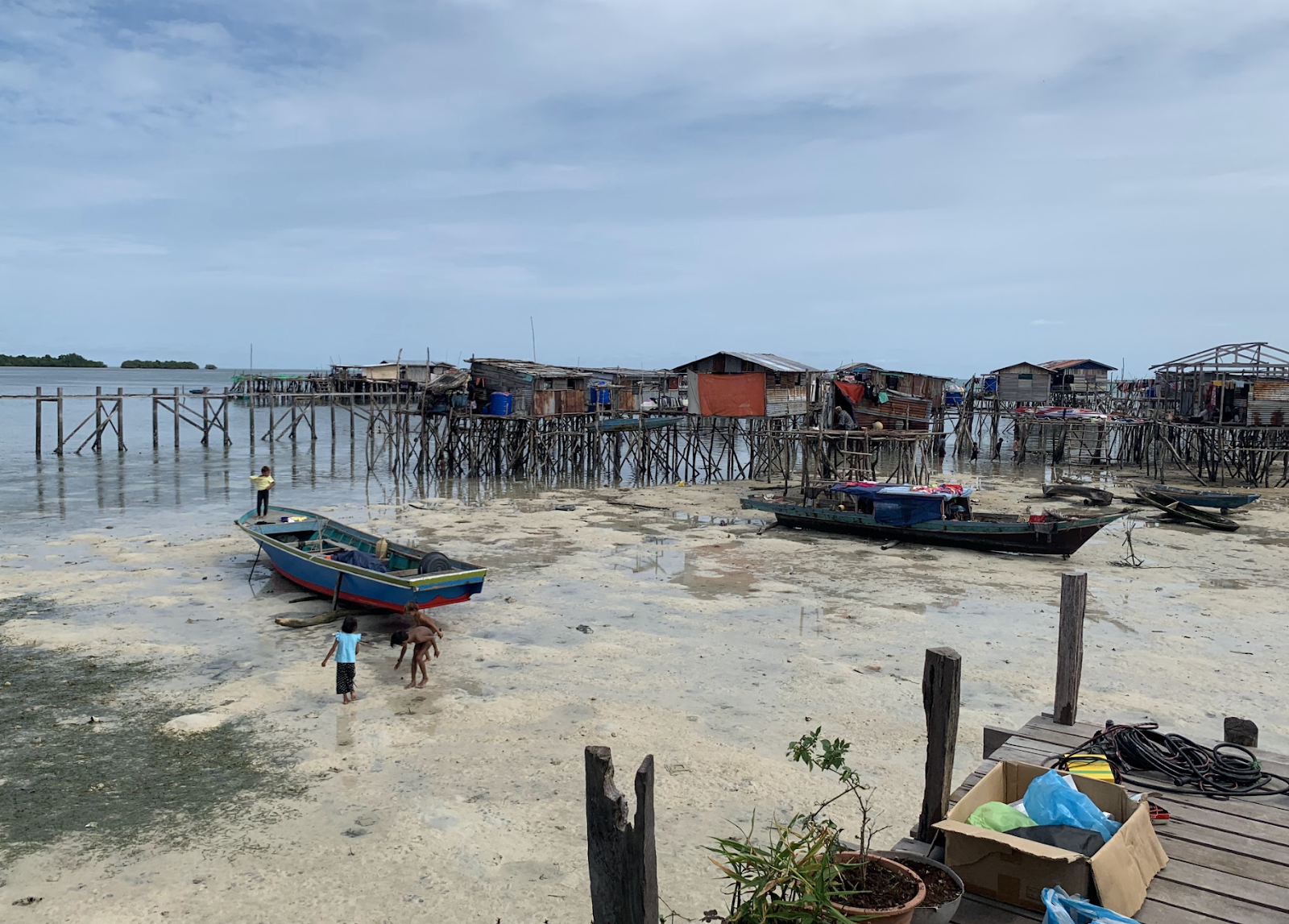
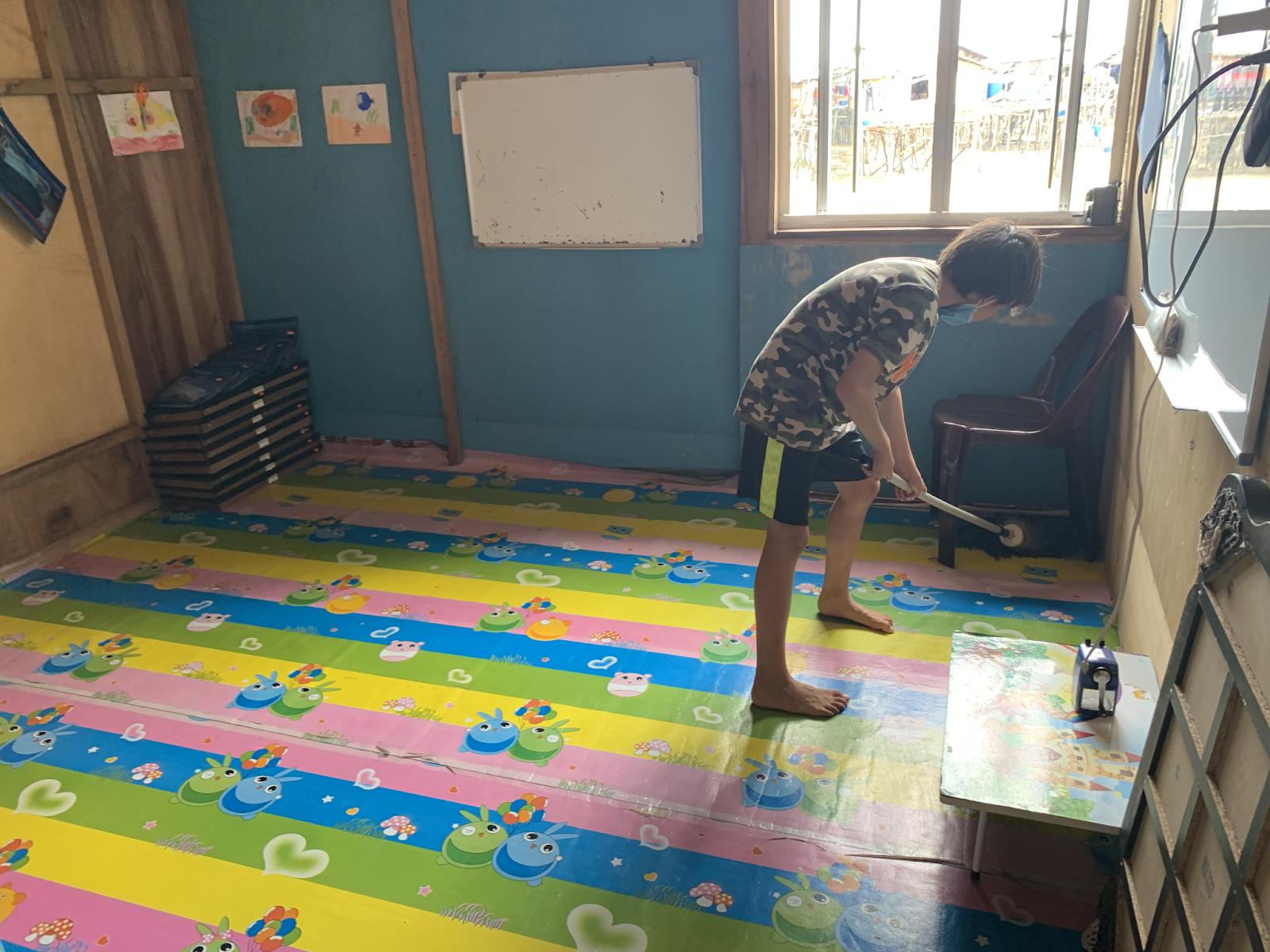
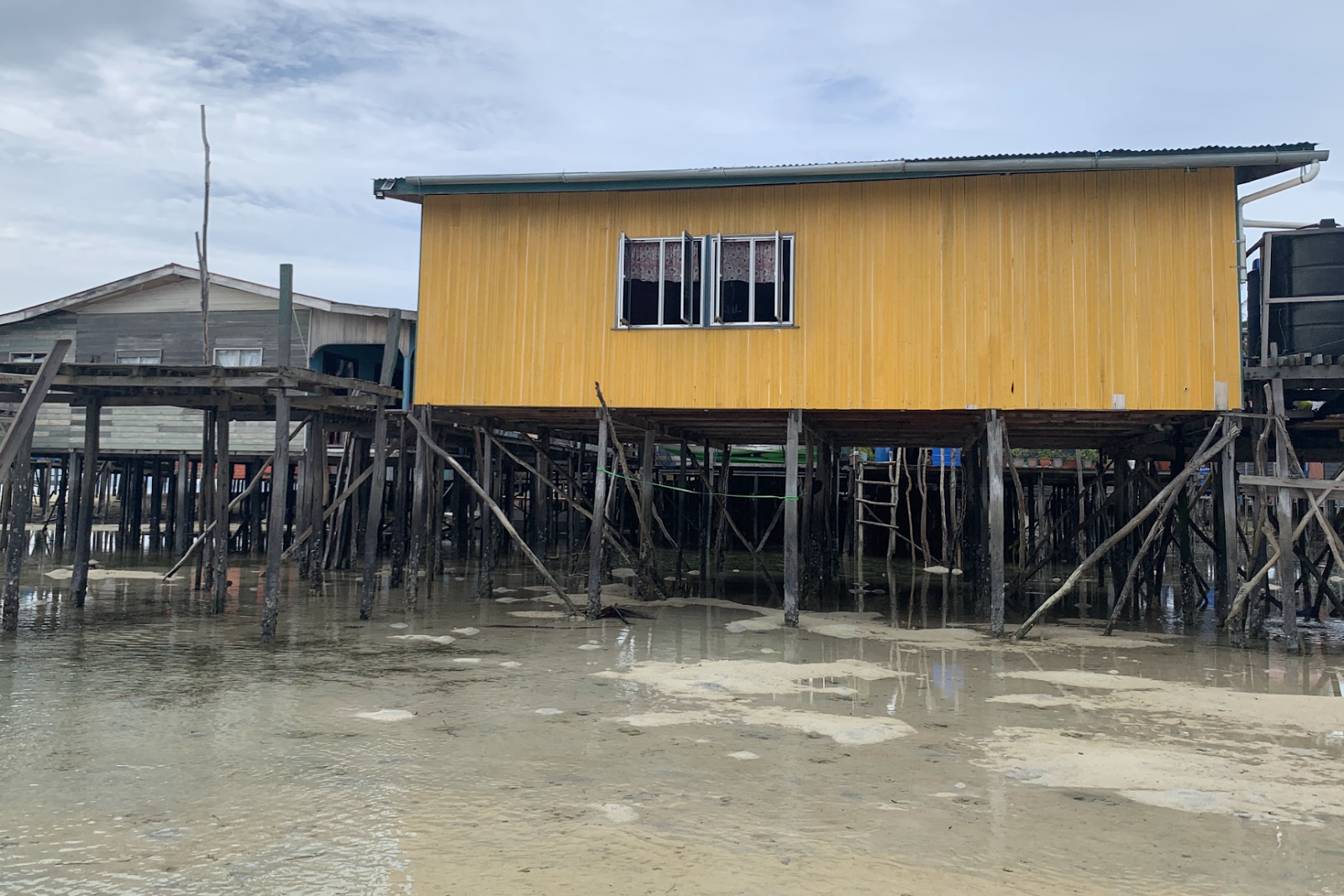
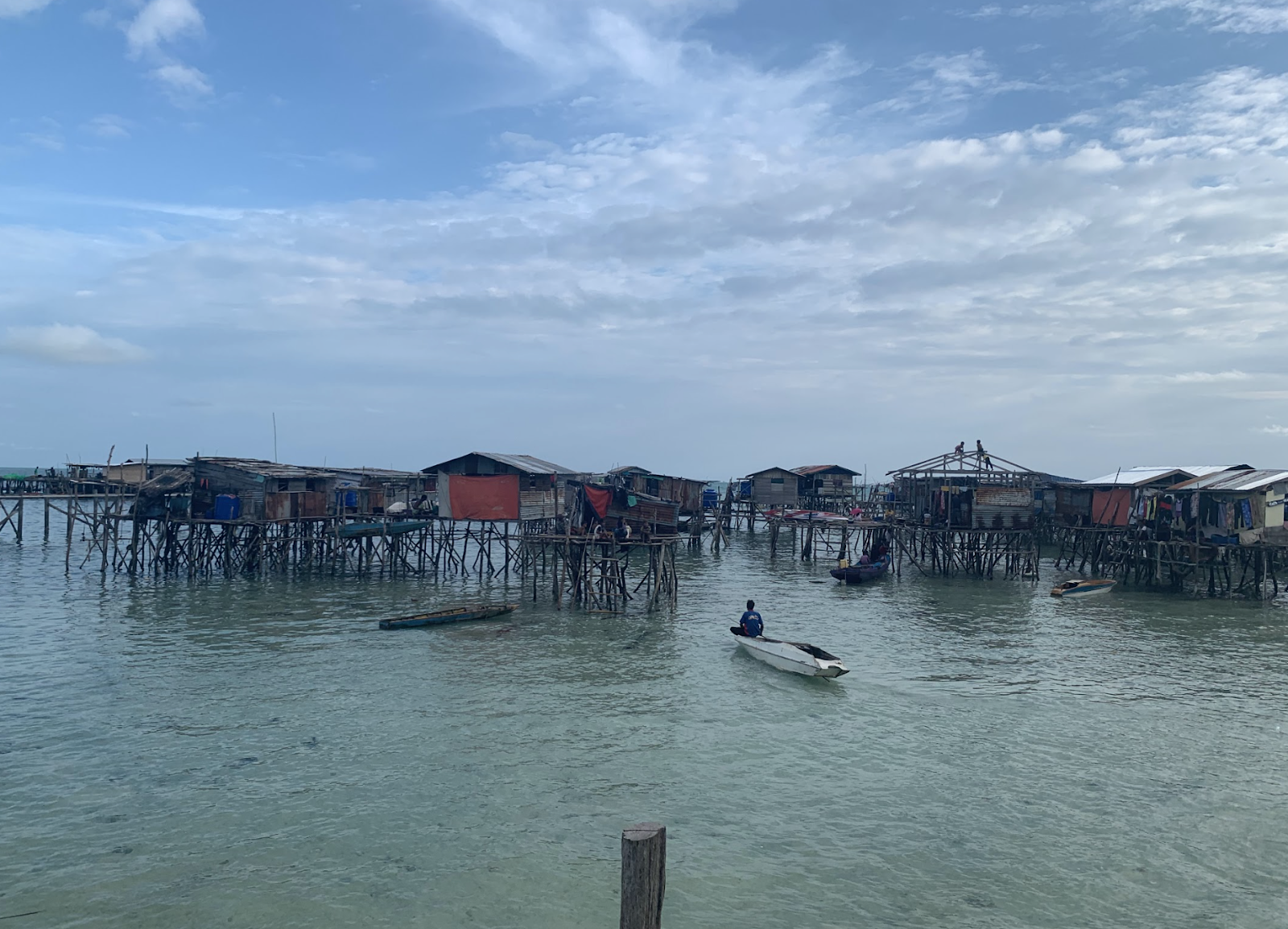
    I noticed a bunch of houses made out of wood and metal scrap. The school and houses were built on the sea. The kids were still having class when we came in, and we introduced ourselves to them.  After the school was over, we cleaned the school, fixed the tables, and planted new vegetables. When I heard all human waste in toilets there go directly into the sea because there is no sewage system, I was grossed out!  My parents explained that sewage solutions are needed to tackle the human waste problem in the island.  Later, I went down the ladder to the sea, and the water was up to my knees because it was at low tide. I saw a lot of trash floating around. 
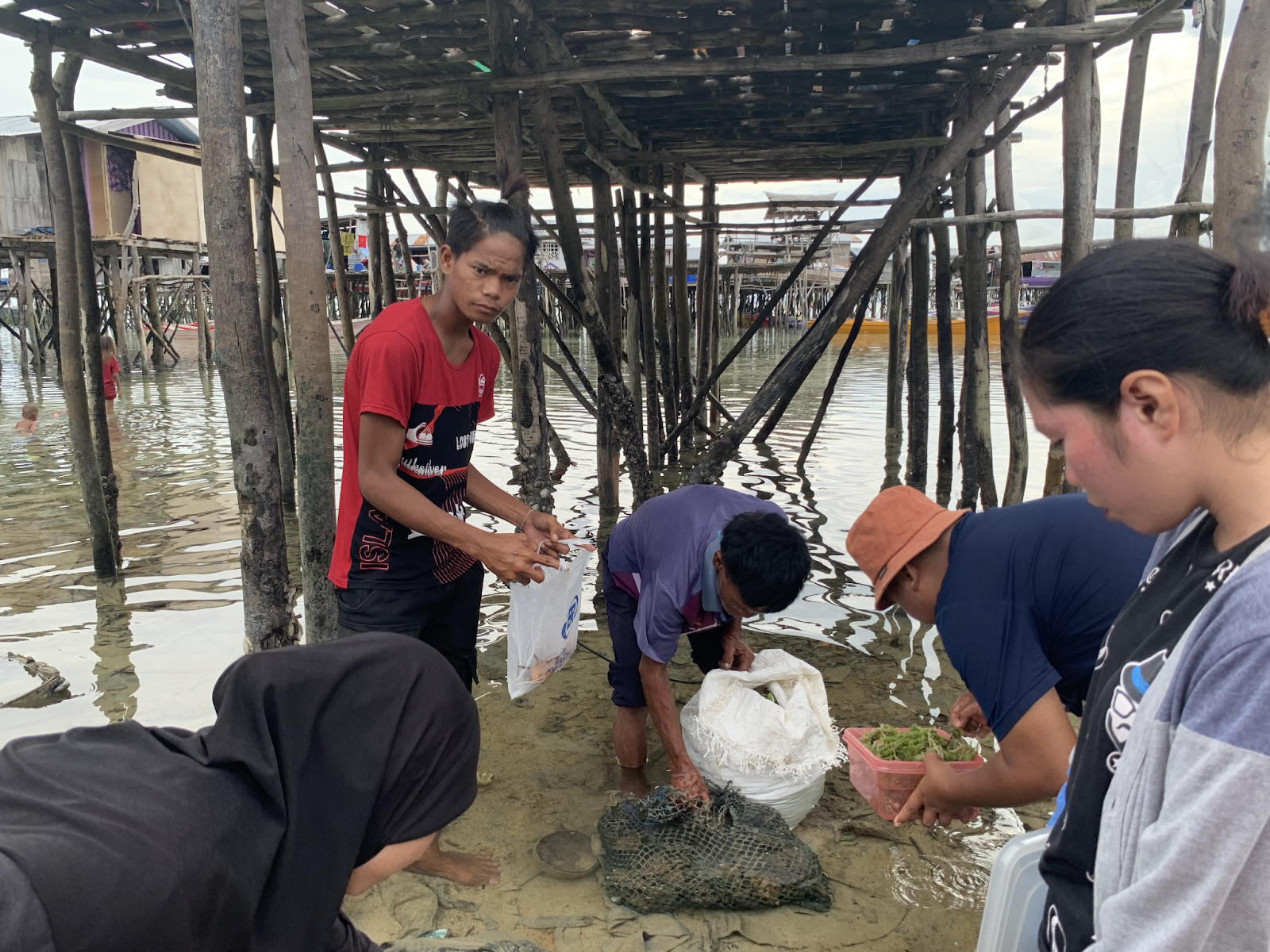
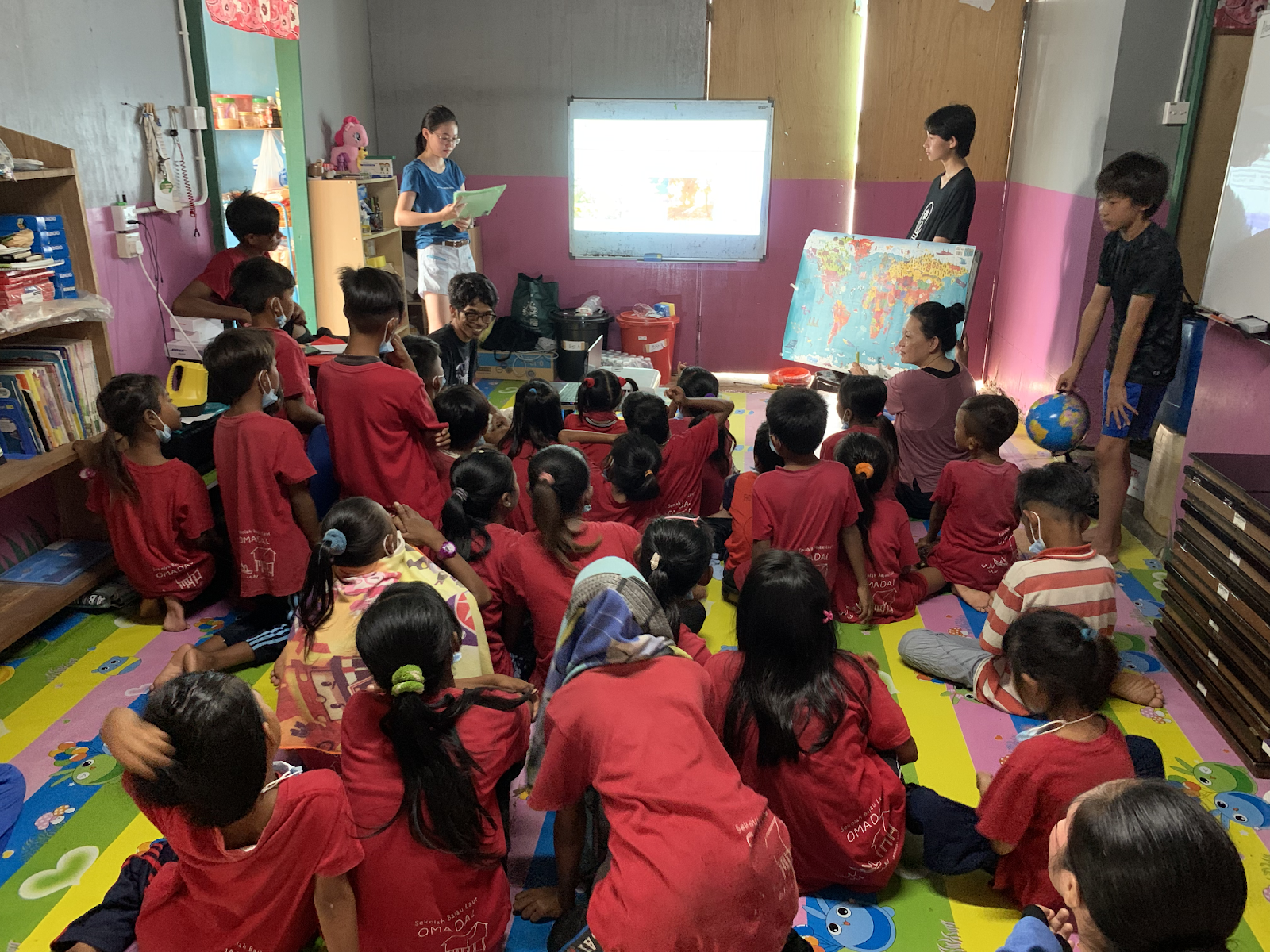
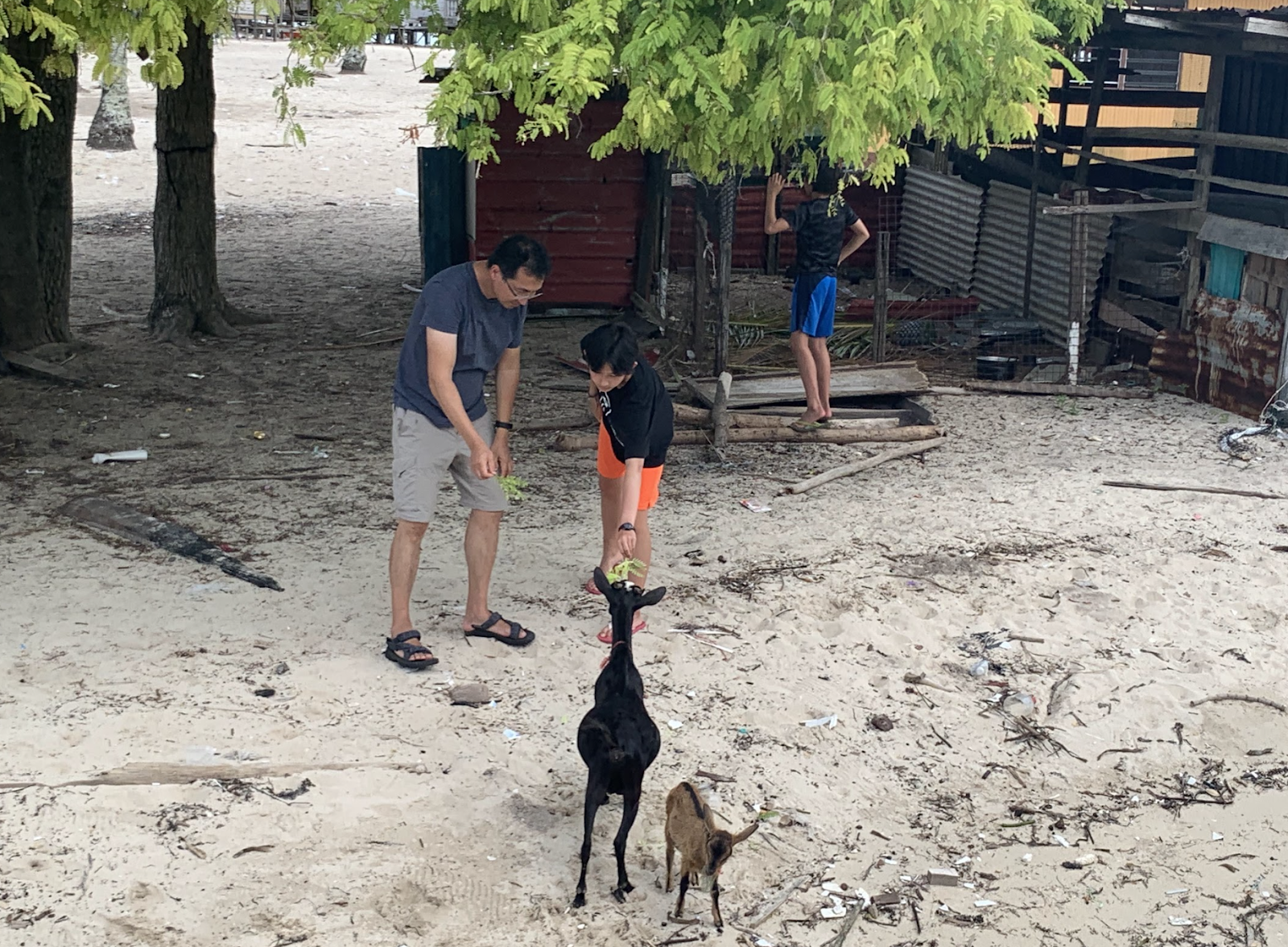
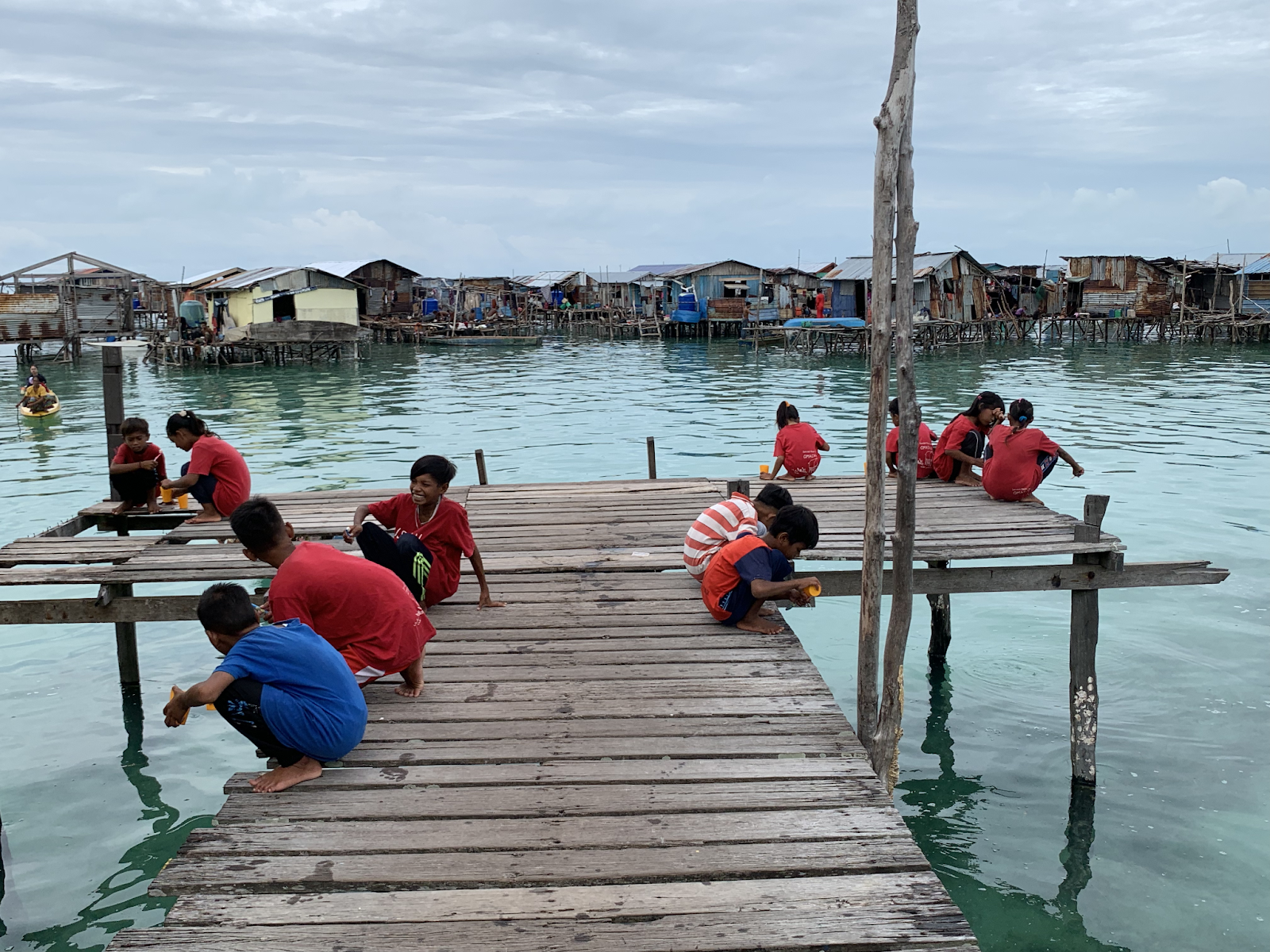
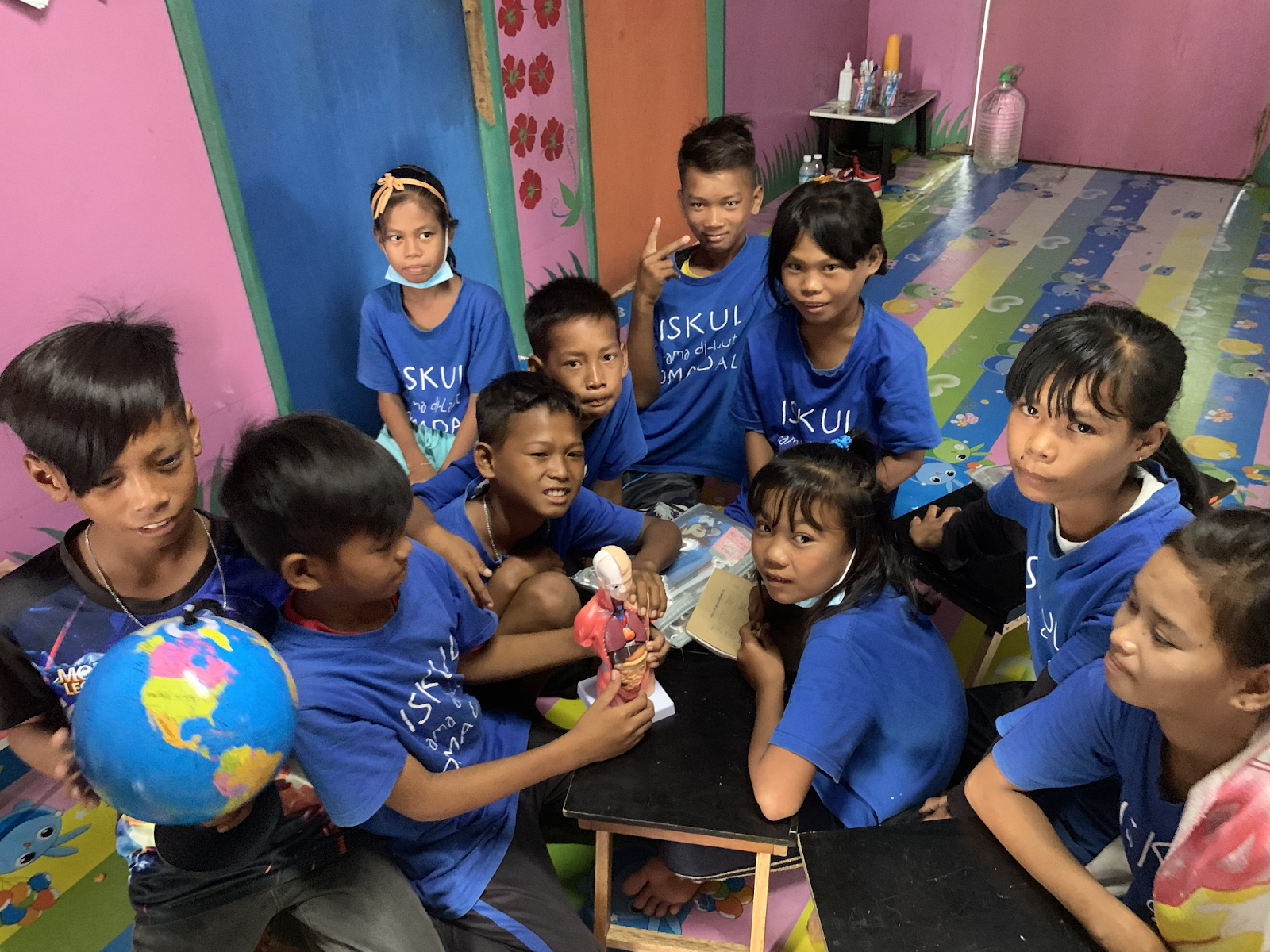
    The next day, when we went to the school again, the kids were brushing their teeth and dumping the used water into the sea. After brushing, they went back to the school and sat reading. When they were done, My sister did a presentation about “Exploring the world”. The kids had never heard of any place besides Malaysia. My mom gave stickers to the kids whenever they answered a question. They were jumping for joy because they like stickers! When the school dismissed, I went to play in the sea and caught crabs and sea stars. My family was busy labeling every book and putting some new things we brought from home, like a human body model, a globe, world map, legos, and some science kits on the shelves. I feel happy that the kids have something to play with now. After cleaning up, we went down the ladder with the teachers and walked to a stateless house at low tide to buy some sea grapes and shellfish. The sea grapes tasted like seawater, and it tasted better when dipped in spicy sauce! At night we stayed in a villager’s home that had electricity and fed some goats.
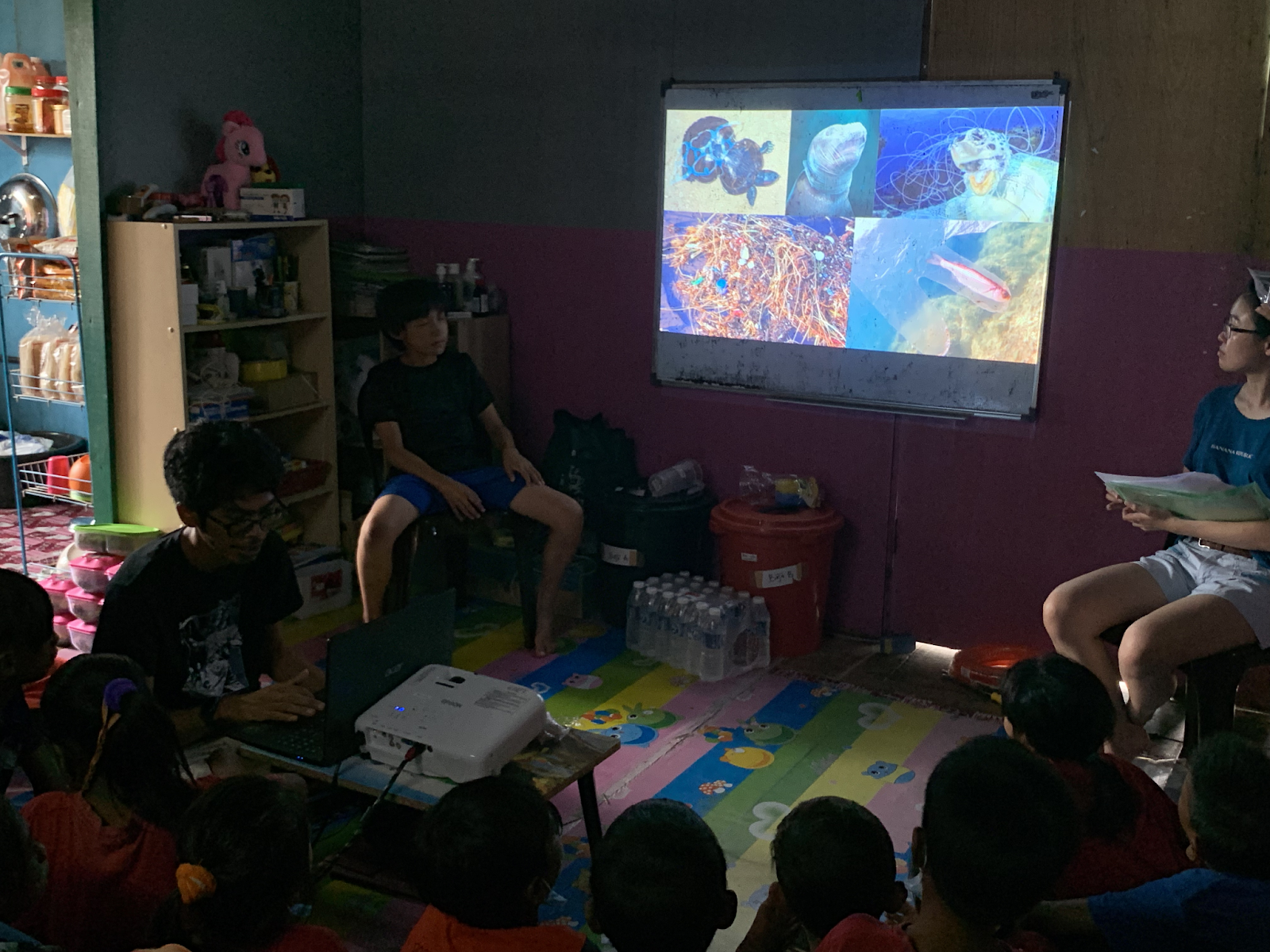
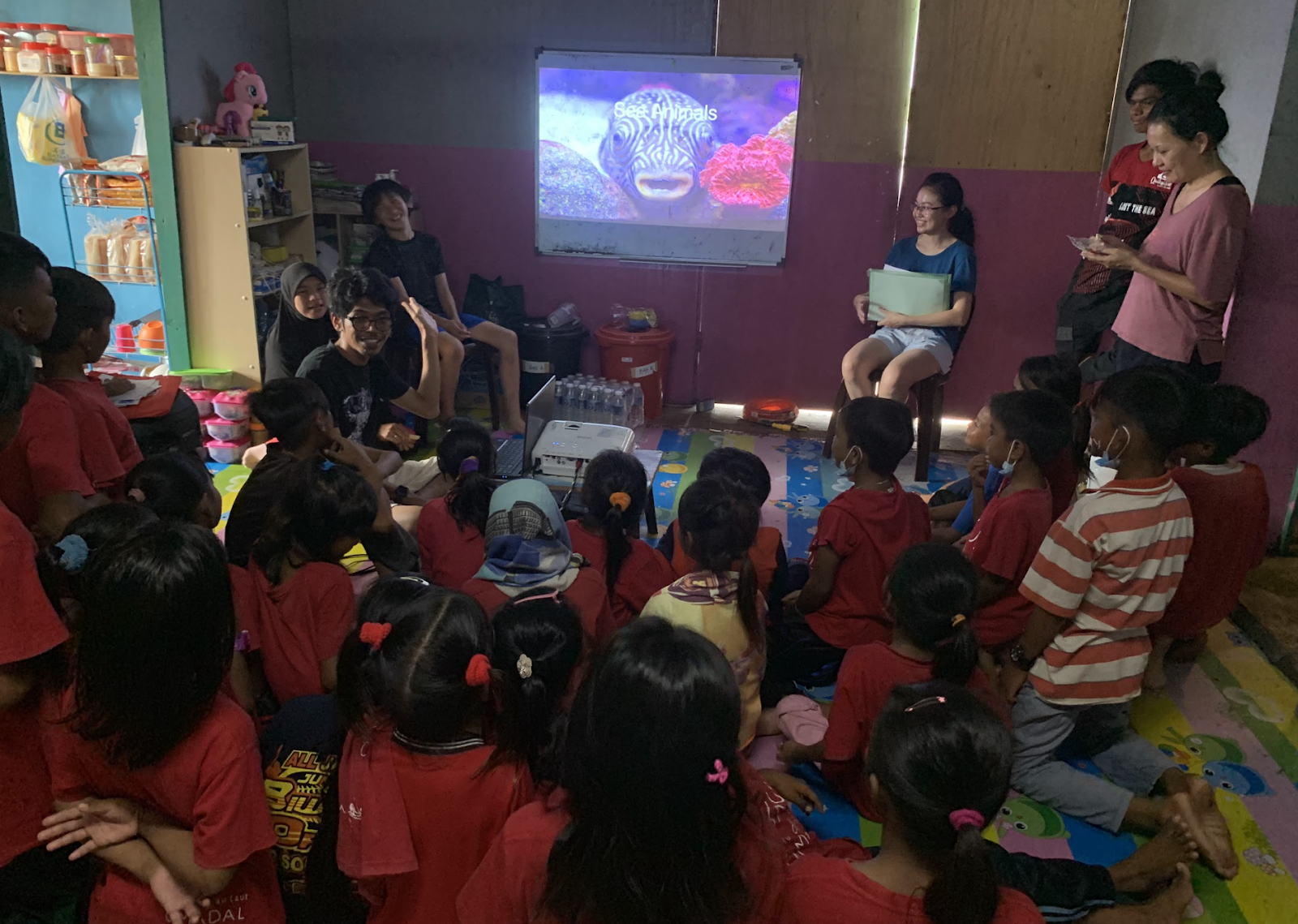
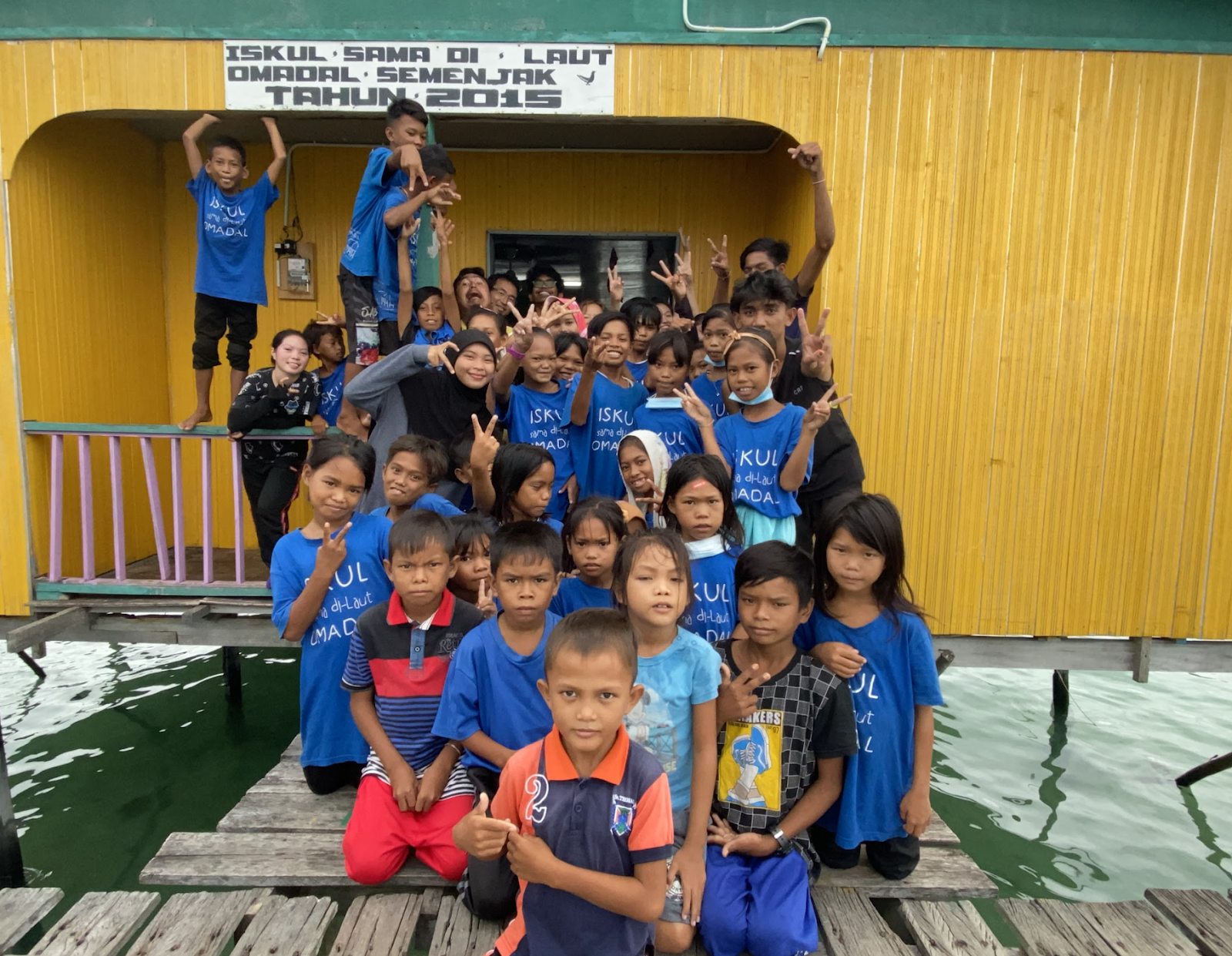
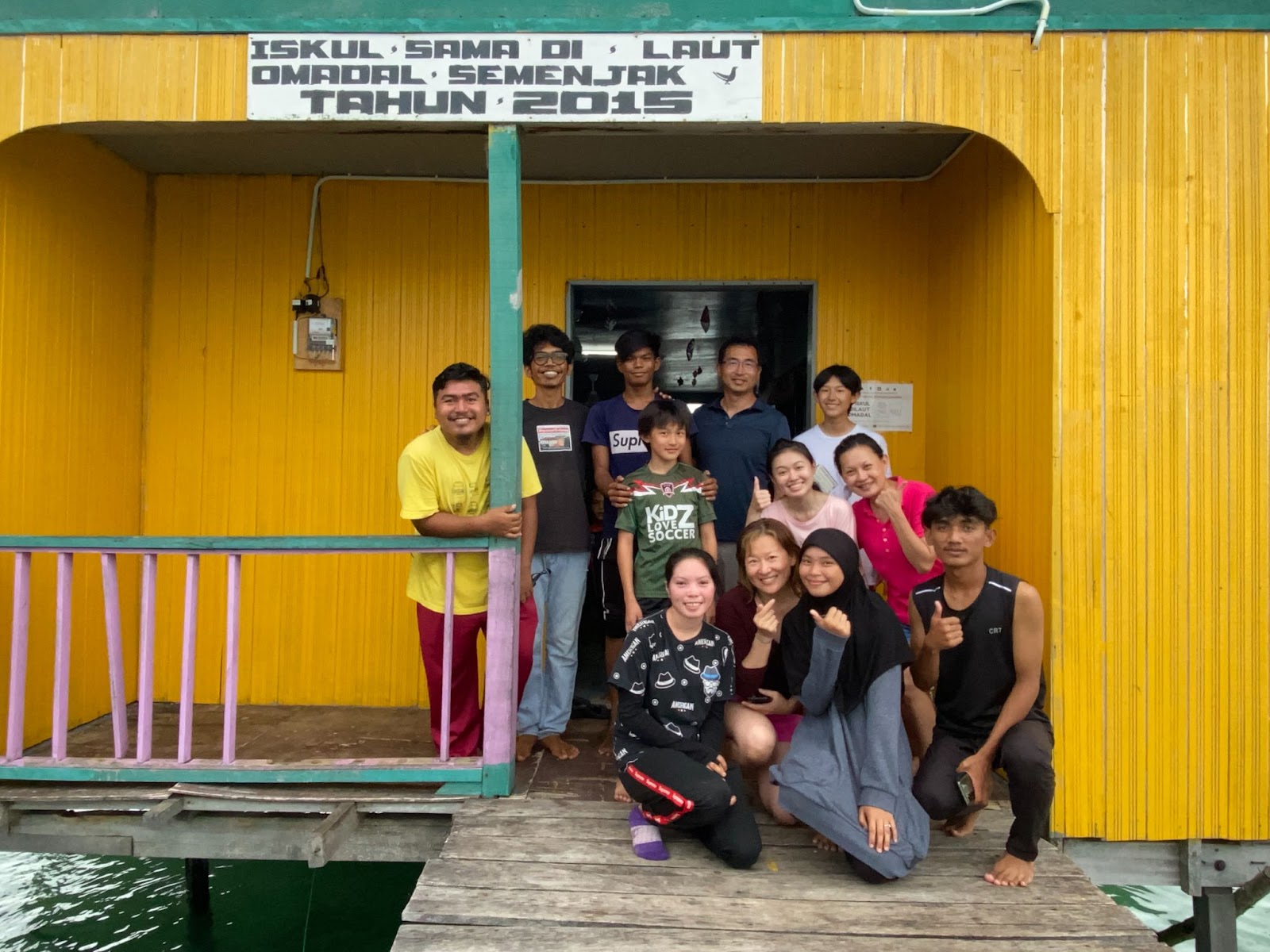
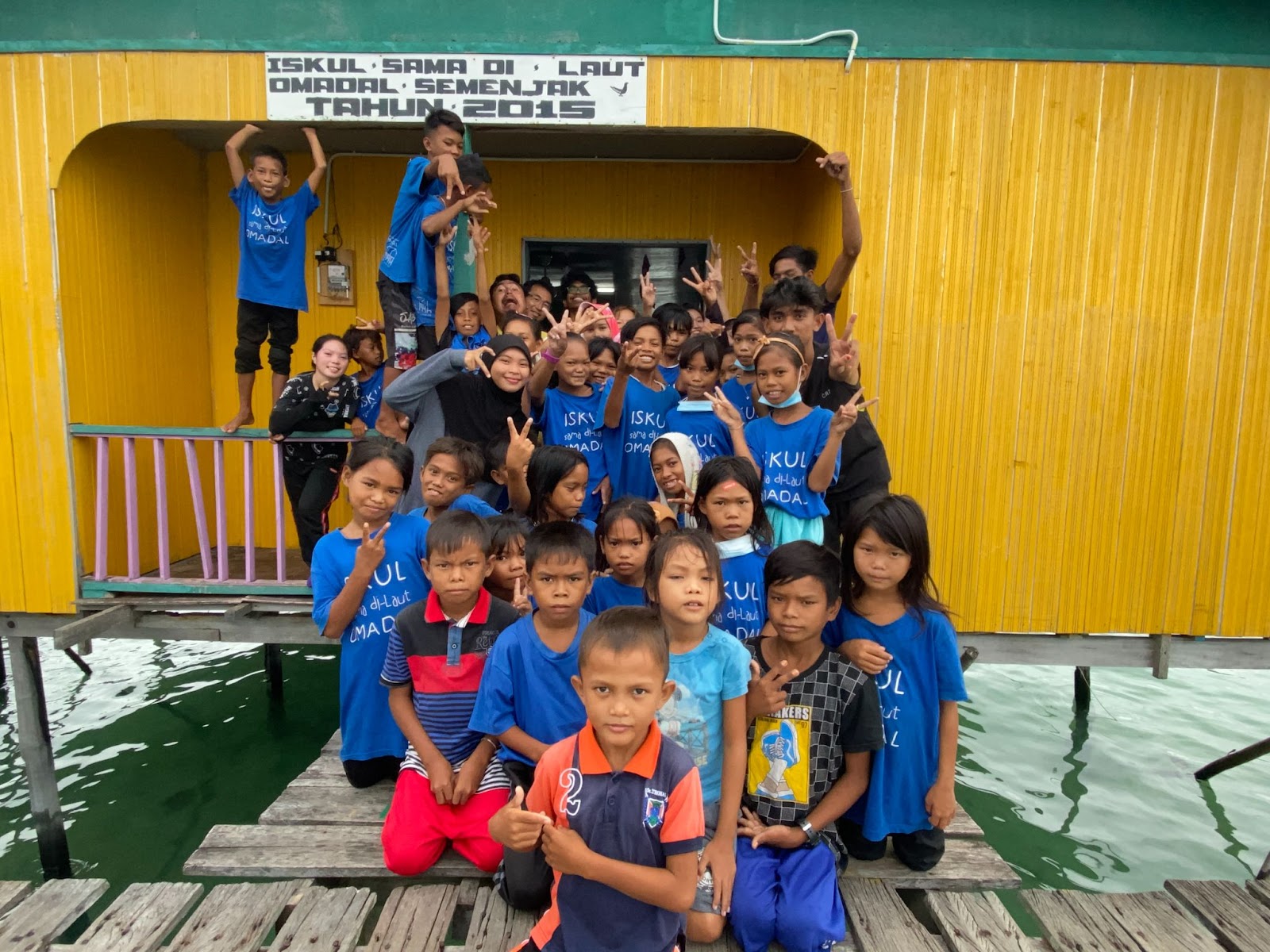
    On our second and last day at Omadal, We gave a presentation about sea animals, and a presentation about the human body. I spoke about not throwing trash in the ocean and I showed a model of the human body on the other presentation. There was a new stateless kid who came from Tawau, which was three hours away from Omadal! She came because they didn’t allow her in other schools because she was stateless. We took a photo with everyone in the school! The kids waved goodbye when we left Omadal. 
    You may be wondering how we can further help these children at Iskul? The children can benefit from more medical supplies, books, and toys such as legos and games. We can spread the word about Iskul, so other people can learn about the children and give them supplies and money. Volunteering as a teacher will also help make sure that the children will learn important skills to make a living for themselves. Lastly, your donations will enable Iskul to pay for more food and student activities for the children.
    Vince and family volunteered at Pondok Iskul, Omadal for 3 days where they shared their knowledge and culture with Iskul students and the students shared theirs with them. Vince and family helped Iskul in many ways such as bringing educational items, Lego and assisting with our inventory system. Below is a short recap of his experience at Iskul.
  • Trip to Omadal Island

    By Lindsey Luo

    Lindsey Luo and family volunteered at Pondok Iskul, Omadal for 3 days where they shared their knowledge and culture with Iskul students and the students shared theirs with them. Lindsey and family helped Iskul in many ways such as bringing educational items, Lego and assisting with our inventory system. Below is a short recap by Lindsey of the family’s experience at Iskul.

    We went to Omadal on July 17th, 2022 and stayed there for 2 nights and 3 days. It was very interesting for me because I had never done something similar before. My family and I went on the trip so we could help a school called Iskul located there. Iskul is a non-profit school in Malaysia founded by Chuah Ee Chia to provide basic education to stateless children. Some of their ancestors were sea gypsies, and some were refugees from the Philippines. Because of their nomadic lifestyle, they missed Malaysia’s citizenship registration in 1969, so now they are stateless. Without documents, these children are stuck in Omadal and can’t enroll in any public schools.

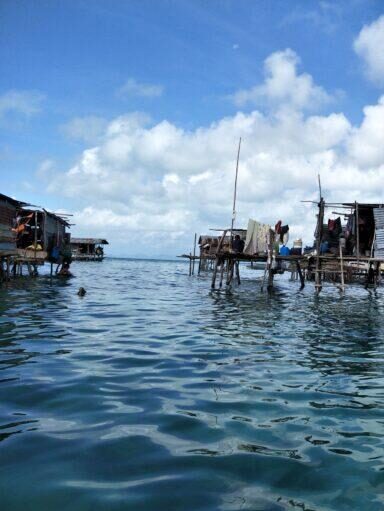
    We got to the island by a speedboat, and the first thing I noticed was the quality of the houses. All of them seemed very old, and they were built on top of the water. The school seemed like one of the better quality buildings, but it wasn’t like the buildings in mainland Malaysia. The school building was a lot smaller, and it was made out of planks of wood that had wallpaper on top. The second thing I noticed was how many people were in the water. A lot of the younger kids weren’t wearing clothes, and they were rowing boats, boogie boarding, playing volleyball, and running around. 

    The weather at Omadal wasn’t too hot, but it was pretty warm. During the days we were there, there was no rain. My mom told me that when it rained, people would put buckets out so they could use the rainwater for showering and drinking because they didn’t have a clean water system. In fact, the water we used to wash ourselves was rainwater.

    When we passed by the school’s window in the boat, some kids poked their heads out and waved at us. We waved back, and when we climbed up the ladder we saw the kids in the main room each drawing a dot-to-dot mouse. After the teacher gathered everyone into the main room, we introduced ourselves. The kids were asking us questions like our names, age, and where we came from. Soon after, the school was dismissed. A few kids stayed behind so the teachers could tend to some wounds that they had on their bodies. Later, the teachers explained that since Omadal had no clinics, the students and their families went to the teachers for medical help.

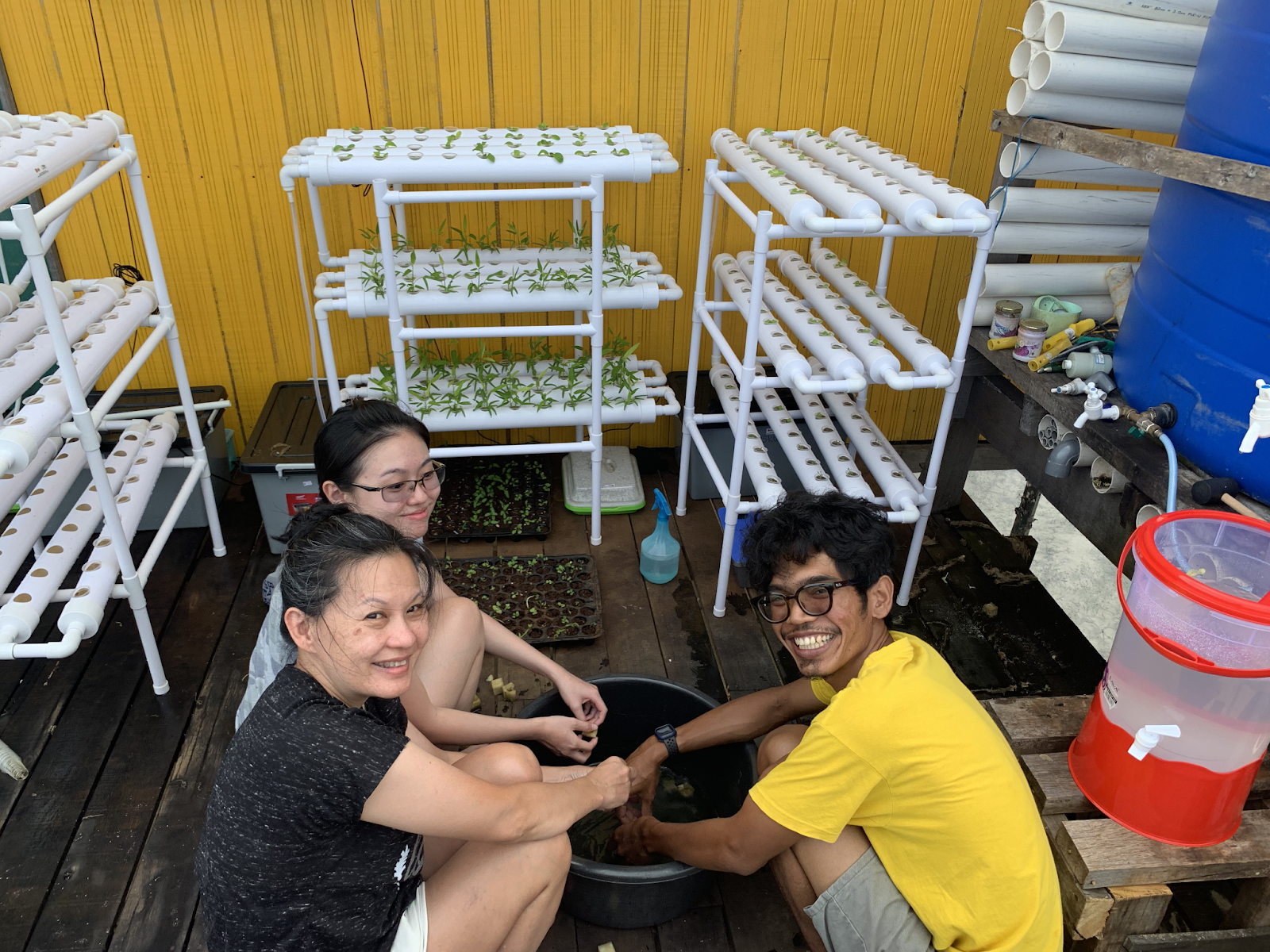
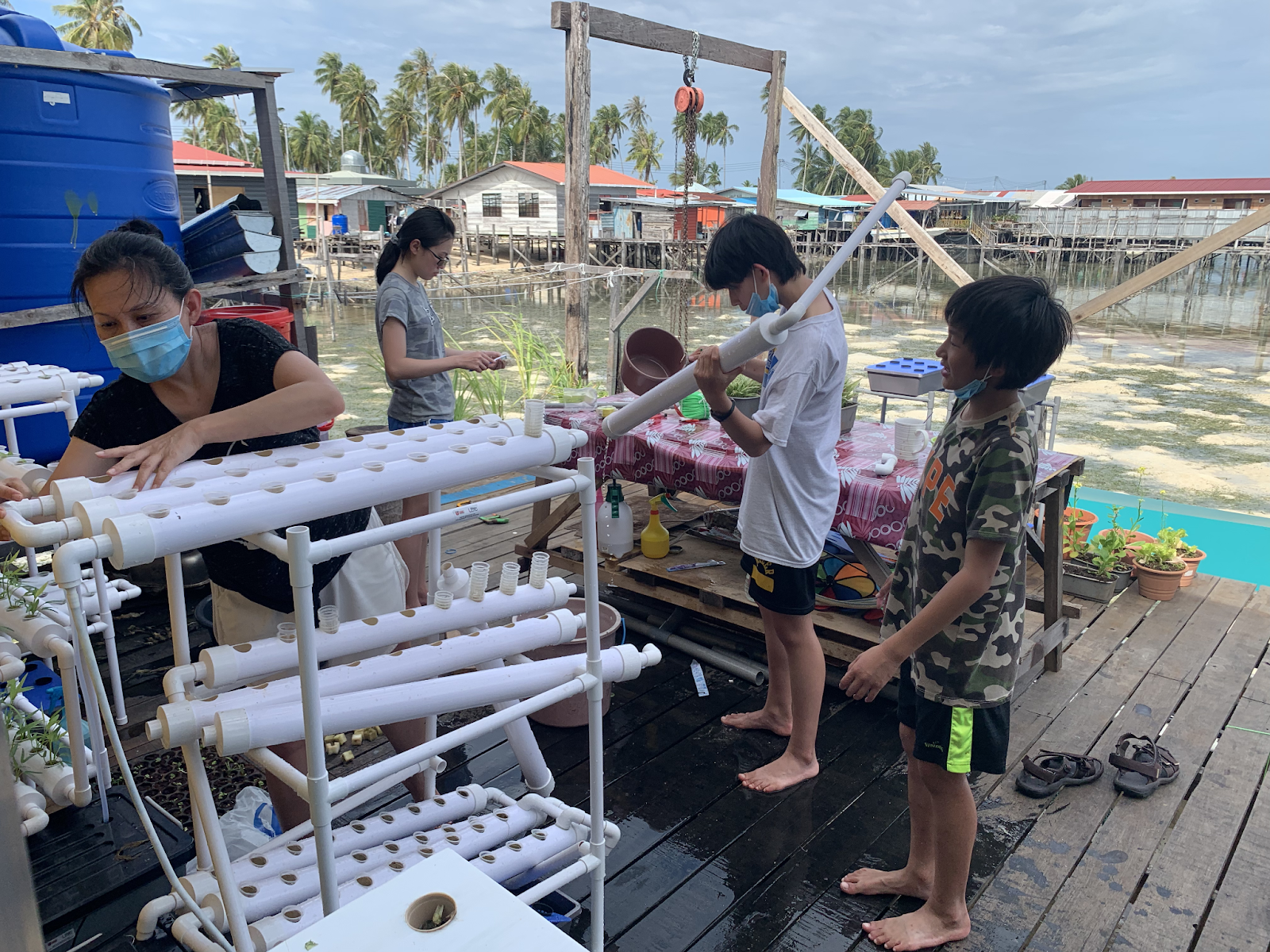
    We stayed behind to help sweep and mop the floor. We also cleaned some pipes with holes in it that were used to grow plants. My cousin helped the teacher remove old plant sprouts from some sponges and put in new ones. Jefry, the main teacher, told us that the plants were used for science projects, but they were also used for food for the students. My mom and I helped with inventory tracking by putting stickers with special numbers and words on objects around the classroom. When my brother and I were finished helping, we went down the ladder and into the ocean, and looked at sea cucumbers, starfish, and sea urchins inside. The tide was low during that time so the water was only up to our calves. We also watched two boys playing a game of volleyball in the water. Their makeshift net was a string tied between two poles that Iskul was built on.

    The place we stayed in was owned by a person who had identification, unlike most of the people on the island. He was allowed to leave the island since he had documents, while others had no choice but to stay. His house had water and some electricity, which the other people couldn’t afford. 

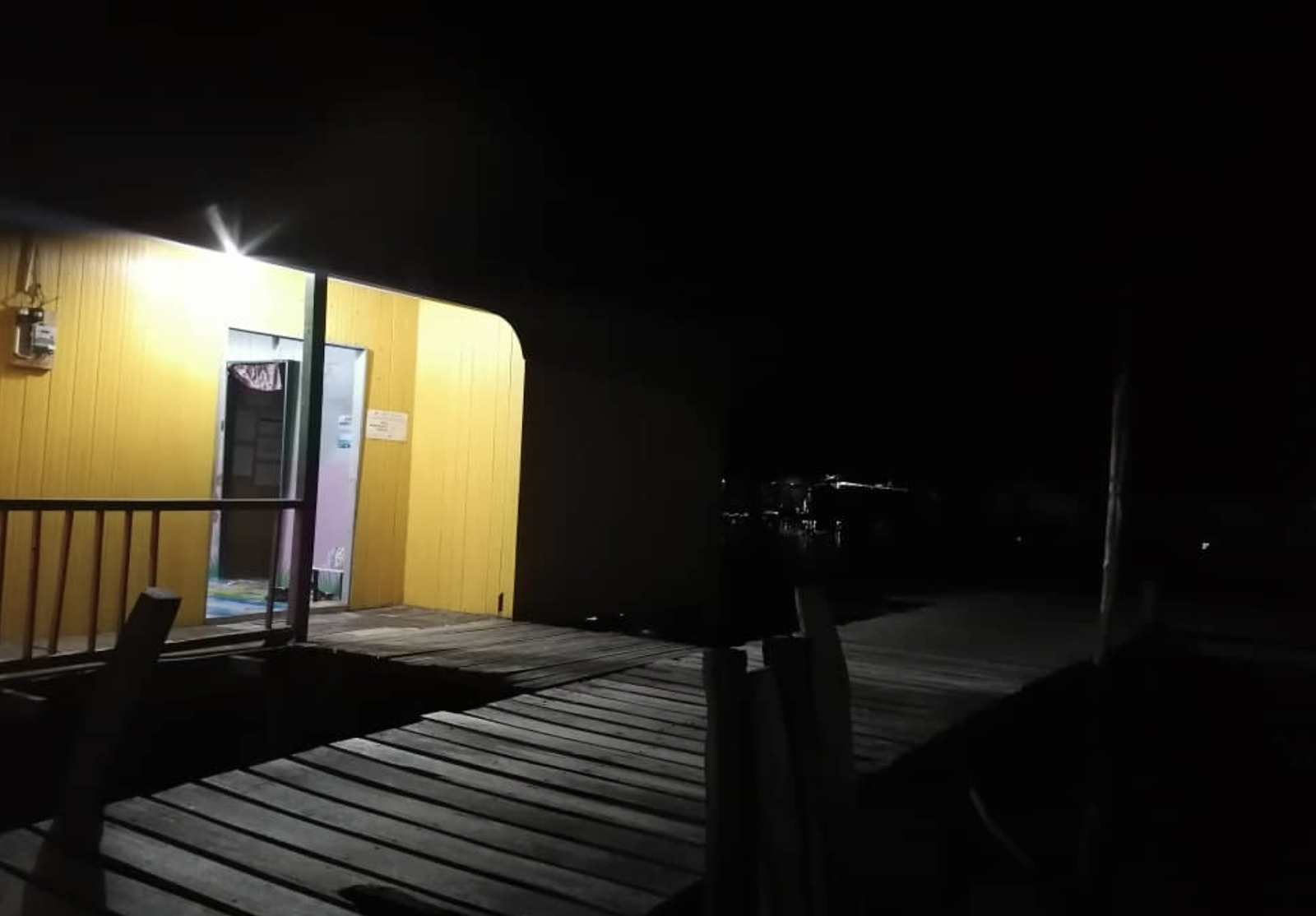
    At night, my family was surprised by how dark it was outside. We were so used to seeing city lights. 

    On the second day at Omadal, my brother and I showed two presentations that we made to the kids. The first one was called Around the World, and the second one was called Marine Environment Protection. The students in Iskul didn’t know any places besides Malaysia, so we taught them about continents, seasons, and animals that lived in different countries. The kids seemed very curious and excited to learn about new places. The students participated a lot and learned very quickly. The teacher would translate the words and have the students answer questions he asked.

    A lot of goats lived near the house we stayed at, so one day, I ripped leaves off a tree and fed them to a goat and its baby. Soon, about 3 or 4 goats noticed and came to eat from my hands. Sometimes, they fought over the food and headbutted each other with their horns. There were also some kids running around and playing volleyball outside. Two of them lured dogs into a square of closed fence and hosted dogfights. It was entertaining to me, but I worried the dogs might try to bite the kids once they were let out. The kids asked for our names, but we couldn’t communicate well because they didn’t know a lot of English.

    Before my trip to Omadal, I was skeptical about going because teaching was new to me and I was nervous about the lack of clean water and electricity there. But when it was time to leave, I sat in our boat and looked at all the kids waving at us. I thought, “I would really like to come back to Omadal someday!” This trip was a rewarding experience for me, and I felt grateful that we could offer to support Iskul.

    There are many ways you can help Iskul. You can help spread the word by sharing Iskul’s blogs or videos on social media, because the more that the world knows about Iskul, the more people who can potentially help the school. You can also donate money to help fundraise or donate items for the teachers. Another option is volunteering at Iskul by teaching the students or cleaning up the classroom. With your help, Iskul can get a clean water supply, a good sewage system, healthcare, and education.

  • Apa yang telah kita belajar daripada Covid-19

    Apa yang telah kita belajar daripada Covid-19

    Enam bulan sudah berlalu sejak kita mula berhadapan dengan krisis pandemik Covid-19. Ini bermakna setengah daripada tahun 2020 kita menjalani hidup yang penuh dengan rasa ketakutan, ketidaktentuan, misteri dan keliru. Tiada seorang pun di dunia hari ini boleh menjangkakan apa yang akan terjadi pada hari-hari yang mendatang. Ternyata manusia masih naif dan miskin pengetahuan untuk melakukan perancangan, jauh daripada gambaran masyarakat modenisasi yang kita banggakan itu.

    Ketika tulisan ini di tulis, jumlah korban disebabkan oleh wabak Covid-19 telah mencecah hampir 380 ribu orang. Sehingga kini masih tiada vaksin bagi wabak ini dan menurut Prof Shi Zhengli, ahli virologi, virus yang sudah dikenalpasti hanyalah “just the tip of the iceberg”, masih banyak virus-virus yang belum diketahui dan dicerap oleh manusia hari ini. Ketidaktentuan ini menyebabkan ikhtiar terakhir untuk menyelamatkan nyawa hanyalah dengan melaksanakan langkah-langkah pencegahan daripada dijangkiti.

    Kredit foto: ANAK

    Manusia mula menjalani kehidupan dengan norma-norma yang baru seperti menjaga jarak, limitasi pergerakan, menjaga kebersihan, bekerja daripada rumah, berkomunikasi di atas talian dan banyak lagi. Dunia yang dulu kelihatan sangat cepat membangun dan luas kini terasa pelahan dan sempit. Wujud juga kepercayaan bahawa dunia sedang pulih daripada pencemaran-pencemaran disebabkan oleh langkah ‘permaksaan’ norma-norma yang baru ini seperti pembentukan kembali lapisan ozon, penurunan kepanasan global dan lain-lain lagi.

    Adakah benar dunia semakin baik?

    Foto: Penulis bersama tenaga pengajar dan pengurusan Iskul.

    Saya menetap di pedalaman kepulauan di Sabah, mengajar anak-anak tiada dokumen. Bagi komuniti pedalaman ketakutan kami terhadap wabak ini tidaklah menjadi sesuatu yang merungsingkan disebabkan komuniti ini tidak terlalu terdedah dengan komunikasi atau berhubungan dengan orang-orang luar. Malah kepulauan ini juga bukanlah merupakan destinasi pelancongan yang sering menerima kunjungan pelancong.

    Maka ketika wabak ini mula merebak dan berlaku panik di beberapa tempat, kehidupan kami disini masih stabil. Perlu juga diingatkan bahawa stabil disini bukanlah bermakna kehidupan yang senang lenang, tanpa berlaku krisis pandemik ini, mereka tetap di dalam kategori miskin tegar. Stabil disini bermaksud mereka masih boleh menjalankan aktiviti harian dan ekonomi mereka seperti sedia kala. Kesan pertama yang dirasai oleh saya adalah ketika kerajaan pusat mula melaksanakan Perintah Kawalan Pergerakan, aktiviti pembelajaran ketika itu harus dihentikan menyebabkan dengan berat hati saya perlu mematuhi perintah ini.

    Foto: Pelajar-pelajar menunjukkan hasil lukisan mereka

    Menjadi warga pendidik di pedalaman atau komuniti terpinggir bukanlah sahaja mempunyai akses yang terhad, juga suasana yang berbeza yang tidak ramai dapat fahami. Sekolah adalah pusat untuk pelajar-pelajar mendapat sebarang informasi, pengetahuan dan ruang yang selesa dan selamat. Menutup sekolah seperti menutup pintu bagi pelajar-pelajar berhubung dengan dunia. Menutup sekolah dengan lama juga menyebabkan kesedaran akan pendidikan di dalam komuniti sukar untuk dipupuk disebabkan sekolah tidak lagi dapat berfungsi dan hidup bersama-sama komuniti.

    Kesan kedua yang saya rasai apabila kerajaan menyambung perintah kawalan untuk fasa kedua, pelajar kerap datang ke rumah saya dalam keadaan yang lapar sehingga saya perlu sediakan makanan. Suasana ini adalah suasana yang baru, tidak terjadi pada hari-hari sebelum ini. Maka ketika itu saya mula ke rumah-rumah membuat sedikit kunjungan dan pemerhatian untuk memahami apa yang terjadi. Saya mendapati komuniti dalam keadaan terkejut dan tidak stabil kerana mereka tidak faham apa yang terjadi dan kawalan pergerakan menyebabkan sumber pendapatan utama mereka daripada aktiviti menjual beli hasil laut tidak dapat dijalankan apabila pekan Semporna lumpuh dan tidak dapat berfungsi. Ada diantara mereka mencuba nasib berlayar ke pekan-pekan berhampiran seperti Tawau, Kunak dan Lahad Datu untuk menjual hasil laut namun tetap tiada pembeli dan pemborong yang mahu. Mereka juga tidak layak menerima sebarang bantuan daripada inisiatif-inisiati kerajaan dalam membantu warga menghadapi krisis ini.

    Foto: Penulis membuat kunjungan ke rumah-rumah komuniti

    Kesan ketiga yang saya dapat rasa adalah peningkatan kos terutamanya kos pengangkutan untuk kami yang tinggal di pedalaman. Disebabkan berlaku limitasi penumpang, waktu dan kekurangan orang yang dibenarkan untuk keluar daripada rumah, pengusaha-pengusaha bot, bas dan kereta sewa menaikkan caj sehingga tiga kali ganda daripada harga biasa. Kesempitan hidup ditambah lagi dengan peningkatan kos menyebabkan komuniti disini hampir lumpuh dan sehingga kini mereka masih terkesan dengan krisis ini. Walaupun perintah kawalan mula dilonggarkan namun pemborong membeli hasil laut dengan harga yang murah dan masih tidak berani untuk mengambil risiko peniagaan memandangkan kuasa membeli masih rendah.

    Foto: Iskul mengedarkan bekalan bantuan kepada komuniti di Pulau Omadal

    Menyedari keadaan semakin mendesak dan tiada apa-apa sokongan atau bantuan kepada komuniti ini, Iskul dengan kapasiti yang ada cuba untuk memberi bantuan jangka pendek kepada mereka dengan mengagihkan bekalan asas dapur. Bermula daripada April 2020, kami berjaya mendapat kebenaran dan membawa bekalan dapur masuk ke Pulau Omadal. Dalam masa satu bulan kami berjaya mengagihkan bekalan dapur kepada 150 buah rumah yang memerlukan dan bekalan sampingan kepada lebih daripada 200 buah rumah sekitar Pulau Omadal. Kepada pelajar-pelajar kami yang memerlukan, kami memberi bekalan dapur secara mingguan.


    Melihat pada kesan-kesan ini saya tidak nampak ada ruang untuk saya percaya bahawa dunia semakin bertambah baik. Dianggarkan hampir 26 juta orang yang kehilangan pekerjaan disebabkan oleh krisis ini. Ada yang percaya bahawa kini kita semua berada di dalam satu sampan yang sama. Saya juga tidak percaya pada itu, benar kita semua sekarang hanyut diatas laut yang berisiko namun tidak semua yang hanyut di dalam sampan, ada yang hanyut diatas Yacht, ada yang hanyut diatas rakit, ada yang hanyut diatas kapal, ada yang hanyut diatas perahu. Sejak bulan Mac sehingga kini, dianggarkan kekayaan billioner di dunia meningkat sebanyak $308 billion. Jelas dunia tidak bertambah baik dan kita bukan diatas sampan yang sama.

    Terima kasih.

    Jefry Musa, Guru Iskul Sama DiLaut Omadal

  • Testimonial from Iskul Field Coordinator, Aida

    In 2018, Iskul had the opportunity to bring on-board a full-time Field Coordinator, many thanks to the generous donors who have supported our #50forIskul fundraising campaign in the previous year. The Field Coordinator is expected to guide our Mastal Arikik, evaluate the teaching and learning experience, as well as to be entrusted as the guardian of Pondok Iskul. 

    We managed to get in touch with Aida, who was on board from mid-February 2018 to mid-January 2019. Due to local political conflict, Iskul was forced to let her go and fortunately, she is now serving in The Fire and Rescue Department of Malaysia. 

    The following is her sharing in Bahasa Malaysia, extracted from a brief conversation:

    Apakah 3 perkara yang Aida belajar dari Iskul?

    Pertama, saya dapat mempelajari dan memahami tanggungjawab dan tugas saya sebagai seorang penyelaras Iskul. Kedua, saya juga berpeluang untuk merancang pelbagai aktiviti yang menarik bersama rakan penyelaras dan Mastal Arikik. Akhir sekali, saya telah belajar menyelesaikan masalah-masalah dalam kelas, antara pelajar dan lain-lain tugasan yang diamanahkan. Pengalaman ini menjadikan saya lebih bijak dalam menguruskan tugasan yang diamanahkan bagi sesuatu pekerjaan. 

    Apakah 3 cabaran Aida sebagai Penyelaras Iskul?

    Saya berpendapat yang utama, segelintir konflik yang wujud berkaitan dengan permasalahan peribadi atau dibawa oleh individu dan bersifat emosional, dan tidak mudah untuk didekati bagi mendapatkan penyelesaian jelas. Ketidaksefahaman dan kecaman orang kampung kerana saya menolong komuniti tanpa kewarganegaraan menyebabkan banyak tekanan kepada saya. Selain itu, saya berasa saya masih perlu membaiki pendekatan komunikasi saya. 

    Bagaimana Iskul telah membantu Aida bertambah menjadi lebih baik?

    Menjawat peranan sebagai seorang penyelaras, nilai kepimpinan dapat dipupuk dalam diri saya. Selain itu, saya menjadi matang untuk berfikir dan mempunyai lebih banyak kesabaran dari pengalaman baik dan buruk yang saya alami semasa di Iskul. Tanggungjawab saya sebagai seorang penyelaras di Iskul telah memupuk nila berdikari dalam diri saya dan menjadikan saya seorang pemimpin yang berwibawa dan dihormati oleh pelajar-pelajar Iskul sehinggalah sekarang. 

    Apakah yang Aida paling rindu di Iskul?

    Sepanjang perkhidmatan saya bersama Iskul, hubungan saya dengan pelajar-pelajar Iskul telah bertambah erat, kukuh dan bersatu. Kami akan saling menghormati. 

    Apakah pengalaman terindah Aida di Iskul?

    Pengalaman terindah adalah masa Hari Sukaneka dan Majlis Anugerah Cemerlang akhir tahun 2018. Semasa aktiviti dijalankan, sebarang perselisihan faham dapat dielakkan dan suasana yang harmoni dapat dirasai. Saya juga dapat berkomunikasi dengan baik dengan peserta-peserta aktiviti.

    Iskul would like to record our gratitude for her excellent service with Iskul and we wish her the very best in her endeavours. The students missed her around and Iskul’s door will always be open to welcome her back to contribute when she has the time to spare.

  • Annual Field Visit 2019 (Finally!)

    For the most part of the early journey from the Tawau Airport to Semporna, the view is mostly oil palms and coconut trees, bushes, and occasionally, houses. Well, the road definitely has greatly improved as there are no more dangerous potholes. Ah, still the familiar trip nonetheless!

    It has been over two years since any of the management team members visited Semporna and boy, did the town changed! As the distance to Semporna town closes, the first obvious change is the lack of rubbish on the roadside where previously it was almost unmissable. Well done, Sempornians!

    As the major eyesore issue is now finally taken care of, there was really nothing major we thought Semporna really need, but boy oh boy, the town has upgraded! The second you passed the archway that welcomes you to Semporna, a 5-6 storey high new hotel greets you. Then, there is a McDonald’s! If previously you needed to make a trip to Tawau (the next nearest town) for the fast food, now you do not need to! New concept lodging facilities mushroomed all across the town and you can hardly miss it because it is just so-out-of-place (in a good way, perhaps?). Restaurants and fancy cafes are also spotted as you approach the centre of the town.

    When you approach the most happening side of the town, well, apparently, it is no longer the most happening side anymore because a Seafest Mall with Starbucks and Tealive has been constructed on reclaimed land on the northeast side of the town. Wow.

    We wonder if Omadal Island has changed too?

    The road heading to Jeti Umum Semporna situated near Giant mall Semporna remains very much the same – crowded and wet as catches of the day are being traded. The journey to Omadal begins by getting on a 12-15 person passenger boat to Balimbang. The whole journey takes about 45-60 minutes to reach Omadal Island. Nothing has really changed in this part of the journey, apparently.

    Upon arriving Omadal Island, find your way to the resident of the Ketua Kampung to make your presence known and then register yourself at the General Operations Force (Malay: Pasukan Gerakan Am; PGA) centre for security check and protection.

    All in all, Omadal Island has not changed much. The goats are still roaming around, grazing on any plantations they can find, the turtle hatchery and the football court. Well, there is now a beautifully re-constructed Balai Raya (Community Hall) and a fully functionally mosque.

    After making our obligated rounds, we finally visited Pondok Iskul! Since the completion of its construction, the management team has not made any official (physical) visit and this time, we will be putting up in the Pondok for the next 10 days! As we toured the space, we were overwhelmed by gratitude that this dream of a conducive learning space is a reality!

    The trip was a packed one as we arrived just in time to celebrate Malaysia Day on 16 September. Following that, visits to the homes of our Iskul students were also arranged in an effort to register them officially and to gather basic family background. Our group interviews with 3-4 students in one session were also conducted to evaluate the current understanding of our new batch of students and find out if our previous batch students still remember the lessons they took.

    Whilst Omadal Island remains peaceful and calm, it has recently been receiving more visits from groups of loud foreign tourists carrying professional cameras. Children from the stateless community gathers upon receiving news of incoming visitors and soon gathered around these visitors. One young girl instinctively began “modelling” in the signature pose of flipping their long hair, and younger kids with their wooden boats are asked to flip over into the water as these visitors start snapping away. Once, we observed that the group of tourists intentionally bought coloured powder packets and with the help of a local tourist guide, they have “orchestrated” so that the children are on gathered on the boat and on their count, to release the powder for photograph effects.

    The scene was very difficult to observe, however, we are in no position to stop them because we are not a resident of the Omadal Island and for all we know, these visitors have sought permission from the Ketua Kampung.

    Nonetheless, we have a few burning questions we are dying to ask:

    To a tourist guide:

    • Why would you bring tourists to go watch stateless children and allow them to request these children to make a circus out of themselves i.e., flip hair, jump off the boat, etc?
    • Why is it that it is not okay with Malaysian children but okay with stateless children? They are children all the same, isn’t it?
    • Why would you allow tourists to take thousand dollars photo of stateless partially/fully-clothed children and in return, they only received small packets of sweets, snacks and maybe few ringgits as compensation for their “modelling effort” and their unique skin colour and background

    To the residents of the neighbourhood village:

    • Why would you allow such exploitation in the backyard of your own house and to the community that have stayed your neighbour for many years?

    To the visiting tourists:

    • Why did you think it would be helpful to compensate them with snacks and few ringgits for the effort these kids take in “modelling” under your instruction?
    • Why would you think your photos could make any difference to the state of these communities?
    • Why would you be trespassing on the privacy of these children for your own selfish needs of photography portfolio or travel memories? At some point, where is your photography etiquette to ask these kids to either remove their shirt or put on their shirt or change their shirt to fit your photography needs?
    • Do you really think that the amount you pay the guide to take you to these communities benefits the communities at all?

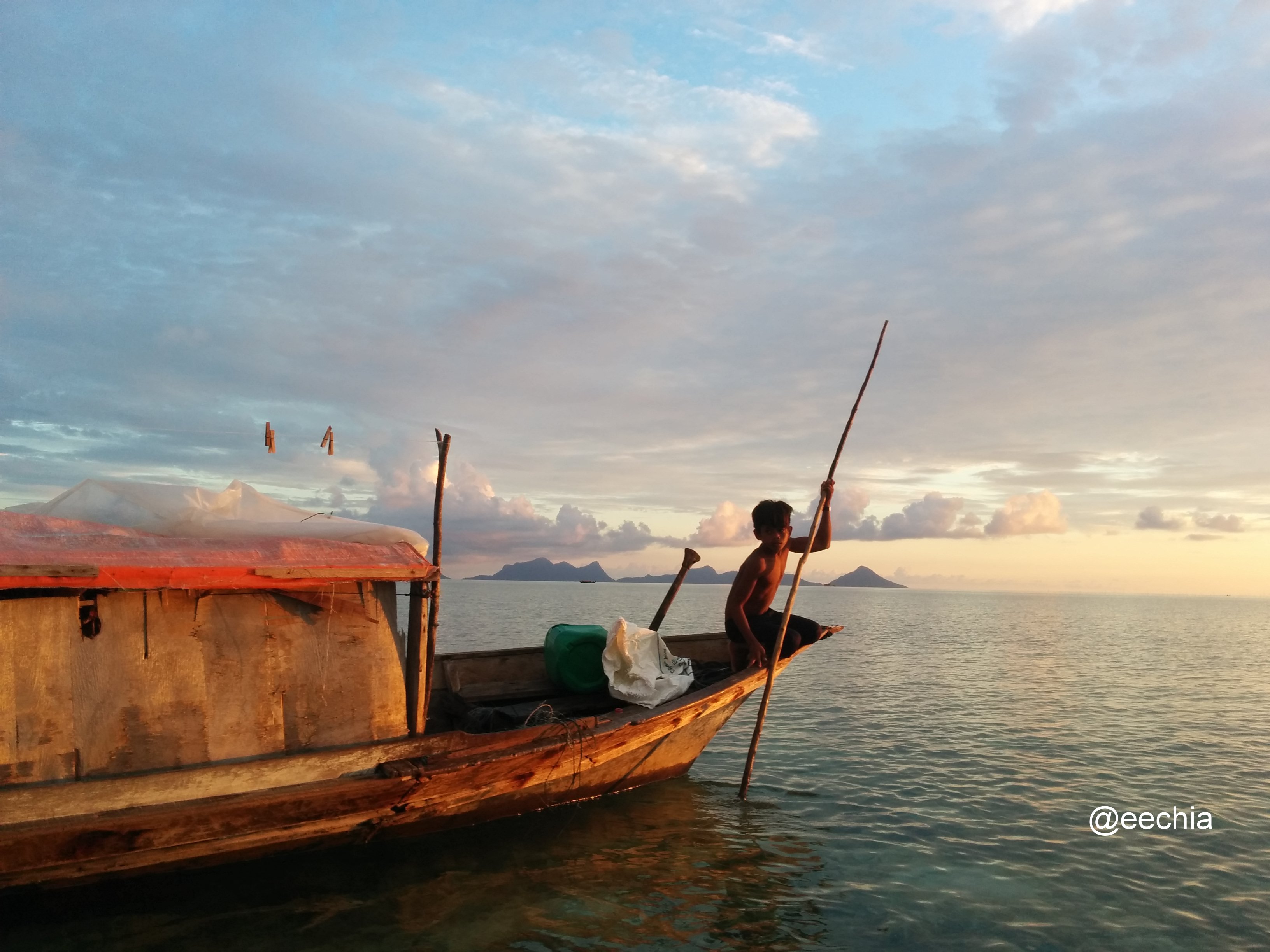
    As the sun sets on Omadal Island on the day before we leave, we realised that while the Semporna town has changed exponentially for the past 2 years, none of these developments has positively impacted the stateless community on Omadal Island.

  • Year 1 – The Experiment

    Year 1 has been a colourful year for Iskul. Here are some of the highlights:
    • Our Mastal Arikik divided the school to two classes: beginner and intermediate. They created school anthems and the students sing the anthem at the beginning of every class. Some students now can count from one to hundred, do simple addition and minus operation, read and write from A to Z. So far, they had a number of tests. The average class size is around 21-24 students. They are given homework after every class. And they also have ‘gotong-royong’ after their Sunday class to keep the beach clean. The Mastal Arikik also conducted extra classes during their school holiday in December 2015. (Aug,2015 – Sept 2016)


    • One of our Mastal Arikik was nominated as Unicef Young Changemaker 2015 that has garnered much attention to Iskul. As a result, the Trustee created an InfoKit for media, potential donors and Volunteer Tutors who wish to contribute to Iskul.


    • A video called Mastal Arikik were produced by WAPO and presented during a meeting with Datuk Masidi Manjun – Ministry of Tourism, Culture and Environment Sabah during the meeting he was surprised and proud of the Iskul initiative and the local kids for teaching the Bajau Laut friends. (Dec 2015)


    • For the first year, Iskul spent RM500 monthly to cover the four Mastal Arikik allowance (RM50) and the students food after every class. We have one monthly donor. We also received donations in form of workbooks, bags and toys.


    • The Trustee has ten online Board meetings and made four visits to Iskul from Aug 2015 – July 2016. We also welcomed a new member into the Board of Trustees, Shafiyyah on July 2016.


    • The Trustee made an assessment trip to Omadal on September 2017, and identified four gaps to be addressed:
      • lack of proper classrooms and it has affected our students attention during class
      • our MA has yet to master the teaching skill, they would need more trainings to teach better
      • lack of monitoring and supporting mechanism on the ground for our Headmistress, MA and students
      • lack of self-esteem and high-consciousness amongst students.


    • Iskul celebrated its one year anniversary and Awards Day on 20 September 2017 to celebrate the time and efforts our students, Mastal Arikik, Headmistress have invested in Iskul! We had invited our student’s parents to witness the historical moment when their child walks up to the stage to receive a certificate of enrollment from the Head of Omadal Hujung village.


    • To improve our MA’s teaching skills, our friend Cikgu Wai Yan guided them on how to prepare a Teaching Plan before class on 24 September 2016.


    • After one year, 71% of our students can write their own names while 57% can write A-Z based one a test result conducted in September 2016


    • On November 2016, Hui Ling attended YSEALI GO NGO on behalf of Iskul to seize the opportunity to introduce Iskul and its journey thus far to other participants while very much looking forward to receive their collective ideas on how to better improve Iskul because there is no one fits all solution. Indeed, Hui Ling returns with abundance of reflections and eager to bring the knowledge she obtained from speakers during the workshop which she proposed would be suitable for Iskul to consider or adapt.


    • The Board of Trustee (BoT) had a two-day Strategic Planning Meeting online in January 2017 to reevaluate, restructure and plan Iskul’s milestones for the next 12 months. One major change is the restructuring of the BoT as each member assessed our circumstances and commitments to Iskul. For now the BoT cease to exist and we are absorbed as the Iskul Management Team. For the purpose to increase accountability, transparency and legality, we have also registered an enterprise named Kahanga Enterprise where official account can be registered and bank statements can be audited in the future.


  • The First Annual Assessment Visit

    The Board of Trustee (Trustees) conducted our first annual assessment visit to Iskul Sama diLaut Omadal from 14 to 30 September. Hui Ling and I flew to Semporna to meet Adzmin and Shafiyyah at our own expenses. This 17-day trip provided us better understanding of Iskul’s classes, students, Mastal Arikiks (little teachers in Bajau) and the headmistress. As insightful as the trip may be, however, it was not without challenges.

    The first challenge was the security risk. Two days before our depature, news reported kidnapping of a fisherman off Semporna water. Our dive operator friends advised us against staying on the Omadal island. Interestingly, local islanders feel otherwise. Semporna town residents find it dangerous to travel to non-touristy islands i.e. Omadal but the islanders disagreed. Honestly, we were worried for many days, before and during the visit, especially on our trip to and fro Omadal. For security reasons, when in Omadal, we reported our presence to the General Operation Force’s (Pasukan Gerakan Am, PGA) base. We randomised our visits to the island and stayed a total of 10 nights. PGA advised us against roaming around when darkness sinks in. Overall, throughout the visit, we didn’t wander too far off the kampung areas. We find the island pleasant to visit especially to interact with Bajau Laut children as they gather in the evening to play. However, this security risk made it infeasible for outsiders like us to work in Omadal.

    Throughout our stay, we conducted (i) seven Focus Group Discussions of threes with most of our students, (ii)13 individual interviews with our students, little teachers and headmistress,(iii) two impromptu tests for both our students and little teachers and (iv) observations as ways to collect data to understand Iskul better. Hui Ling and myself also taught a few classes which helped us to understand why our little teachers splitted the students into smaller group for better management. It was a joy to see our students eagerness in learning and wanting more classes. They were proud of their new Iskul’s t-shirt and wore it for all classes. They also displayed a persistent spirit in completing all test questions despite not knowing the answer.

    Unfortunately, our in-class observation showed that our Mastal Arikiks are weak in teaching. Students were taught to memorise without understanding what they were learning. The class typically began with the little teachers writing on the board and students copied what was written. After about 45mins, the little teachers read out the words, but  always explaining what it means. Futhermore, their teaching methods and class control lack creativity and fun elements.

    The difference between the students’ eagerness in learning and the Mastal Arikiks’ lack of enthusiasm and teaching skills is apparent. Our little teachers had no teaching plans and repeated words taught previously. We were disappointed at this discovery. However, we understand that our Mastal Arikik are still young and they don’t have the capacity to teach like teachers. Their teaching methods possibly reflects how they learn in school (which indicates a greater problem in our national education system)! Hence, we invited a friend, Cikgu Wai Yan to guide our MA on how to prepare lessons before class.

    Nonetheless, a few students can read/write/recognise A-Z, 1-50, certain words, while the rest are still learning. Together with the Mastal Arikiks and headmistress, we reshuffled the classes according to the students’ level. As our fund was running low and to reevaluate our young teachers’ teaching motivation we resolved to remove their RM50 monthly allowance for the next six months from October 2016 to March 2017. As a result, two Mastal Arikiks who recently joined us quitted. They even discouraged other children from teaching in Iskul without allowance. Thankfully, our three founding Mastal Arikik decided to continue teaching despite no allowance.

    Another shocking discovery is our Mastal Arikiks’ poor school results. Their grade for Bahasa Malaysia and Mathematic are below 40 marks (fail). This shattered our initial assumption that our little teachers pass all their subjects in school.

    Hence, we refocus the project into two fold. Firstly, to provide basic literacy to the stateless Bajau Laut children. Secondly, to build capacity of rural students in Malaysia. We want to build young leaders within these two communities.

    Therefore the next one year, our focus will be:

    • To build the capacity of our young teachers so they can teach
    • To fundraise to build a structure for Iskul so that the children have a proper place to learn
    • To elevate the self-esteem of out students – to empower them to become assistant MA to teach their friends, and hopefully they can become MA later.
    • To hire a field coordinator to support the Mastal Arikik, students and headmistress as well as to become communicator between them and the Trustee and more


    The assessment trip was intense, we had so many ideas but we can’t implement them without being there. The funding coupled with the security issue made it hard for us to work in Omadal. Nonetheless, we are resolved to continue to support Iskul and to build leaders among the stateless and local communities in Semporna!

  • The Bajau Laut Community in Semporna at a Glance

    The Bajau Laut Community in Semporna at a Glance

    I first met Ginara in July 2013 when I was in Mabul Island in Sabah. She has one of the most captivating smiles I’ve seen. She was about 8-year-old. She came to us in her little sampan (boat), begging for food, money and clothes. Later I discovered that she’s a Bajau Laut girl. She and her family live in the boathouse about 5km from the guesthouse that I was staying.

    When I saw how Ginara, her parents and three siblings crammed into that small boathouse (lepa-lepa), I was intrigued. I decided to research more on the Bajau Laut people. I discovered that they are one of the last surviving sea nomads in the world. In Malaysia, they are stateless or undocumented and live on subsistence fishing.

    They are famously known as sea gypsies or sea nomads. They live in small family boats or lepa-lepa in the sea and rely on marine resources for living¹.

    In recent years, others have moved into stilted wooden houses on the sea. They still use the lepa-lepa as their primary transport. Both the lepa-lepa and house have no electricity and fresh water. They sell their catch to the local community, seafood restaurants, tourists and fish operators.

    They are also one of the small-scale suppliers of the luxurious Live Reef Fish Trade (LRFT) in Southeast Asia². They are poor and are often socially marginalised by the general public “for their nomadic seafaring way of life”³. They are called derogatory terms like pala’au or luwa’an, “meaning, literally, ‘that which is spat or vomited out’”⁴. Their average monthly fishing income is only enough to survive, insufficient for anything beyond necessities⁵.

    The area where they are living is where I was in Sabah. It is part of an area known as The Coral Triangle.

    The Coral Triangle has more marine species than anywhere else on the planet. It is known as the Amazon of the Sea. It also covers the water of five other countries. These countries are Indonesia, the Philippines, Papua New Guinea, Timor-Leste, and the Solomon Islands. The Coral Triangle is the global centre for marine biodiversity.

    Why are the sea-nomads in Sabah?

    Their history is complex and multifaceted.

    Some of the Bajau Laut sea nomad communities have inhabited the islands of Semporna before the formation of Malaysia.

    Others arrived after 1963. Some are the descendants of evacuees who fled the Sulu armed conflict. They escaped political instability in Southern Mindanao, the Philippines in the 1970s.

    These individuals sought refuge in Sabah. Back then the evacuees included other groups of people like the Suluk and Bajau.

    Malaysia was caught in a refugee crisis. As a result, the country received humanitarian support and financial aid. The support came from the United Nation High Commissioner for Refugees (UNHCR), the International Red Cross, and Saudi Arabia. The renowned diving island Pulau Mabul formerly known as the UN Island was used to settle the refugees.

    Now, despite the presence of resort and dive operators and tourists, Pulau Mabul is still inhabited by the refugees. They are a mix of Suluk, Bajau, and Bajau Laut. Many of them are undocumented. Hence they can neither be enrolled in school nor work legally in Semporna.

    Some of them have the IMM13 document issued by the Immigration. They can study in SK Pulau Mabul and work. But, many do not have such opportunities.

    Historically, the Bajau Laut community is part of the wider Sama-Bajau-speaking people living in Borneo, Sulu Archipelago and Eastern Indonesia. In Sabah, the latter consists of land-based and shore-based peoples⁶. The land-based people are commonly known as Bajau Darat can be found on the West Coast.

    On the East Coast, there are two different communities of shore-based people. One is the nomadic/semi-nomadic Bajau Laut, which is Ginara’s community. The other is the settled/mainland Bajau (Bajau). They are possibly also known as the Samals (Samales Laut), originated from Sulu⁷.

    Even though both groups speak a similar language, they are different culturally. The Bajau/Samals are Muslim while the Bajau Laut are pagan, and often assume a more inferior status. Scholars suspect that both descended from the same sea-roving ancestor, but the Samals would reject such hypothesis⁸. The Bajau identifies themselves according to their island of origin, e.g. Bajau Ubian, Bajau Simunul.

    Currently, there are two different groups of Bajau Laut in Semporna who describe themselves as Sama diLaut or a’a dilaut.

    One group has Malaysian citizenship while the other does not. The first group managed to register as citizens in 1963 during the formation of Malaysia and have are sedentarized. They mostly live in Kampung Bangau-Bangau, the first Bajau Laut settlement since the sixties.

    The second group are stateless who are still nomadic and semi-nomadic. Some of them have inhabited in the islands in Semporna before 1963 like Ginara’s grandparents.

    Others came after 1963, even during the Mindanao’s crises. Some of them live in marine parks. Others reside on islands surrounding TSMP, like Pulau Omadal and Pulau Mabul. Some live along the coast of Semporna town.

    Some people still live in their lepa-lepa, leading a nomadic lifestyle. They move around between these three places. Others have built their stilt houses, like Ginara’s parents.

    After my first meeting with Ginara in 2013 in Pulau Mabul, she has followed her parents to Pulau Omadal. She now attends Iskul Sama diLaut Omadal together with her other stateless friends.


    1. Sopher 1965; Sather 1997; Ali 2010
    2. Clifton & Majors 2012, 718; Teh el al. 2011, 457
    3. Saat 2001; Torres 2005, cited in Tel el al. 2011, 457; Clifton and Majors 2012, 717
    4. Kiefer, 1972a: 22; Sather, 1984: 12-13, 1993a: 30 cited in Sather 1997, 6
    5. Teh el al. 2011, 456; Clifton and Majors 2012, 717
    6. Sather 1997, Rahim, Osman and Dambul 2012
    7. Rahim, Osman and Dambul 2012, 29; Sopher 1965, 122
    8. Rahim, Osman and Dambul 2012, 29; Sopher 1965, 122

  • The Beginning of Iskul

    Semporna has many beautiful islands, endowed with turquoise water and pristine sand – look almost like heaven on earth. Yet if you walk around Semporna downtown, you will see many children running around barefooted, begging for money and food.

    A serene view of the coastline in Semporna, showcasing traditional boats and lush greenery against a backdrop of turquoise waters and a clear blue sky.

    Occasionally, you find a woman walking with them. These children mostly have hair with golden streaks. This results from the sea-water bleaching since young. They are the children of the subsistence Bajau Laut fishermen. Most of them have no national identity even though they are born here.

    In the 1970s, many parents fled the armed conflict and political instability in Southern Mindanao, the Philippines. They sought refuge in Sabah.

    The Bajau Laut are also known as subsistence fishermen and sea nomads. Some of them still live in their traditional wooden boat known as lepa-lepa. Others have moved into wooden stilted houses. Both the lepa-lepa and house have no electricity and fresh water.

    The Bajau Laut children are trapped in the inter-generational cycle of poverty. Having no Malaysian citizenship, the children are incapable of attending school (or even work).

    When they are not fishing with their parents, they are left roaming in the town, begging for food and money. In recent time, many of them have started the habit of glue-sniffing. It was said that children sniffed glue to escape the feeling of hunger.

    You asked the children what they feel when they sniff glue. They would tell you tales of an out-of-body experience. They feel a happiness that casts all their worries and humiliation away. They became addicts. These were my observations during my thesis fieldwork on the Bajau Laut community in Semporna.

    When I was in the Omadal island for my fieldwork, I was taken aback. I saw similar patterns with the Bajau Laut children there. They sniff glue. They hardly speak Malay. They were not capable of attending school.

    Once, I get to speak to the children through a little girl of Bajau Laut and Bajau parentage, Sakinas (Kinas). She became my translator as she can speak both Malay and Bajau. Through her, I asked the Bajau Laut children (mostly  her cousins and playmates) if they want to go to school. Many of them shook their head because they think they are not smart enough for school.

    Many feel shy and inferior to be in school as they have never been to one. I then asked if they would give it a try if Kinas teaches them instead of a schoolteacher. Their eyes brighten up and nodded their heads. I asked the 11-year-old Kinas if she’s willing to teach her friends on weekends and receives a small allowance. She nodded.

    The first meeting after the trial class.

    I quickly ran back to discuss with my host, Kak Roziah. She agreed to the idea. She introduced two more people: her 11-year-old son, Fazlan, and a 14-year-old teenager, Khairul, who can also be teachers.

    We promptly had a meeting. The three young teachers, Kinas, Khairul and Fazlan, agreed to a trial class (you can view the video here).

    During the trial class, they decided that they needed one more teacher to help, so they included a 14-year-old Syakila. That night, after the trial class, we had a meeting – the four young teachers, Kak Roziah and myself. The young teachers were all so excited and energised after their first teaching experience.

    I asked how did they feel, they replied “Best!” and indicated that they want to continue teaching. We discussed about the setup. The school name is Iskul Sama DiLaut Omadal (Iskul).

    We talked about its vision and the allowances. The allowances are not confirmed as they depend on donations. We also discussed the teaching plan, classes, and other details. Everyone spoke their minds and we recorded our decisions in the meeting minutes. They agreed to teach their Bajau Laut friends basic literacy, arithmetic and arts.

    The next day, I travelled to Semporna town with Khairul and Kak Roziah. We went there to get the necessary stationery. I also posted a plea for donation on my Facebook for Iskul! So, we finally started our first class 1 of August 2015!

    The formation of the Iskul would not be possible without the support of many friends. They donated in cash and in-kind to sustain its operation for one year.

    We created a Board of Trustees (Trustees) because Iskul was (and still is) not registered. The Board was formed to keep tabs on donation and expenses. It also supports and oversees the operation. The Trustees was formed in August 2015 when Adzmin and Hui Ling joined us.

    We meet bi-monthly to discuss Iskul progress. We disburse monthly allowance to the young teachers. They are also known as Mastal Arikik. This means Little Teacher in the Bajau language.

    The last one year has been a learning experience for the Board of Trustees. Personally, I observed the pivotal role of local knowledge. Local community participation also plays an essential role in the sustainability of the project. It is the ownership of the local community that spurs the project further.

    The Bajau Laut children also taught me an important lesson. According respect and dignity to the recipients of aid unlock the potential they have. I have not seen any group of children who are so eager to learn as these stateless children of Omadal. I’m ever grateful for this experience.

    To find out about the highlights of our first year, read Year 1 – The Experiment