Category: Uncategorized

  • Protect Malaysian Children from Statelessness, Help Shima Get Her Rightful Citizenship

    Protect Malaysian Children from Statelessness, Help Shima Get Her Rightful Citizenship

    “Cikgu Shima!” a young girl cries for help, hobbling over on an injured foot. The girl is a stateless Bajau Laut child, who had stepped on a shell and cut herself. Like all the other kids, she knew to immediately come to Iskul for medical assistance, and to look for Shima. Calmly, Shima washed the wound, medicated it, and covered it up in a band aid – this has become routine for her.

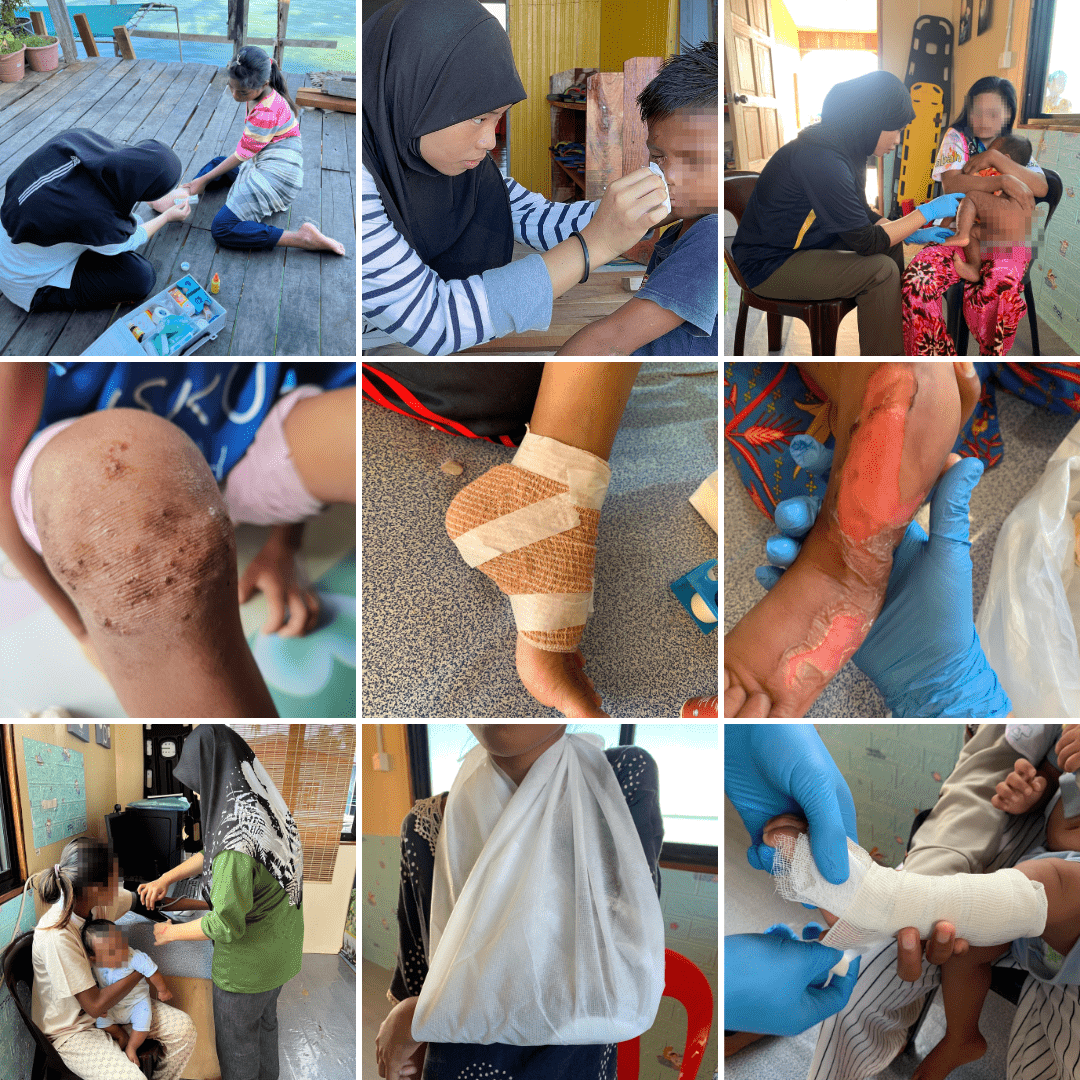
    This story is just one of a hundred; Shima gets calls by grown-ups and children alike every day on Omadal, looking for medical help. In addition to her job teaching the stateless Bajau Laut children at Iskul Sama diLaut Omadal (Iskul), she  also serves as coordinator and Community Health Helper to Iskul’s Community Health Centre. Beyond providing first aid, Shima administers basic medication for fever, headache, flu, scabies, boils, diarrhea, cough, toothache and more, to patients of all ages including infants. She underwent two weeks of basic medical training at a clinic in Semporna, along  with three other community members. She is now the backbone of our Community Health Center, where since July 2022, more than 536 cases have been seen, out of a population of over 1000 people on Pulau Omadal.
    Shima at work and the kind of cases she treats.

    Photos: Shima at work and the kind of cases she treats

    Shima is 18 years old this year. Being a Community Health Helper is the closest that she can get to her dream of becoming a doctor or a nurse. She has given up hope of ever studying further in medical school. It is a disappointment, but a fact that she, like many in her community, has had to accept.

    Despite being born to a Malaysian father, Shima has yet to be recognized as a Malaysian citizen. In other words, she is stateless, no matter that her father is Malaysian and her birth certificate lists her as a warganegara (citizen). Because of this, she was allowed to attend the primary school in Semporna—but when it was time for secondary school, she could not register without an IC (identity card), which she cannot obtain.

    Her mother is undocumented, and her parents are married only a religious ceremony. In Malaysia, it is not possible to register a marriage with an undocumented or stateless person, despite how common this occurrence is in Sabah. As a result, all children born from these marriages are considered illegitimate, due to the fact that men cannot pass on their citizenship to children born out of legal “wedlock”. Malaysia is one of only two countries in the world that discriminate in this way against men passing their citizenship to their children born out of wedlock.[1][2]

    In theory, Shima can apply for citizenship under Article 15(A) of the Constitution. However, to do so, she would need to update her birth certificate. If and when she attempted to update it, her birth certificate’s status would be changed to Bukan Warganegara (Not a Citizen), as happened with her elder brother. He was then asked to apply for MyKAS or Kad Pengenalan Sementara (Temporary Identity Card). Why is a child of a Malaysian father being asked to apply for MyKAS instead of citizenship by the Jabatan Pendaftaran Negara (JPN)? 

    Shima had requested to update her birth certificate with JPN in September 2022, when she was 16 years old. Now, two years later, she is still waiting for the call.

    Shima will turn 19 next year, and it is unlikely her birth certificate will be updated by the end of this year. Even if it were, she would NOT be able to apply for citizenship in time, under 15(A) if the current proposed Citizenship Amendment is passed in parliament this October. The current Constitution allows stateless children and youth up to the age of 21  to apply for citizenship, but the Citizenship Amendment proposes to reduce the age from 21 to 18. If that happens, Shima will miss her rightful pathway to citizenship. What would happen to her then?

    This means  she would continue living in fear of being questioned by the authorities: “Do you have any documents?”. This is a common question asked by police whenever they see anyone who looks disheveled on the streets of Semporna. She would keep living as “the other”, one of those without documents, discriminated against simply for not having proper identifications.

    She would not be able to live freely or go wherever she wants, instead, being confined to one place for the rest of her life. There would be no way for her to further her education or fulfill her dreams. Dreams? What dream? She would be forced to stay silent when wronged by others, even though it is not her fault, because how can an undocumented or stateless person stand up for themselves? At best, they face the threat of being reported to the police.

    Does she dare to fall in love and start a family? No, because she does not want her future children to be stateless and suffer like her. This cycle of statelessness will never end if the government does not resolve its systemic causes and continues to aggravate the problem (like the proposed regressive amendments in the Citizenship Bill).

    It is imperative that the government addresses these key areas:

    1. Marriage Recognition: Allow the registration of marriages between Malaysians and stateless individuals to ensure that children can inherit citizenship from their Malaysian fathers.
    2. Equal Rights for Fathers: Eliminate discriminatory laws that prevent unmarried fathers from passing citizenship to their children.
    3. Protect Citizenship Rights: Maintain the current age limit of 21 for applying for citizenship under Article 15(A) to avoid further discrimination against stateless youth. Decouple the 3 regressive Citizenship Amendments. 
    4. Amend Article 14: Allow equal rights to Malaysian mothers for their children born overseas.

    There are too many Shimas in Sabah. We cannot allow these bright, incredible youths to be trapped by statelessness forever by passing the regressive amendments in the Citizenship Bill, and creating more stories like Shimas’ in the process.

    [1] https://www.equalnationalityrights.org/the-problem/ ( Barbados, Malaysia)

    [2] Press Statement from The Office of the Attorney General that children born out of wedlock to Bahamian fathers and foreign mothers are citizens of the Bahamas.

    Chuah Ee Chia could not unsee the harm that statelessness brings to children born to Malaysian fathers with undocumented/stateless persons, and children from the indigenous maritime community in Sabah. She hopes that the Home Ministry will decouple the 3 regressive amendments from Citizenship Amendments and address the systemic statelessness crisis in Sabah.
  • Solidarity with the Bajau Laut community

    Solidarity with the Bajau Laut community

    We stand in solidarity with the stateless Bajau Laut community, whose homes and boats on small islands in Sabah have been demolished. We are deeply concerned for the vulnerable children, women, and men left without shelter and food.

    We recognise the Bajau Laut’s long-standing presence in the Sulu and Sulawesi Seas as sea nomads. Their ancestors have roamed these waters for generations, practicing subsistence fishing, collecting sea products and contributing to the local economy.

    Historical records, such as those of Spenser St John and Verschuer in 1862, document encounters with nomadic Bajaus in the north and northeast coast of Borneo (Sabah) (i). Similarly, 19th-century accounts by Crawfurd mention nomadic Bajaus visiting all parts of North Borneo (present day Sabah), including areas around the Malawali and surrounding islands in Sabah (ii)

    These historical ties extend to the Sulu and Celebes regions, with the Bajau Laut found near offshore islands like Bum-Bum and Pulau Mabul in Sabah (iii) (iv). Notably, Dewall’s 1849 report documented seasonal movements of Bajau boats over significant distances, highlighting their mobility (iii). This aligns with earlier accounts by Captain Thomas Forrest in 1774. During his voyage along the eastern Borneo coast, he met a group of maritime nomads he called ‘Badjoo’ described as ‘a kind of itinerant fishermen’ living on boats. He also documented their presence in Sulawesi and Sulu, further solidifying their historical presence across the region (v).

    In light of this urgent situation, we plead with the authorities to establish a special task force focused on the Bajau Laut community. This task force should address the following objectives:

    • Conduct a comprehensive historical study on the Bajau Laut community in the region (to provide context for the situation)
    • Initiate discussions with the Philippines and Indonesia to develop a collaborative approach to safeguard and protect the Bajau Laut as the indigenous people of the Sulu and Sulawesi Seas. (This is a shared heritage between the 3 countries hence collaborative efforts are imminent)
    • Organise stakeholder consultations with the affected communities, facilitated by relevant NGOs working in the ground.(This ensures the voices of those directly impacted are heard.)

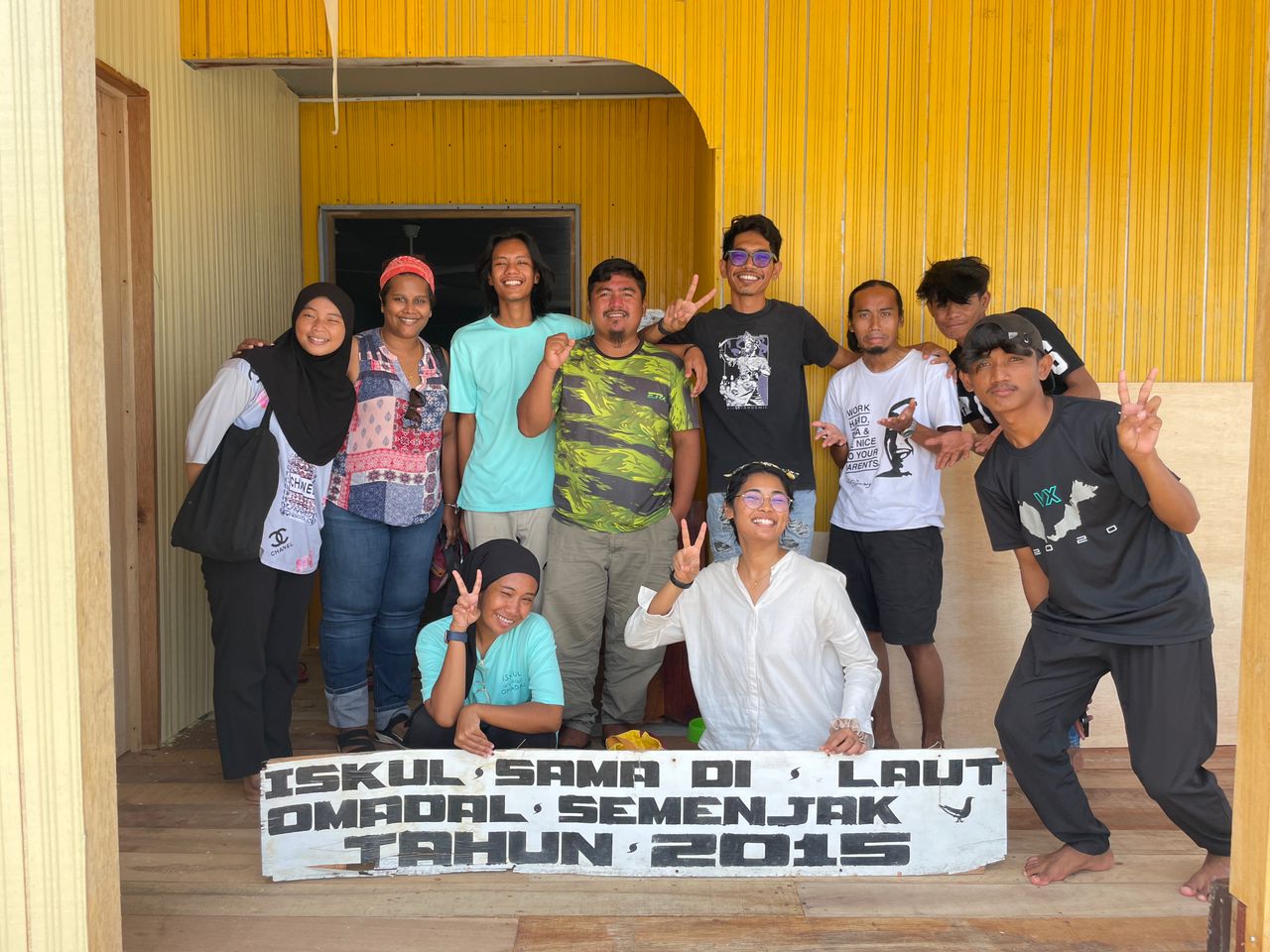
    Iskul Sama diLaut Omadal

    6 June 2024

    References:

    (i) The few nomadic Bajau’s encountered by Spenser St. John and by Verschuer (St. John, 1862, v. 2, pp. 231-2, Verschuer, 1883, p. 4), in sheltered bays on the north and northeast coast of Borneo reacted to their approach with characteristic apprehension, trying to conceal themselves in the mangrove creeks, and on one occasion taking to the woods and abandoning their boats. (The Sea Nomad, Sopher, 1965 pg 116)

    (ii) “During the nineteenth century, nomadic Bajaus probably visited all parts of the North Borneo coast at one time or another. Crawfurd, for example, says that some of the boat population of Brunei consisted of “nomadic Bajau Malays” (Crawfurd, 1856, p. 69). However, the chief collecting grounds and resting places of the sea nomads were and still are the offshore islands. In 1938, Balambangan and Banggi Islands, north of Marudu Bay, were inhabited by a few sedentary Bajau or Orang Sarna fishermen, while the nomadic Bajaus were to be found chiefly around Malawali and the smaller islands to the south” (The Sea Nomad, Sopher, 1965 pg 118-119)

    (iii) “On the east coast of Borneo, nomadic Bajaus having ties with the Sulu groups as well as the Celebes groups, and particularly with Makas­sar, were found, principally in the vicinity of the small reef-fringed off­shore islands, like Bum-Bum and Pulau Mabul opposite Simporna in North Borneo, Bunyu near the mouths of the Sembakung and Sesayap, Pulau Panjang opposite the town of Tanjung Batu, the small island of Buaya-Buaya off Batu Putih, and some distance out to sea, the Maratua and Sambit clusters. In 1849, Dewall reported a seasonal move­ment of one group of Bajau boats from the islands near Simporna to the Tanjung Batu area, a distance of 150 miles. In addition there was a local group making this area near the delta of the Kelai their base, sup­plying the local ruler with tripang and dried fish in return for cloth and rice (Dewall, 1855, p. 446)”.(The Sea Nomad, Sopher, 1965 pg 118-119)

    (iv)“Based on the history, the story on the Bajau people living in boats along Sabah coast (Sulu Sea) has existed since the Sulu Sultanate era.” (“Since Birth Till Death, What is Their Status: A Case Study of the Sea Bajau in Pulau Mabul, Semporna” Ismail Ali, Pg 158)

    (v) “In Borneo, early use of ‘Bajau’ appears in English in the writing of Captain Thomas Forrest, who, in 1774, sailed along the eastern Borneo coast, from Balambangan at the northern tip of present-day Sabah, to the islands east of Sulawesi. At points along the east coast of Borneo, Forrest met with groups of maritime nomads whom he called ‘Badjoo’ and described as ‘a kind of itinerant fishermen’ who ‘live chiefly in small covered boats’ (Forrest, 1780; 372). Later, he encountered additional ‘Badjoo’ in Sulawesi, and again in Sulu on a subsequent voyage from” (The Bajau Laut: Adaptation, history, and fate in a maritime fishing society of south-eastern Sabah.​ Kuala Lumpur : Oxford University Press. Clifford Sather. 1997, Pg 6)

    Kami berdiri dalam solidariti bersama komuniti Bajau Laut, yang rumah dan bot mereka di pulau-pulau kecil di Sabah telah dirobohkan dan dimusnahkan. Kami sangat prihatin terhadap kanak-kanak, wanita, dan lelaki yang rentan, yang kini tidak mempunyai tempat tinggal dan keperluan makanan.

    Kami mengakui kehadiran lama Bajau Laut di Lautan Sulu dan Sulawesi sebagai nomad laut. Nenek moyang mereka telah mengembara di perairan ini selama beberapa generasi, menjalankan aktiviti perikanan subsisten, mengumpul hasil laut dan menyumbang kepada ekonomi tempatan.

    Rekod sejarah, seperti yang didokumentasikan oleh Spenser St John dan Verschuer pada tahun 1862, mencatatkan pertemuan dengan Bajau nomad di pantai utara dan timur laut Borneo (Sabah) (i). Begitu juga, catatan abad ke-19 oleh Crawfurd menyebutkan Bajau nomad yang melawat semua bahagian Borneo Utara (Sabah masa kini), termasuk kawasan sekitar Malawali dan pulau-pulau sekitar di Sabah (ii).

    Ikatan sejarah ini meluas ke kawasan Sulu dan Celebes, dengan Bajau Laut ditemui berhampiran pulau-pulau luar pesisir seperti Pulau Bum-Bum dan Pulau Mabul di Sabah (iii) (iv). Secara khusus, laporan Dewall pada tahun 1849 mendokumentasikan pergerakan bermusim bot Bajau meliputi jarak yang jauh, menunjukkan mobiliti mereka (iii). Ini selaras dengan catatan awal oleh Kapten Thomas Forrest pada tahun 1774. Semasa pelayarannya di sepanjang pantai timur Borneo, beliau bertemu sekumpulan nomad maritim yang dipanggilnya “Badjoo,” yang digambarkan sebagai “sejenis nelayan pengembara” yang tinggal di atas bot. Beliau juga mendokumentasikan kehadiran mereka di Laut Sulawesi dan Sulu, mengukuhkan lagi kehadiran sejarah mereka di seluruh rantau ini (v).

    Berikutan situasi mendesak ini, kami merayu kepada pihak berkuasa untuk menubuhkan satu jawatankuasa khas yang memberi tumpuan kepada komuniti Bajau Laut dengan 3 objektif berikut:

    1.Melakukan kajian sejarah yang komprehensif mengenai komuniti Bajau Laut di rantau ini (untuk memberikan konteks kepada situasi ini)

    2.Memulakan perbincangan dengan Filipina dan Indonesia untuk membangunkan pendekatan kerjasama bagi melindungi dan melindungi Bajau Laut sebagai orang asli Laut Sulu dan Sulawesi. (Ini adalah warisan bersama antara 3 negara maka usaha kerjasama adalah penting)

    3.Menganjurkan rundingan dengan pihak berkepentingan dari komuniti yang terjejas, dengan bantuan NGO yang relevan yang bekerja di lapangan.(Ini memastikan suara mereka yang terjejas secara langsung didengar.)

    Rujukan:

    (i) The few nomadic Bajaus encountered by Spenser St. John and by Verschuer (St. John, 1862, v. 2, pp. 231-2, Verschuer, 1883, p. 4), in sheltered bays on the north and northeast coast of Borneo reacted to their approach with characteristic apprehension, trying to conceal themselves in the mangrove creeks, and on one occasion taking to the woods and abandoning their boats. (The Sea Nomad, Sopher, 1965 pg 116)

    (ii) “During the nineteenth century, nomadic Bajaus probably visited all parts of the North Borneo coast at one time or another. Crawfurd, for example, says that some of the boat population of Brunei consisted of “nomadic Bajau Malays” (Crawfurd, 1856, p. 69). However, the chief collecting grounds and resting places of the sea nomads were and still are the offshore islands. In 1938, Balambangan and Banggi Islands, north of Marudu Bay, were inhabited by a few sedentary Bajau or Orang Sarna fishermen, while the nomadic Bajaus were to be found chiefly around Malawali and the smaller islands to the south” (The Sea Nomad, Sopher, 1965 pg 118-119)

    (iii) “On the east coast of Borneo, nomadic Bajaus having ties with the Sulu groups as well as the Celebes groups, and particularly with Makas­sar, were found, principally in the vicinity of the small reef-fringed off­shore islands, like Bum-Bum and Pulau Mabul opposite Simporna in North Borneo, Bunyu near the mouths of the Sembakung and Sesayap, Pulau Panjang opposite the town of Tanjung Batu, the small island of Buaya-Buaya off Batu Putih, and some distance out to sea, the Maratua and Sambit clusters. In 1849, Dewall reported a seasonal move­ment of one group of Bajau boats from the islands near Simporna to the Tanjung Batu area, a distance of 150 miles. In addition there was a local group making this area near the delta of the Kelai their base, sup­plying the local ruler with tripang and dried fish in return for cloth and rice (Dewall, 1855, p. 446)”.(The Sea Nomad, Sopher, 1965 pg 118-119)

    (iv)“Based on the history, the story on the Bajau people living in boats along Sabah coast (Sulu Sea) has existed since the Sulu Sultanate era.” (“Since Birth Till Death, What is Their Status: A Case Study of the Sea Bajau in Pulau Mabul, Semporna” Ismail Ali, Pg 158)

    (v) “In Borneo, early use of ‘Bajau’ appears in English in the writing of Captain Thomas Forrest, who, in 1774, sailed along the eastern Borneo coast, from Balambangan at the northern tip of present-day Sabah, to the islands east of Sulawesi. At points along the east coast of Borneo, Forrest met with groups of maritime nomads whom he called ‘Badjoo’ and described as ‘a kind of itinerant fishermen’ who ‘live chiefly in small covered boats’ (Forrest, 1780; 372). Later, he encountered additional ‘Badjoo’ in Sulawesi, and again in Sulu on a subsequent voyage from” (The Bajau Laut: Adaptation, history, and fate in a maritime fishing society of south-eastern Sabah.​ Kuala Lumpur : Oxford University Press. Clifford Sather. 1997, Pg 6)

  • Our Co-Founder Khairul Was Nominated For An Award By Unicef!

    It has been several years since Khairul was nominated for this award, but his work with Iskul still makes a huge difference in the lives of the stateless children on Omadal.

    Khairul is Iskul’s co-founder and pioneer Mastal Arikik, which means he was one of the first to actually teach the younger studens, forming the basis for our educational structure at Iskul. Not many young boys want to spend their free time after school teaching others, but he picked up the role and continues to advocate for his community till today. He conducted the first trial class at 14, and committed to teaching on weekends. 

    After SPM, he stepped up as the Field Coordinator trainee. His background and experience provides insight to the Malaysian and stateless communities of Omadal Island.

    He began training as the Field Coordinator in 2020, and is now in charge of Iskul’s meals, organising activities, key liaison with orang Kampung and external parties, and documenting Iskul’s activities.

    Watch the video on his nomination below!

    “Born in Pulau Omadal, Sabah, 15 year-old Mohd Khairul Bin Atim spends his free time making sure that the Bajau Laut children in his village are able to read and write. He is one of 10 finalists of the inaugural Tuanku Bainun Young Changemakers Awards 2015.”