Building Sustainable Practices
Nutrition Outcomes – 2020/2021
We aim to increase the children’s nutritional intake by supplementing them with 1 balanced meal 5 days a week.
Their daily staple consists of tapioca/rice and any catch of the day. We provided meals to 3 groups of people. These include 30 Iskul children, 6 graduate students, and 9 students’ siblings.
This began in July 2022. Under the YHSG 2020, we hired 2 cooks to prepare the daily RM4 meals for our children.
Every two weeks, Iskul’s coordinator travels to Semporna town to buy the ingredients. Every week, we would buy fish from the local fishermen for our menu.
Our menu includes carbohydrates, protein, vegetables and fruits. At the beginning of the program, all children’s BMI readings were underweight.
All 30 students showed significant weight gain by mid-September 2021. 25 students’ BMIs have grown since joining our meals program in July 2020.
Even though 83.3% of the students have improved BMI rates, their BMI readings still fall in the underweight category.
For the 6 graduate students who participated in the meals program, 60% showed an increase in weight. For the 9 students’ siblings who participated in our meals program, 56% (5) have gained weight. 33% (3) lost weight. 10% (1) didn’t gain nor lose weight.
Hygiene Programme
We launched our hygiene program in August 2020. At this time, our 30 students began their morning routine of brushing their teeth before class. Pre-program, at least 5 students reported toothache and bleeding gum problems.
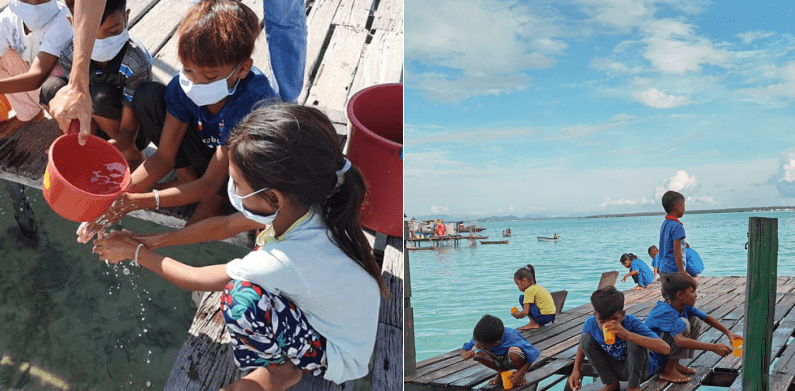
By September 2021, we saw a great improvement in their oral hygiene. Only 2 students reported toothache. None complained about bleeding gums. Students were also taught to wash their hands and wear face masks as a Covid-19 prevention method.
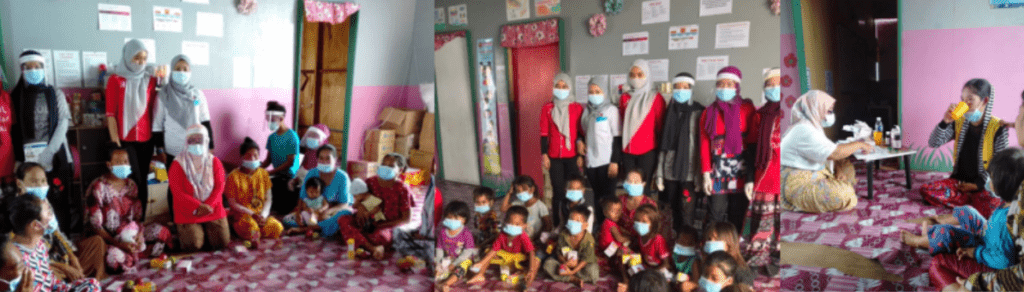
We held two workshops on the 18 and 25 July 2020. Jefry Musa conducted the workshop on the 18, sponsored by the YHSG 2020 and Semporna Aid Team. Mercy and Unicef conducted the workshop on the 25. Students were given masks, hand sanitizer, and soap. They were taught the correct techniques of use.
Supplements For Mother And Child’s Health
Most of the stateless women in Omadal do not carry out routine pregnancy checks and they labour at home. Their newborns are unvaccinated.
The main reasons are high medical cost and little exposure and fear of modern medication. Maternal and newborn deaths are not uncommon amongst the community though there is no official data. Hence, we jump-started simple mother and children health programmes.
We provided Obimin supplements to 20 expecting and new mothers. We also provided multivitamins to 30 children below 6 years old. We hope to supply nutrients to the unborn children.
Proper nutrition is essential for a child’s early year development. We worked with nurses and doctor Leong from Klinik Warisan Semporna.
To start, we teamed up with the nurses to conduct an information session for our women and children participants. They learned about the importance of nutrition to children’s growth and development. They also learn about the safe and appropriate way to consume the supplement.
For the first month, we distributed the supplement daily and monitored their progress. A few pregnant mothers reported headache and stomachache, So, we changed their supplement to Zincofer. As for the children, all of them enjoyed the multivitamins.
This program has given us insight into the vulnerability of the stateless Bajau Laut community. We noticed how sudden deaths are prevalent and unrecorded.
By June 2021, there were 3 births. Sadly, one infant passed away one day after the birth. This is about 33% of the infant survival rate from our observation. Furthermore, one child from our multivitamin program died suddenly after a fever. These deaths might be avoided if they received early and proper medical treatment.