Author: Iskul

  • Apa yang telah kita belajar daripada Covid-19

    Apa yang telah kita belajar daripada Covid-19

    Enam bulan sudah berlalu sejak kita mula berhadapan dengan krisis pandemik Covid-19. Ini bermakna setengah daripada tahun 2020 kita menjalani hidup yang penuh dengan rasa ketakutan, ketidaktentuan, misteri dan keliru. Tiada seorang pun di dunia hari ini boleh menjangkakan apa yang akan terjadi pada hari-hari yang mendatang. Ternyata manusia masih naif dan miskin pengetahuan untuk melakukan perancangan, jauh daripada gambaran masyarakat modenisasi yang kita banggakan itu.

    Ketika tulisan ini di tulis, jumlah korban disebabkan oleh wabak Covid-19 telah mencecah hampir 380 ribu orang. Sehingga kini masih tiada vaksin bagi wabak ini dan menurut Prof Shi Zhengli, ahli virologi, virus yang sudah dikenalpasti hanyalah “just the tip of the iceberg”, masih banyak virus-virus yang belum diketahui dan dicerap oleh manusia hari ini. Ketidaktentuan ini menyebabkan ikhtiar terakhir untuk menyelamatkan nyawa hanyalah dengan melaksanakan langkah-langkah pencegahan daripada dijangkiti.

    Kredit foto: ANAK

    Manusia mula menjalani kehidupan dengan norma-norma yang baru seperti menjaga jarak, limitasi pergerakan, menjaga kebersihan, bekerja daripada rumah, berkomunikasi di atas talian dan banyak lagi. Dunia yang dulu kelihatan sangat cepat membangun dan luas kini terasa pelahan dan sempit. Wujud juga kepercayaan bahawa dunia sedang pulih daripada pencemaran-pencemaran disebabkan oleh langkah ‘permaksaan’ norma-norma yang baru ini seperti pembentukan kembali lapisan ozon, penurunan kepanasan global dan lain-lain lagi.

    Adakah benar dunia semakin baik?

    Foto: Penulis bersama tenaga pengajar dan pengurusan Iskul.

    Saya menetap di pedalaman kepulauan di Sabah, mengajar anak-anak tiada dokumen. Bagi komuniti pedalaman ketakutan kami terhadap wabak ini tidaklah menjadi sesuatu yang merungsingkan disebabkan komuniti ini tidak terlalu terdedah dengan komunikasi atau berhubungan dengan orang-orang luar. Malah kepulauan ini juga bukanlah merupakan destinasi pelancongan yang sering menerima kunjungan pelancong.

    Maka ketika wabak ini mula merebak dan berlaku panik di beberapa tempat, kehidupan kami disini masih stabil. Perlu juga diingatkan bahawa stabil disini bukanlah bermakna kehidupan yang senang lenang, tanpa berlaku krisis pandemik ini, mereka tetap di dalam kategori miskin tegar. Stabil disini bermaksud mereka masih boleh menjalankan aktiviti harian dan ekonomi mereka seperti sedia kala. Kesan pertama yang dirasai oleh saya adalah ketika kerajaan pusat mula melaksanakan Perintah Kawalan Pergerakan, aktiviti pembelajaran ketika itu harus dihentikan menyebabkan dengan berat hati saya perlu mematuhi perintah ini.

    Foto: Pelajar-pelajar menunjukkan hasil lukisan mereka

    Menjadi warga pendidik di pedalaman atau komuniti terpinggir bukanlah sahaja mempunyai akses yang terhad, juga suasana yang berbeza yang tidak ramai dapat fahami. Sekolah adalah pusat untuk pelajar-pelajar mendapat sebarang informasi, pengetahuan dan ruang yang selesa dan selamat. Menutup sekolah seperti menutup pintu bagi pelajar-pelajar berhubung dengan dunia. Menutup sekolah dengan lama juga menyebabkan kesedaran akan pendidikan di dalam komuniti sukar untuk dipupuk disebabkan sekolah tidak lagi dapat berfungsi dan hidup bersama-sama komuniti.

    Kesan kedua yang saya rasai apabila kerajaan menyambung perintah kawalan untuk fasa kedua, pelajar kerap datang ke rumah saya dalam keadaan yang lapar sehingga saya perlu sediakan makanan. Suasana ini adalah suasana yang baru, tidak terjadi pada hari-hari sebelum ini. Maka ketika itu saya mula ke rumah-rumah membuat sedikit kunjungan dan pemerhatian untuk memahami apa yang terjadi. Saya mendapati komuniti dalam keadaan terkejut dan tidak stabil kerana mereka tidak faham apa yang terjadi dan kawalan pergerakan menyebabkan sumber pendapatan utama mereka daripada aktiviti menjual beli hasil laut tidak dapat dijalankan apabila pekan Semporna lumpuh dan tidak dapat berfungsi. Ada diantara mereka mencuba nasib berlayar ke pekan-pekan berhampiran seperti Tawau, Kunak dan Lahad Datu untuk menjual hasil laut namun tetap tiada pembeli dan pemborong yang mahu. Mereka juga tidak layak menerima sebarang bantuan daripada inisiatif-inisiati kerajaan dalam membantu warga menghadapi krisis ini.

    Foto: Penulis membuat kunjungan ke rumah-rumah komuniti

    Kesan ketiga yang saya dapat rasa adalah peningkatan kos terutamanya kos pengangkutan untuk kami yang tinggal di pedalaman. Disebabkan berlaku limitasi penumpang, waktu dan kekurangan orang yang dibenarkan untuk keluar daripada rumah, pengusaha-pengusaha bot, bas dan kereta sewa menaikkan caj sehingga tiga kali ganda daripada harga biasa. Kesempitan hidup ditambah lagi dengan peningkatan kos menyebabkan komuniti disini hampir lumpuh dan sehingga kini mereka masih terkesan dengan krisis ini. Walaupun perintah kawalan mula dilonggarkan namun pemborong membeli hasil laut dengan harga yang murah dan masih tidak berani untuk mengambil risiko peniagaan memandangkan kuasa membeli masih rendah.

    Foto: Iskul mengedarkan bekalan bantuan kepada komuniti di Pulau Omadal

    Menyedari keadaan semakin mendesak dan tiada apa-apa sokongan atau bantuan kepada komuniti ini, Iskul dengan kapasiti yang ada cuba untuk memberi bantuan jangka pendek kepada mereka dengan mengagihkan bekalan asas dapur. Bermula daripada April 2020, kami berjaya mendapat kebenaran dan membawa bekalan dapur masuk ke Pulau Omadal. Dalam masa satu bulan kami berjaya mengagihkan bekalan dapur kepada 150 buah rumah yang memerlukan dan bekalan sampingan kepada lebih daripada 200 buah rumah sekitar Pulau Omadal. Kepada pelajar-pelajar kami yang memerlukan, kami memberi bekalan dapur secara mingguan.


    Melihat pada kesan-kesan ini saya tidak nampak ada ruang untuk saya percaya bahawa dunia semakin bertambah baik. Dianggarkan hampir 26 juta orang yang kehilangan pekerjaan disebabkan oleh krisis ini. Ada yang percaya bahawa kini kita semua berada di dalam satu sampan yang sama. Saya juga tidak percaya pada itu, benar kita semua sekarang hanyut diatas laut yang berisiko namun tidak semua yang hanyut di dalam sampan, ada yang hanyut diatas Yacht, ada yang hanyut diatas rakit, ada yang hanyut diatas kapal, ada yang hanyut diatas perahu. Sejak bulan Mac sehingga kini, dianggarkan kekayaan billioner di dunia meningkat sebanyak $308 billion. Jelas dunia tidak bertambah baik dan kita bukan diatas sampan yang sama.

    Terima kasih.

    Jefry Musa, Guru Iskul Sama DiLaut Omadal
  • Students’ Progress Evaluation (2015-2018)

    3 January 2020

    We analysed the progress and impact of the 16 students who have joined Iskul since the inception for 3 consecutive years from 2015-2018. The 16 students were given Test 1 on Sept 2016, Test 2 eight months after, followed by Test 3, a year later (March 2018). Assumptions made for this analysis are:

    • There were a minimum of 2 hours per class, 2 classes per week
    • Students’ attendance is at an average of 70% 

    Using these assumptions and data, according to national school days (5 hours/class, 5 days/week), they attended about 70 days or 14 weeks (less than 4 months) of school over the past three years.

    Overall, we are pleased with the result considering that the actual time our 16 students spent on a normal schooling period is just less than 4 months. Based on our observation, Iskul students have mastered basic numeracy, however, they are still mostly weak in the Bahasa Malaysia language, although most of them have no problem understanding and engage in basic conversation in Bahasa Malaysia. The greatest outcome is that two of our students from this test have now become Mastal Arikik (MA) to teach the new batch of students.

    From the result, we noticed the shift in students’ progress when we provide teaching camps to our MAs to improve their teaching quality and when we find SPM graduates to teach. We also like to note that the involvement of our Headmistress in teaching demonstrated that students learned faster. 

    In a nutshell, we found that MAs with better results can teach better and have better skills in transferring knowledge to the students, although it is not as efficient as having an adult/qualified teacher to conduct the teaching. 

    Moving forward, Iskul aims to:

    • focus on language mastery
    • consult a language (BM) teacher
    • create a learning-enabled environment
    • employ an adult teacher

    Iskul feels strongly that if the children do not continue practising what they learned, they will forget as time passes and it would be a waste. Therefore, for the graduating students, Iskul hopes to create programme(s) to encourage the students to continue learning and contribute to Iskul long-term. 

    The analysis’ results are divided into three parts:

    • Result 1: The basic evaluation criteria used during Test 1 for all three tests
    • Result 2: Further evaluation on Mathematics in Test 3
    • Result 3: Further evaluation on Bahasa Malaysia in Test 3

    Result 1: The basic evaluation criteria used during Test 1 for all three tests

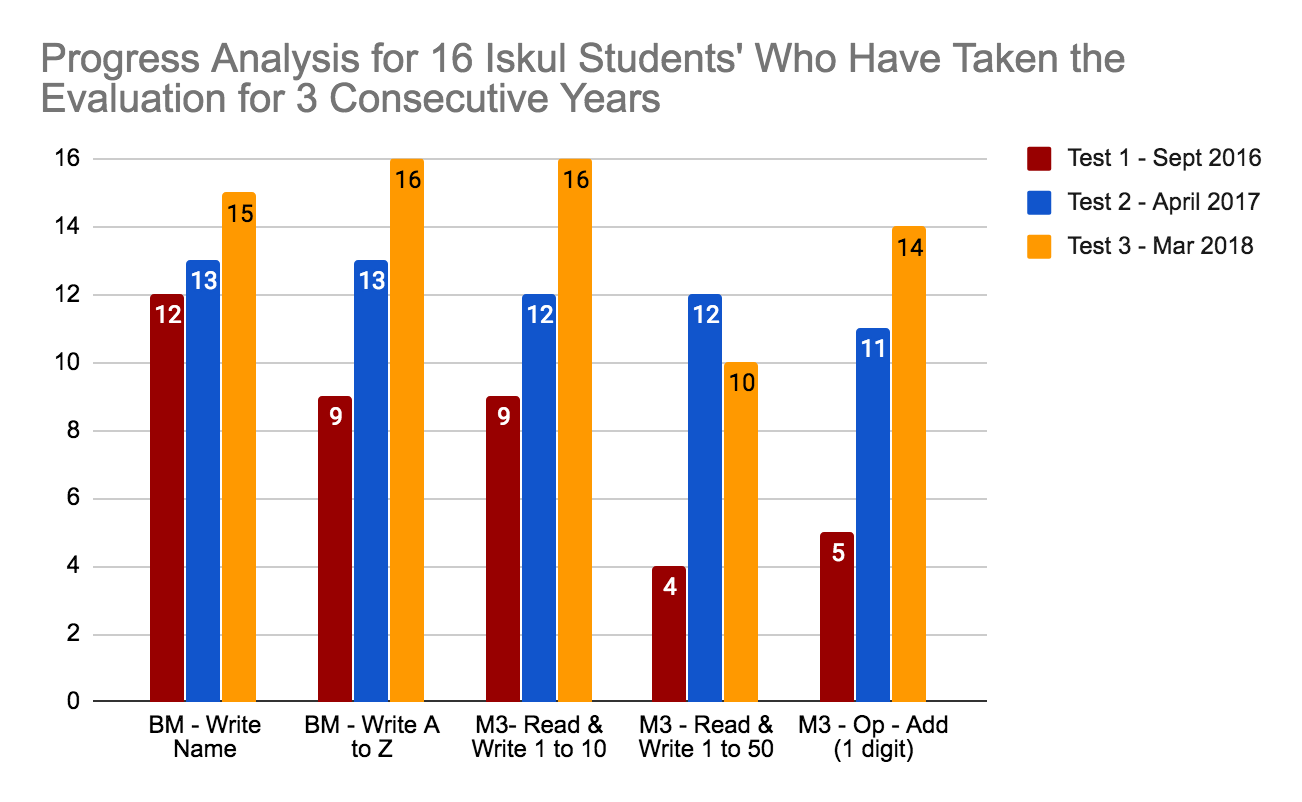
    Graph 1. Progress Analysis for 16 Iskul Students who have taken the Evaluation for 3 Consecutive Years

    As shown in Graph 1, there is a steady increase in the number of students who can perform all five basic criteria of assessment from Test 1 to Test 3.

    By Test 3, all 16 students can write A to Z and read and write number 1 to 10. All except for 1 can write his/her own name. Those who can do simple 1 digit addition increased by 19% to 14 students from Test 2. Oddly, two students digress from being able to write the number 1-50 to only 1-20. Further investigation reveals that their attendance is an average of 60%.

    Result 2: Further evaluation of Mathematics in Test 3

    In the further evaluation of Mathematics, the students were tested on how many digits they can write and recognise, reading clock and questions related to addition, subtraction, multiplication and division.

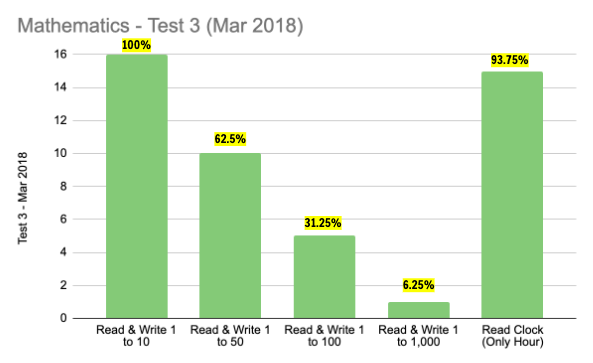
    Graph 2. Read and Write Number and Read Clock Result in Test 3

    Graph 2 shows that all students can write the basic number from 1-10, while only 10 students can write from 1-50. Interestingly, 1 student can write up to 1,000 and 5 can write up to 100. With regards to reading time, about 94% of the students can read only up to the “hour” hand.

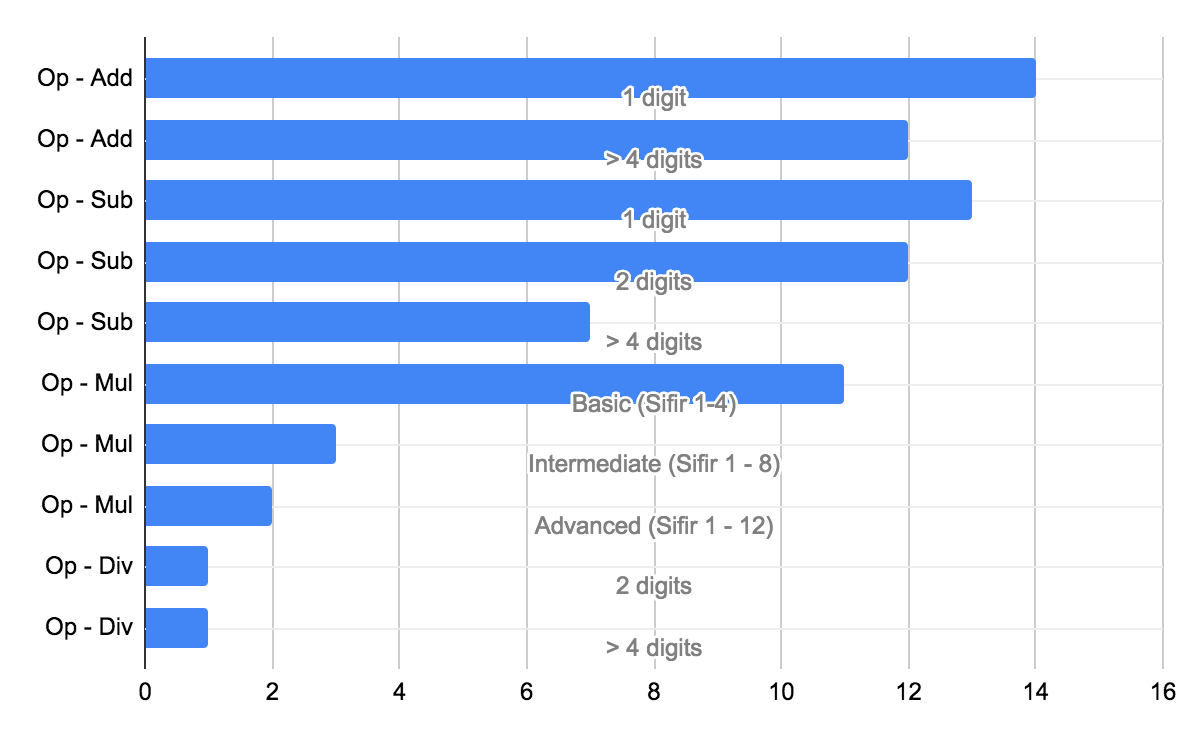
    Graph 3. Mathematical operations of addition, subtraction, multiplication  and division according to digits

    We’re delighted to note that more than 75% of our students can solve additional operation questions up to 4-digits. More than 70% of them can solve subtraction questions up to 2-digits while only 43% of them can do up to 4-digits. Furthermore, about half of them can memorise the multiplication table from 1 to 4. However, a majority of them are still unable to solve division problems. 

    Interestingly, one student has mastered the basic arithmetics – able to memorise multiplication table up to 12 and solve up to 4-digits division questions

    Result 3: Further evaluation on Bahasa Malaysia in Test 3

    Test 3 for Bahasa Malaysia evaluates students on two things: (1) recognising body parts and (2) recognising terms for family members.

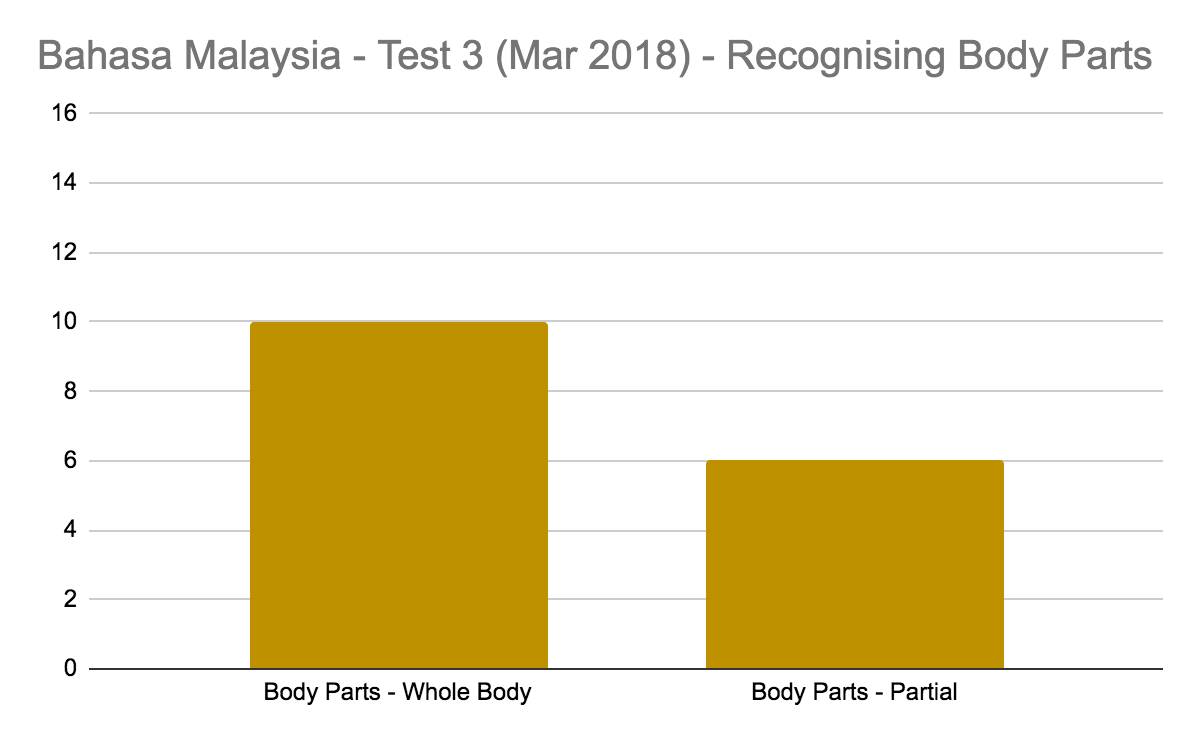
    For the former, 10 of the students can identify the whole body parts while the remaining 6 are only able to identify “rambut”, “mata”, “hidung”, “kening”, “ibu jari”, “kaki”, “perut” and “dahi” only. (Refer to Graph 4)

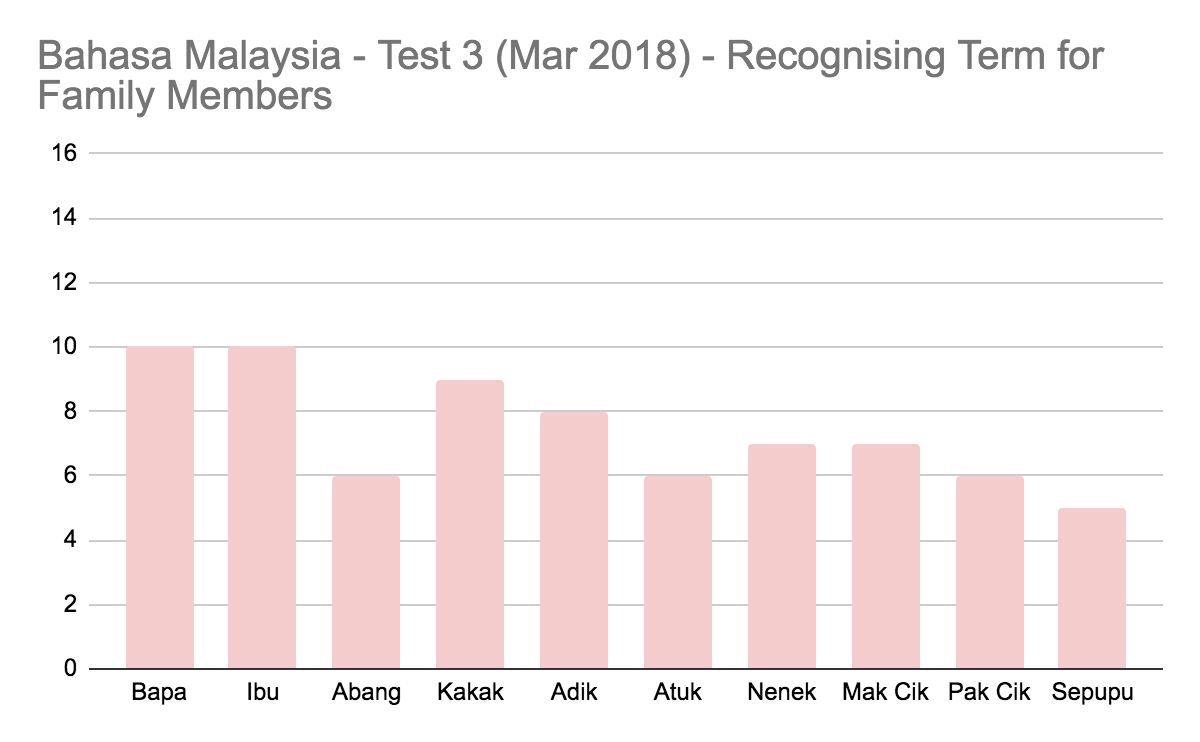
    As for the latter, firstly only 10 students can recognise the term for parents. Secondly, more than six students who can recognise terms for close family members (i.e., parents and siblings). Finally, a average of 39% of our students able to recognise terms for extended family members (i.e., grandparents, relatives) (Refer to Graph 5)

    Graph 4. The number of students who can recognise Body Parts in Test 3

    Graph 5. The number of students who can recognise terms for family members in Test 3.

  • Media Statement: Iskul Hopes to Partner with Relevant Authorities to Expedite Relief for the Stateless Community in Omadal

    There are an estimated 900-1,000 stateless individuals living off the coast of the Omadal Island, Semporna, Sabah. Averagely, seven people live in a cramped space with limited clean water and without electricity. 

    When the Movement Control Order (MCO) was implemented and wet markets in Semporna town closed, this community whose main income is generated from fishing and sales of their daily catch, lost their one and only revenue. This community lives from hand to mouth and after seven (7) days of ceasing seafaring activities, they have exhausted their food supply and savings. 

    Hence, Iskul welcomes the timely announcement by the Sabah State Government to provide the much-needed food ration to islanders off Semporna and Kota Kinabalu, irrespective of nationalities (The Star Online, 26 March 2020). We hope to partner with the relevant authorities to help distribute the food. Our community learning centre, Pondok Iskul (pic) is located between the stateless occupants off the coast and the Malaysian residents on the island. It can be used as the distribution centre for the stateless population. Iskul has a resident teacher and field coordinator in Omadal Island who is able to identify the community members and helped ensure everyone in the community has come forward to receive the relief. If necessary and permitted, they may also be mobilised to purchase or collect the food rations from town accordingly. 

    We truly understand the Defence Minister’s intention to centralise distribution (Malay Mail, 28 March 2020) and restrict movement under the MCO in the effort to flatten the Covid-19 curve. In view of the urgency, Iskul only hopes to expedite and facilitate the distribution of the allocated ration to the affected communities in the shortest time possible and is willing to abide by the SOPs for the personnel on the ground. 

    Food is essential for the vulnerable community in order to overcome Covid-19 but not the only necessity lacking. The community also lacks clean water to wash hands and for basic hygiene. Thus, it is imperative to (i) provide a supply of clean water for drinking and washing purposes, and (ii) educate them with knowledge of basic personal hygiene. 

    Therefore, Iskul hopes to assume the leading role to gather support in addressing the issues. We welcome anyone who wished to come onboard in either of the two initiatives for the stateless community. Please feel free to email us at iskul.samadilaut.omadal@gmail.com for further discussion.

    This crisis is hard for everyone, and for those of us that can, it’s about doing a little more to help. 

    You may support Iskul’s proactive effort by contributing cash for additional food supply, clean water supply as well as a basic personal hygiene campaign for the stateless in Omadal as we fortify the local community’s protection against Covid-19. 

    Last but not least, thank you for your kindness and stay safe. #KitaJagaKita

    Contributions for food and clean water supply can be made to:

    Account name: Persatuan Pendidikan Bajau Laut (Iskul Sama diLaut Omadal)
    Account number: 3-2165146-31
    Bank Name: Public Bank Bhd
    SWIFT Code: PBBEMYKL

    Please include note <Covid-19> in your transfer receipt and email to iskul.samadilaut.omadal@gmail.com for bank record purposes. 

    Sincerely,

    Persatuan Pendidikan Bajau Laut (Iskul Sama DiLaut Omadal) 

    PPM-009-14-24072017

  • Gabungan Guru Alternatif Menawarkan Khidmat Memudahcarakan Bantuan Bencana daripada Kerajaan kepada Masyarakat Terpinggir di Negeri Sabah

    (1) Perintah Kawalan Pergerakan (PKP) yang diumumkan oleh Perdana Menteri adalah langkah terbaik untuk memutuskan rantaian wabak Covid-19 di antara rakyat Malaysia.

    (2) Namun begitu, rakyat terpinggir seperti masyarakat pedalaman, masyarakat pulau, pelarian, gelandangan dan warga tanpa dokumen di Sabah mendapat impak yang sangat besar dari sudut bantuan makanan, kesihatan dan maklumat.

    (3) Masyarakat pedalaman dan masyarakat pulau sangatlah jauh dari pusat bantuan atau kota. Masyarakat pelarian di skim penempatan pelarian, gelandangan di pekan-bandar dan warga tanpa dokumen di kampung-kampung seluruh daerah Sabah belum lagi mendapat kejelasan polisi untuk membantu mereka.

    (4) Sekatan jalan raya dan sekatan laut menyukarkan lagi usaha masyarakat terpinggir untuk bergerak mendapatkan bantuan dan informasi dari luar. Bantuan dan informasi dari Badan Bukan Kerajaan (NGO) juga sukar disampaikan.

    (5) Keadaan semakin kritikal, ramai yang telah kehabisan simpanan makanan dan kehilangan sumber pendapatan utk membeli makanan selepas masuk hari ke-10 terperangkap di dalam kampung masing-masing. Perdana Menteri juga telah menambah lagi 14 hari PKP ini sehingga 14 April 2020.

    (6) Gabungan Guru Alternatif menyambut baik usaha kerajaan negeri untuk memberikan bantuan bekalan makanan kepada semua penduduk terutamanya di kepulauan tanpa mengira kewarganegaraan (The Star Online, 26 Mac 2020).

    (7) Kami sedia untuk bekerjasama dengan kerajaan dalam membantu masyarakat terpinggir di negeri Sabah dengan menawarkan khidmat sukarelawan dan menjadikan sekolah sebagai pusat pengagihan bantuan makanan, air bersih/air minuman, bekalan ubat-ubatan serta maklumat terkini mengenai wabak Covid-19 kepada masyarakat terpinggir ini.

    (8) Semoga kerajaan negeri sudi memberikan peluang kepada kami untuk membantu meringankan beban kerajaan dan masyarakat terpinggir dalam usaha menangani krisis wabak Covid-19 ini.

    (9) Terima kasih.

    Kenyataan bersama:

    1. ALC Saga , Likas
    2. Cahaya Learning Center, Sandakan
    3. Harumanis Alternatif School (HAS), Kota Kinabalu
    4. Iskul Sama diLaut Omadal, Semporna
    5. Mabul Kids Education Society Semporna
    6. Sekolah Alternatif Kg Bangau-Bangau, Semporna
    7. Sekolah Alternatif Kg Hidayat, Tawau
    8. Sekolah Alternatif Teluk Layang, Kota Kinabalu
    9. Pacos Trust, Panampang
  • Iskul’s 1st Students’ Convocation & Mastal Arikik Appreciation Ceremony 2020

    The day has finally arrived! Iskul was able to throw a celebration to commemorate the progress our students have made since enrolled in our weekend classes in August 2015 – our very first Majlis Konvokesyen Pelajar dan Penghargaan Mastal Arikik Iskul Sama DiLaut Omadal 2020 (1st Students’ Convocation & Mastal Arikik Appreciation Ceremony 2020)!

    The first trial class in August 2015, sees a group of 15 children from the stateless Bajau Laut community of Omadal Island taken their very first momentous step to learn. The eagerness in these children to attain knowledge remains ever joyous, be it the pioneer batch or the recent new intake. They beamed at the thought of attending lessons and take pride in being known to attend lessons with Iskul. And that was the fuel for Iskul. In return, we want to celebrate their journey through this convocation ceremony!

    In order for us to be able to evaluate their progress upon graduation, we set a prerequisite that they must have completed or at least attempted the evaluation test for Bahasa Malaysia and Mathematics that we have prepared. A total of 18 students from the pioneer batch have come forth and took the challenge courageously. The reason why we said it was a brave step is that they have had almost one gap year where they did not attend to lessons in Iskul. This is because, in January 2019, Iskul lost two capable Field Coordinators and with no Mastal Arikik to carry out lessons, classes were put on hold. When Khairul returned in May 2019, he gathered a new intake of students and convinced two of the pioneer batch students to teach as Mastal Arikik. As 2019 progressed, lessons were conducted for the new intake of students. Since the pioneer batch students had learned the basics, they no longer want to attend classes.

    What surprised us most was to find out that some of the students continue to learn on their own effort despite no classes held for the year! Their performance in the evaluation tests testify their effort and further proved to us the potential these children have if only they were given the chance. Just a brief recap, January lost two Field Coordinators and no Mastal Arikik, which forced us to close the classes until we were able to gather the teachers again. It is estimated that from August 2015 to December 2018, they have only attended about 70 days or 14 weeks (less than 4 months) of school over the past three years! You may read about the detailed analysis of the evaluation here.

    It was a festive weekend as we hold Hari Sukan followed by the ceremony the day after. It took the whole team almost 2 weeks of preparation prior to the weekend. The invitation cards for parents have been delivered personally to the homes of students and Mastal Arikik, inviting them to witness the momentous ceremony for Iskul. For the first time, our students will be walking into a school compound and receiving their graduation certificate in a school hall. Iskul is very grateful to have Encik Budlaji, Principal of SK Pulau Omadal who has been encouraging and supportive in making this gift of experience to our students possible!

    The night after the Hari Sukan, the team gathered at Pondok Iskul to make the finishing decoration touch-up for the stage. The next morning, we gathered at SK Pulau Omadal to set up the venue for the 7.30 pm event. Our pioneer batch students have also helped to arrange the chairs for the invited guests.

    On 23 February 2020, Iskul’s 1st Students’ Convocation & Mastal Arikik Appreciation Ceremony 2020 was graced by MPKK Pulau Omadal Hujung, Tn Hj Jimlan Panglima Sabtuhari, Headmaster of SK Pulau Omadal, Encik Budlaji Bin Tianggi, as well as our very own Headmistress, Pn Roziah Jalalid. Our Field Coordinator, Khairul Atim was the Masters of Ceremony (MC) for the ceremony. The parents have arrived earlier and were served with a simple meal before the ceremony began.

    The Principal of SK Pulau Omadal, Encik Budlaji Bin Tianggi complimented the initiative. He congratulated our students and encouraged our students not to feel inferior. Encik Budlaji further added that the school welcome the children as long as we all ensure that the school assets are taken care of.

    This inaugural ceremony was successfully organised in a spacious environment, many thanks to the willingness of the Headmaster of SK Pulau Omadal who allowed us to use their solar panel hall. Iskul presented our shirt to the Headmaster of SK Pulau Omadal to commemorate our first collaboration and we look forward to future joint activities!

    We are also very grateful to MPKK Tn Hj Jimlan for officiating our ceremony and as always encouraged our students and their parents to learn and be literate. As the fatherly figure to Iskul, he has always been watching over us and in his speech, he has never failed to remind our students to step away from glue-sniffing addiction and focus on learning.

    Besides celebrating our pioneer students who have successfully completed their basic (preschool) learning, we also celebrate their parents who had helped to ensure that they attend classes every weekend. We are very proud of our students and their parents for making learning a priority despite living in poverty! 

    During the event, our hearts warmed as we witnessed our student representative as well as currently one of our Mastal Arikik, Enidah courageously say a short sentence of gratitude in Bahasa Malaysia.

    Enidah also sang a song entitled, “Cinta Luar Biasa” during the closing performance. Oh, our hearts! 

    As the ceremony aptly named, it is also to acknowledge the effort and time invested by our Mastal Arikik (MA) over the years. They took time off their weekends to teach their friends from the stateless community. We have 10 MAs who have volunteered their time for Iskul and the stateless community. To conclude the ceremony, Izwan, representing our Mastal Arikik to perform a song in the closing.

    Moving forward, we hope to have them returning to learn as we work towards providing more advanced classes and/or other skills-building classes for them. Of course, we also hope to hold another convocation ceremony for the current intake, perhaps in a year or two!

  • Iskul’s Hari Sukan 2020

    A little #Throwback to sharing the Hari Sukan we organised prior to the convocation ceremony! It is our hope to continuously improve the relationship of the local community (local citizen and stateless) through such healthy gathering/competition. We have a total of 10 activities for parents (mothers) and children. Our Mastal Arikik (MA) and students participated in the activities too! It was very a hot day with little cloud to buffer the scorching sunray!

    Warm-up is important before sports activity begins. As so, for such important activity, Iskul’s Mastal Arikik (MA) and Field Coordinator Khairul lead the warm-up session. But as a matter of fact, all of us are pretty warmed up by the blazing hot sun even without the session!

    Activity #1: Lumba karung (pelajar) 
    Teams were to compete by running/jumping across a distance in a sack. Waves of laughter, lots of fun!

    Activity #2: Makan kuih (pelajar) 
    Members for each team are to finish a square biscuit. The facilitators check everyone’s mouth to ensure its swallowed before they can return to pass to the next member. What a rush! 

    Activity #3: Bawa Ping-pong Guna Sudu (pelajar)
    The teams were to work together to carry the ping-pong ball across to one another using spoon in their mouths. They can only pass the ping-pong using the spoon. The sudden gushes of wind was an added challenge we didn’t factor in for this race but we do welcome! 

    Activity #4: Pecah belon (pelajar) 
    Each member is to blow up and burst a balloon. They can of blow it up till it burst, OR hug it, squeeze under their armpits or sits on it. Sitting on it definitely the fastest!

    Activity #5: Hujan (pelajar) 
    Teams lined up to pass seawater from the front to the back over the top of their head. The last in the line is to fill the water into a water bottle. The bottle filled with most water wins!

    Activity #6: Semakin jauh, semakin sayang  (terbuka)
    Pairs are to throw and catch the water-filled balloons from one another without bursting it. It was a very precious moment indeed! 

    Activity #7: Lari dengan kelapa (ibu) 
    The moms who managed to participate in the activity had fun, running carrying two coconuts. The fastest to finish wins!

    There were lots of laughter, definitely lots of fun as we see the teams giving in their best for each round of activity! We hope to see more parents participating in our next activities.

    The Organising Team signs off till next time!

  • Testimonial from Iskul Field Coordinator, Aida

    In 2018, Iskul had the opportunity to bring on-board a full-time Field Coordinator, many thanks to the generous donors who have supported our #50forIskul fundraising campaign in the previous year. The Field Coordinator is expected to guide our Mastal Arikik, evaluate the teaching and learning experience, as well as to be entrusted as the guardian of Pondok Iskul. 

    We managed to get in touch with Aida, who was on board from mid-February 2018 to mid-January 2019. Due to local political conflict, Iskul was forced to let her go and fortunately, she is now serving in The Fire and Rescue Department of Malaysia. 

    The following is her sharing in Bahasa Malaysia, extracted from a brief conversation:

    Apakah 3 perkara yang Aida belajar dari Iskul?

    Pertama, saya dapat mempelajari dan memahami tanggungjawab dan tugas saya sebagai seorang penyelaras Iskul. Kedua, saya juga berpeluang untuk merancang pelbagai aktiviti yang menarik bersama rakan penyelaras dan Mastal Arikik. Akhir sekali, saya telah belajar menyelesaikan masalah-masalah dalam kelas, antara pelajar dan lain-lain tugasan yang diamanahkan. Pengalaman ini menjadikan saya lebih bijak dalam menguruskan tugasan yang diamanahkan bagi sesuatu pekerjaan. 

    Apakah 3 cabaran Aida sebagai Penyelaras Iskul?

    Saya berpendapat yang utama, segelintir konflik yang wujud berkaitan dengan permasalahan peribadi atau dibawa oleh individu dan bersifat emosional, dan tidak mudah untuk didekati bagi mendapatkan penyelesaian jelas. Ketidaksefahaman dan kecaman orang kampung kerana saya menolong komuniti tanpa kewarganegaraan menyebabkan banyak tekanan kepada saya. Selain itu, saya berasa saya masih perlu membaiki pendekatan komunikasi saya. 

    Bagaimana Iskul telah membantu Aida bertambah menjadi lebih baik?

    Menjawat peranan sebagai seorang penyelaras, nilai kepimpinan dapat dipupuk dalam diri saya. Selain itu, saya menjadi matang untuk berfikir dan mempunyai lebih banyak kesabaran dari pengalaman baik dan buruk yang saya alami semasa di Iskul. Tanggungjawab saya sebagai seorang penyelaras di Iskul telah memupuk nila berdikari dalam diri saya dan menjadikan saya seorang pemimpin yang berwibawa dan dihormati oleh pelajar-pelajar Iskul sehinggalah sekarang. 

    Apakah yang Aida paling rindu di Iskul?

    Sepanjang perkhidmatan saya bersama Iskul, hubungan saya dengan pelajar-pelajar Iskul telah bertambah erat, kukuh dan bersatu. Kami akan saling menghormati. 

    Apakah pengalaman terindah Aida di Iskul?

    Pengalaman terindah adalah masa Hari Sukaneka dan Majlis Anugerah Cemerlang akhir tahun 2018. Semasa aktiviti dijalankan, sebarang perselisihan faham dapat dielakkan dan suasana yang harmoni dapat dirasai. Saya juga dapat berkomunikasi dengan baik dengan peserta-peserta aktiviti.

    Iskul would like to record our gratitude for her excellent service with Iskul and we wish her the very best in her endeavours. The students missed her around and Iskul’s door will always be open to welcome her back to contribute when she has the time to spare.

  • Iskul Home Visits & Group Interviews (2019)

    “Home is where one starts from.”

    T.S. Eliot

    Since the formation of Iskul in August 2015, Iskul team has always wanted to visit homes of our students with the intention to meet their parents and other family members as well as to understand the condition of their living at home. It is important for us the team to meet the parents as we want to inform them that Iskul belongs not to any individuals exclusively but owned collectively by the Iskul community comprising of Iskul’s students and families. Additionally, being able to visit respective homes of the students enabled us to establish a rapport and for us to understand the condition under which our students return to after class. Such information allows us to build empathy and identify support that is essential to allow the children to attend classes to learn.

    During the field visit in September 2019, Iskul prioritised the visit to each and every home of Iskul’s students with the help of our in-training Field Coordinator, Khairul and Mastal Arikik Sakinas and Delah. In total, we have visited 16 homes.

    As the team visits from one home to another, we notice some distinct aspect of the Omadal stateless community which really puts the perspectives in place.

    The condition of the homes of our students, in general, is loosely categorised as:

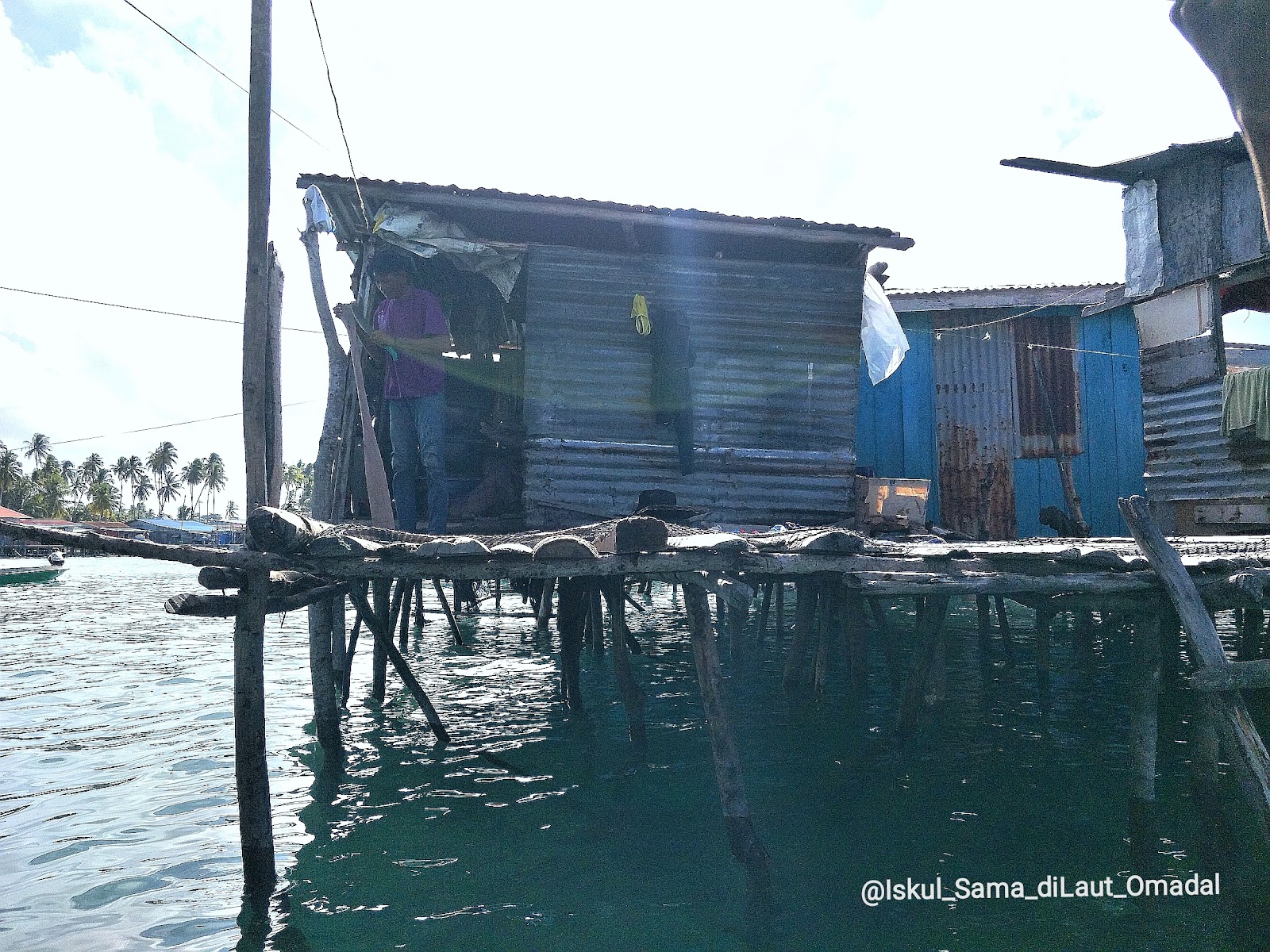
    Living By, One Space for All: Stilt house made of rusty zinc rooftop including its four walls, and there is no distinct compartmentalisation of function spaces, i.e., kitchen, living space, bedroom etc. These houses only source of light is from the oil lamp and their source of drinking water is from the rain or the seawater surrounding them.

    Managing, Distinct Spaces: Stilt house made of leftover woods for its four walls and there are the obvious separation of functional spaces such as the kitchen and the living space/bedroom, with or without wall partitions. These houses may have electricity powered from the generator or connected from neighbouring stilt houses that are ultimately connected to the houses of the residents on the island. Their source of drinking water collected from rain.

    Stable, Comfortable Space: Stilt house made of plywoods for its walls and have several rooms compartmentalising functional spaces such as the kitchen, living room, bedroom, and toilet/shower room. These houses have electricity and collect rainwater in large tanks.

    Besides the materials their houses were made of and access to electricity, we also observe that they prioritise procurement of certain furnishing that mark the improvement of their living standards. Two of the main items they will attain for the display of change are audio speakers and kitchen utensils. We think that this also informed us of their sense of community because the availability of these items showed that they are able to share and to host neighbours. During our annual visits, we found that several houses with speakers and electricity enjoy blasting music over their speakers and it is so loud we could hear from across! There is usually no particular reason for the festive. We are in the opinion that it is just their way of breaking the silence of the night or perhaps a boost of energy as they prepare for their weekly fishing trip out into the sea.

    The ability to work independently also directly reflects their state of income. If the sole breadwinner of the family works for another fisherman, their means of income are usually the lowest with less than RM5 per day. Meanwhile, if the family has a boat and dry their catches of the day for sale in the town, they are most likely making more than RM50 per day, also depending on the catch per trip.

    “Home can be a happy place with surety, knowledge and security; but it can also be a place where people develop confusion, doubt, and a low self-image.”

    Christian Olsen

    Indeed, we observed that children from the impoverished family are more reserved and shy when in class and often comes to class, dishevelled. However, over time, we noticed progressive changes when we help them be aware of the importance of keeping nails short and clean and combing their hair, tying up if wanted to. Their appearance becomes neater and they become more confident. We noticed that boys start learning to style their hair while girls learn to put on eye shadow and lipsticks as well as having fancy clips when they come to class. Although Iskul may be seen as a source of income for some, the changes we have seen in the students are comforting and it is what motivates us to focus on servicing our beneficiaries and their well-being.

    Besides home visits, Iskul also conducted group interviews as one of our consistent method of assessing/evaluating the impact of lessons provided to our students in Iskul. Due to the new intake of students in May, most of our current students have only attended less than two (2) months’ classes, thus, many are still unable to recognise or identify A to Z and numbers. Nevertheless, many of them are able to recite A to Z in one go. During the group interviews, we observed that they are still shy when in contact with us – a stranger to them as they have only seen us probably the first time. When asked if they like coming to Iskul, they nod their heads in much eagerness and tinge of excitement. When asked for a reason, many of them simply just want to ‘belajar menulis….membaca’. And that is really what mattered.

    Although Iskul is now educating a new batch of students, we are eager to reconnect with our students from the pioneer batch. They have all grown into fine lads and ladies. After losing our Field Coordinators in early of the year, they have not returned to Iskul, except two of them who are now teaching our new batch of students. We are informed that the reasons are that (i) there are no more (adult) teachers who could teach them, and (ii) because of that, they do not think they can learn more from Iskul. It is a crucial point we reflect on. Iskul has been practising the concept where peers teaching is the key – school-going Malaysian teens teach their friends from the stateless community. As we conclude the fourth year, we realised that this concept limits the learning potential for our students as most of them are the same age as our Master Arikik and our Master Arikik are also students who are performing less than average at school. Hence, we find their request for an adult (or qualified) teacher as reasonable and a request we prioritise for the year 2020.

    A quick one-to-one evaluation with a few of our pioneer batch students revealed that they can still identify, read, and write A to Z, numbers from 1-100, and do simple calculations. We are also exceptionally glad that we are able to hold the session with them in Bahasa Malaysia! While these are great news, it also justifies that we need to open classes for these advanced students to learn more and create other activities for them to stay connected with Iskul such as creative classes and alternative livelihood plans. Iskul wants to continue to inform and make aware that Iskul is established for the community and one day, we hope that it will be maintained by the community, therefore, we will continue to review our progress and be conscious of our effort to empower them.

  • Annual Field Visit 2019 (Finally!)

    For the most part of the early journey from the Tawau Airport to Semporna, the view is mostly oil palms and coconut trees, bushes, and occasionally, houses. Well, the road definitely has greatly improved as there are no more dangerous potholes. Ah, still the familiar trip nonetheless!

    It has been over two years since any of the management team members visited Semporna and boy, did the town changed! As the distance to Semporna town closes, the first obvious change is the lack of rubbish on the roadside where previously it was almost unmissable. Well done, Sempornians!

    As the major eyesore issue is now finally taken care of, there was really nothing major we thought Semporna really need, but boy oh boy, the town has upgraded! The second you passed the archway that welcomes you to Semporna, a 5-6 storey high new hotel greets you. Then, there is a McDonald’s! If previously you needed to make a trip to Tawau (the next nearest town) for the fast food, now you do not need to! New concept lodging facilities mushroomed all across the town and you can hardly miss it because it is just so-out-of-place (in a good way, perhaps?). Restaurants and fancy cafes are also spotted as you approach the centre of the town.

    When you approach the most happening side of the town, well, apparently, it is no longer the most happening side anymore because a Seafest Mall with Starbucks and Tealive has been constructed on reclaimed land on the northeast side of the town. Wow.

    We wonder if Omadal Island has changed too?

    The road heading to Jeti Umum Semporna situated near Giant mall Semporna remains very much the same – crowded and wet as catches of the day are being traded. The journey to Omadal begins by getting on a 12-15 person passenger boat to Balimbang. The whole journey takes about 45-60 minutes to reach Omadal Island. Nothing has really changed in this part of the journey, apparently.

    Upon arriving Omadal Island, find your way to the resident of the Ketua Kampung to make your presence known and then register yourself at the General Operations Force (Malay: Pasukan Gerakan Am; PGA) centre for security check and protection.

    All in all, Omadal Island has not changed much. The goats are still roaming around, grazing on any plantations they can find, the turtle hatchery and the football court. Well, there is now a beautifully re-constructed Balai Raya (Community Hall) and a fully functionally mosque.

    After making our obligated rounds, we finally visited Pondok Iskul! Since the completion of its construction, the management team has not made any official (physical) visit and this time, we will be putting up in the Pondok for the next 10 days! As we toured the space, we were overwhelmed by gratitude that this dream of a conducive learning space is a reality!

    The trip was a packed one as we arrived just in time to celebrate Malaysia Day on 16 September. Following that, visits to the homes of our Iskul students were also arranged in an effort to register them officially and to gather basic family background. Our group interviews with 3-4 students in one session were also conducted to evaluate the current understanding of our new batch of students and find out if our previous batch students still remember the lessons they took.

    Whilst Omadal Island remains peaceful and calm, it has recently been receiving more visits from groups of loud foreign tourists carrying professional cameras. Children from the stateless community gathers upon receiving news of incoming visitors and soon gathered around these visitors. One young girl instinctively began “modelling” in the signature pose of flipping their long hair, and younger kids with their wooden boats are asked to flip over into the water as these visitors start snapping away. Once, we observed that the group of tourists intentionally bought coloured powder packets and with the help of a local tourist guide, they have “orchestrated” so that the children are on gathered on the boat and on their count, to release the powder for photograph effects.

    The scene was very difficult to observe, however, we are in no position to stop them because we are not a resident of the Omadal Island and for all we know, these visitors have sought permission from the Ketua Kampung.

    Nonetheless, we have a few burning questions we are dying to ask:

    To a tourist guide:

    • Why would you bring tourists to go watch stateless children and allow them to request these children to make a circus out of themselves i.e., flip hair, jump off the boat, etc?
    • Why is it that it is not okay with Malaysian children but okay with stateless children? They are children all the same, isn’t it?
    • Why would you allow tourists to take thousand dollars photo of stateless partially/fully-clothed children and in return, they only received small packets of sweets, snacks and maybe few ringgits as compensation for their “modelling effort” and their unique skin colour and background

    To the residents of the neighbourhood village:

    • Why would you allow such exploitation in the backyard of your own house and to the community that have stayed your neighbour for many years?

    To the visiting tourists:

    • Why did you think it would be helpful to compensate them with snacks and few ringgits for the effort these kids take in “modelling” under your instruction?
    • Why would you think your photos could make any difference to the state of these communities?
    • Why would you be trespassing on the privacy of these children for your own selfish needs of photography portfolio or travel memories? At some point, where is your photography etiquette to ask these kids to either remove their shirt or put on their shirt or change their shirt to fit your photography needs?
    • Do you really think that the amount you pay the guide to take you to these communities benefits the communities at all?

    As the sun sets on Omadal Island on the day before we leave, we realised that while the Semporna town has changed exponentially for the past 2 years, none of these developments has positively impacted the stateless community on Omadal Island.

  • Sayangi Malaysiaku – Iskul Celebrates Malaysia Day 2019

    Iskul skipped a year of Malaysia Day celebration last year, so this year we celebrated it big! Our Mastal Arikik-turned-Field Coordinator Trainee, Khairul has been looking forward to leading the day with his planned fun activities for the children. This year’s celebration considers the interest of our students who wanted to have sukaneka activities.

    A day prior, Khairul and Mastal Arikik Sakinas and Delah gathered at Pondok Iskul to complete the final preparations for the celebration. They packed the gifts expected to be given out at the end of the event and also created a make-shift banner by designing on the whiteboard. The make-shift banner would also be signed off by the Ketua Kampung, Tn Hj Jimlan as a gimmick to officiate the Malaysia Day celebration tomorrow.

    On the morning of the celebration, we were greeted by over 50 enthusiastic children who are eager to participate in our activities. The leader of the respective five groups of tens was given a brief 10-minutes to get to know amongst their team members before they are ushered out into the football court for a quick warm-up before the planned activities.

    Activity 1: Field Bowling (Bowling Padang)
    Each member of respective groups is given a chance to roll a coconut towards the arranged water-filled plastic bottles about 2 metres away. The group that managed to knock off all bottles first proceed to the next round.

    Activity 2: Tug-of-War (Tarik Tali)
    Members of groups are lined up at both ends of the thick rope and upon the count of 1-2-3, they are to pull the rope as hard as they can to their end in order to win. Members who are young are advised to not participate as we are concerned about their safety during the activity. It was an intense competition as we see the determination and strengths the participants invested in throughout the activity. In addition to that, they are pulling on the sandy surface and the rising sun in the morning.

    Activity 3: Hanging Biscuits (Makan Kuih)
    This activity requires just a little bit of stretching for the feet for some. Square biscuits were tied over the top pole of the football goal post at slightly about 1.5 metres height from the ground. Each member was to take a bite off the hanging biscuit at one trip. The trick is that they are not allowed to use their hands to hold the swinging biscuits. Since the winner will be determined by how quickly the team finished the biscuit, each member will try to take as big a bite they can. It was a little tricky for young participants who could not reach the height. Nonetheless, we see that they tried by tipping their toes or jumping to get a bite!

    Activity 4: Burst the Balloons (Pecah Belon)
    The next fun activity requires the participant to blow a balloon and then burst it either by sitting on it or stepping on it. This activity demands the strength of the lung accompanied by the speed and a little technique to complete the task. The group that finished all 12 balloons in the shortest amount of time wins.

    Activity 5: Blow the Flour (Tiup Tepung)
    The last outdoor activity is to blow the flour and uncover hidden sweets underneath. Similar to Activity 3, the participants are not allowed to use their hands to uncover them. They are to blow the flour and upon uncovering a sweet, pick them using their teeth/mouth before returning to the group and tap the next member to proceed. It was the messiest activity but sportsmanship was observed as participants race against time to win.

    After a quick clean-up, the groups are gathered in Pondok Iskul for a light refreshment and rest before continuing with the final activities for the Malaysia Day and the closing ceremony. Our Headmistress, Kak Roziah prepared the light refreshment.

    Activity 6: Drawing & Colouring Session: “Sayangi Malaysiaku”
    For the drawing / colouring activity, Mastal Arikik helps to give out A4 papers and distribute colour pencils for sharing. The session requests the participants’ creativity and imagination as the theme is, “Sayangi Malaysiaku” for Malaysia Day celebration. Based on the theme given, the participants can draw and colour at least a Malaysia national flag or state’s flag for submission. The best drawings will be awarded.

    Upon submission from all participants, Ketua Kampung Tn Hj Jimlan arrived at Pondok Iskul to officiate the closing ceremony. Prior to the closing speech, all participants were requested to stand and sing ‘Negaraku’, ‘Sabah Tanahairku’ and Iskul school song. We observed that most of our students are still not familiar with both the national and state song, hence, we see that it was mostly sung by the children from the resident village. When it comes to Iskul song, our students sang them loud and proud. In such a short instance, we noticed the potential interaction in exchange from the children. It was a good reminder to teach our Iskul students our national song and state song to further instils their sense of belonging to this birth country.

    In his closing speech, he stressed again the importance of attending classes at Iskul consistently and reminded them to stay away from glue-sniffing.

    Activity 7: Dance (Mengalai)
    With the attendance of Ketua Kampung, we proceeded with the final activity of the Malaysia Day celebration as we have group representatives to dance – mengalai (a form of traditional ‘fingernail’ dance of the Bajau Laut ethnic). As an outlier, we have one group of young ladies performing Zumba! To our surprise, they were well-coordinated!

    The Zumba performance marked the end of fun-filled activity and winners were announced to come forward and receive their prizes from Ketua Kampung. As the closing ceremony ended, we noticed the group stayed back as prizes were fairly distributed among team members. We really hope such activity, though short, could start a friendship.

    “Home is where children find safety and security, where we find our identities, where citizenship starts. It usually starts with believing you’re part of a community, and that is essential to having a stable home.”

    Matthew Desmond

    As the saying goes, “it is the differences that unite us all,” we really hope to create an environment whereby the stateless community are included and integrated more wholesomely as one community rather than the current distinct two. As these stateless children were born in Omadal and grow up only knowing this island as home, we hope they find a sense of belonging and home here, in Omadal Island and here, in Malaysia.