Author: Iskul

  • Protect Malaysian Children from Statelessness, Help Shima get her rightful citizenship

    Protect Malaysian Children from Statelessness, Help Shima get her rightful citizenship

    “Cikgu Shima!” a young girl cries for help, hobbling over on an injured foot. The girl is a stateless Bajau Laut child, who had stepped on a shell and cut herself.

    Like all the other kids, she knew to promptly come to Iskul for medical assistance, and to look for Shima.

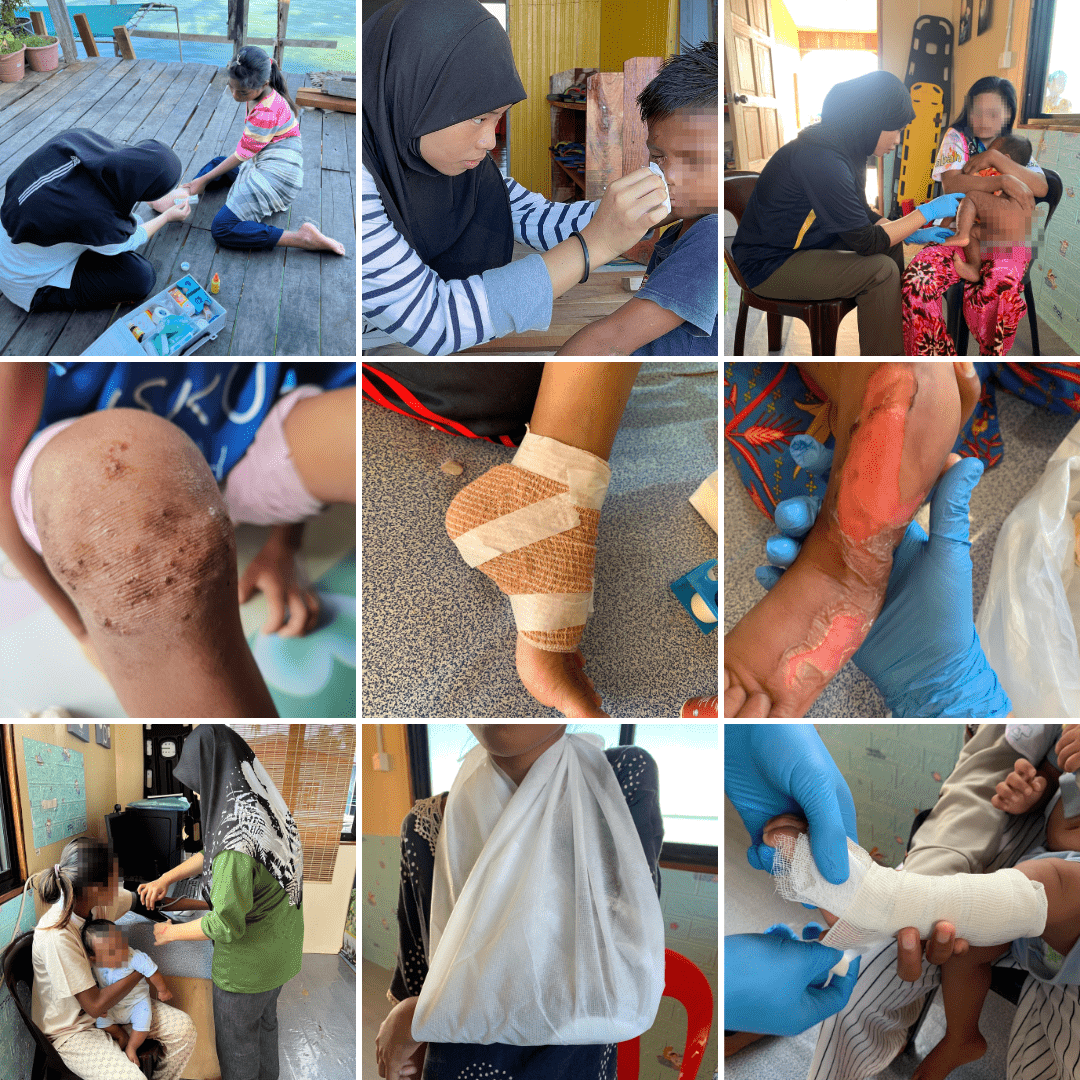
    Shima calmly washed the wound. She medicated it and covered it up in a band aid. This has become routine for her.

    This story is just one of a hundred.

    Shima gets calls by grown-ups and children every day on Omadal. They are looking for medical help. She has a job teaching the stateless Bajau Laut children at Iskul Sama diLaut Omadal (Iskul). She also serves as coordinator. She is a Community Health Helper at Iskul’s Community Health Centre.

    Shima provides more than just first aid. She administers basic medication for fever, headache, flu, scabies, boils, diarrhea, cough, and toothache. She treats patients of all ages, including infants.

    She underwent two weeks of basic medical training at a clinic in Semporna, along with three other community members. She is now the backbone of our Community Health Center. Since July 2022, more than 536 cases have been seen there. This is out of a population of over 1000 people on Pulau Omadal.

    Shima at work and the kind of cases she treats.

    Photos: Shima at work and the cases she treats

    Shima is 18 years old this year. Being a Community Health Helper is the closest that she can get to her dream. She wants to become a doctor or a nurse. She has given up hope of ever studying further in medical school. It is a disappointment, but a fact that she, like many in her community, has had to accept.

    Despite being born to a Malaysian father, Shima has yet to be recognized as a Malaysian citizen.

    She is stateless.

    This is true no matter that her father is Malaysian. Her birth certificate lists her as a warganegara (citizen). Because of this, she was allowed to attend the primary school in Semporna. Yet, when it was time for secondary school, she could not register without an IC (identity card). She can’t obtain one.

    Her mother is undocumented, and her parents are married only a religious ceremony. In Malaysia, it is not possible to register a marriage with an undocumented or stateless person. This remains true despite how common this occurrence is in Sabah. As a result, all children born from these marriages are considered illegitimate. This is because men can’t pass on their citizenship to children born out of legal “wedlock”. Malaysia is one of only two countries in the world with such discrimination. It discriminates against men passing their citizenship to their children born out of wedlock.[1][2]

    In theory, Shima can apply for citizenship under Article 15(A) of the Constitution. Yet, to do so, she would need to update her birth certificate. If she attempted to update it, her birth certificate’s status would change to Bukan Warganegara (Not a Citizen). This change happened with her elder brother. He was then asked to apply for MyKAS or Kad Pengenalan Sementara (Temporary Identity Card). Why is the Jabatan Pendaftaran Negara (JPN) asking a child of a Malaysian father to apply for MyKAS? Why aren’t they offering citizenship instead? 

    Shima had requested to update her birth certificate with JPN in September 2022, when she was 16 years old. Now, two years later, she is still waiting for the call.

    Shima will turn 19 next year. It is unlikely her birth certificate will be updated by the end of this year. Even if it were, she would NOT be able to apply for citizenship in time. She can’t apply under 15(A) if the current proposed Citizenship Amendment is passed in parliament this October. The current Constitution allows stateless children and youth to apply for citizenship up to the age of 21. Nevertheless, the Citizenship Amendment proposes to reduce the age from 21 to 18. If that happens, Shima will miss her rightful pathway to citizenship. What would happen to her then?

    This means  she would continue living in fear of being questioned by the authorities: “Do you have any documents?”. Police commonly ask this question in Semporna whenever they see anyone who looks disheveled. She would keep living as “the other”, one of those without documents, discriminated against simply for not having proper identifications.

    She would not manage to live freely. She would not be capable of going wherever she wants. Instead, she would be confined to one place for the rest of her life. There would be no way for her to further her education or fulfill her dreams. Dreams? What dream? She would be forced to stay silent when wronged by others. It is not her fault. How can an undocumented or stateless person stand up for themselves? At best, they face the threat of being reported to the police.

    Does she dare to fall in love and start a family? No, because she does not want her future children to be stateless and suffer like her. This cycle of statelessness will persist. The government must resolve its systemic causes. It continues to aggravate the problem, like the proposed regressive amendments in the Citizenship Bill.

    It is imperative that the government addresses these key areas:

    1. Marriage Recognition: Allow the registration of marriages between Malaysians and stateless individuals. This will guarantee that children can inherit citizenship from their Malaysian fathers.
    2. Equal Rights for Fathers: Remove discriminatory laws that prevent unmarried fathers from passing citizenship to their children.
    3. Protect Citizenship Rights: Keep the current age limit of 21 for applying for citizenship under Article 15(A). This helps in avoiding further discrimination against stateless youth. Decouple the 3 regressive Citizenship Amendments. 
    4. Amend Article 14: Allow equal rights to Malaysian mothers for their children born overseas.

    There are too many Shimas in Sabah. We can’t allow these bright, incredible youths to be trapped by statelessness forever. Passing the regressive amendments in the Citizenship Bill will create more stories like Shimas’ in the process.


    [1] https://www.equalnationalityrights.org/the-problem/ ( Barbados, Malaysia)

    [2] Press Statement from The Office of the Attorney General. It declares that children born out of wedlock to Bahamian fathers and foreign mothers are citizens of the Bahamas.


    Chuah Ee Chia noticed the harm that statelessness brings. It affects children born to Malaysian fathers with undocumented or stateless persons. It also affects children from the indigenous maritime community in Sabah.

    She hopes that the Home Ministry will decouple the 3 regressive amendments from Citizenship Amendments. The government should tackle the systemic statelessness crisis in Sabah.
  • Solidarity with the Bajau Laut community

    Solidarity with the Bajau Laut community

    We stand in solidarity with the stateless Bajau Laut community. Their homes and boats on small islands in Sabah have been demolished. We are deeply concerned for the vulnerable children, women, and men left without shelter and food.

    We recognise the Bajau Laut’s long-standing presence in the Sulu and Sulawesi Seas as sea nomads. Their ancestors have roamed these waters for generations, practicing subsistence fishing, collecting sea products and contributing to the local economy.

    Historical records include those of Spenser St John and Verschuer in 1862. These records document encounters with nomadic Bajaus in the north and northeast coast of Borneo (Sabah) (i). In the 19th century, Crawfurd mentioned nomadic Bajaus visiting all parts of North Borneo, which is present-day Sabah. This includes areas around the Malawali and surrounding islands in Sabah (ii)

    The historical ties extend to the Sulu and Celebes regions. The Bajau Laut are found near offshore islands like Bum-Bum and Pulau Mabul in Sabah (iii) (iv). Notably, Dewall’s 1849 report documented seasonal movements of Bajau boats over significant distances, highlighting their mobility (iii). This aligns with earlier accounts by Captain Thomas Forrest in 1774.

    During his voyage along the eastern Borneo coast, he met a group of maritime nomads. He called them ‘Badjoo’. He described them as ‘a kind of itinerant fishermen’ living on boats. He also documented their presence in Sulawesi and Sulu, further solidifying their historical presence across the region (v).

    This situation is urgent. We plead with the authorities to set up a special task force. This task force should focus on the Bajau Laut community. This task force should tackle the following objectives:

    • Conduct a comprehensive historical study on the Bajau Laut community in the region (to give context for the situation)
    • Start talks with the Philippines and Indonesia. Develop a collaborative approach to safeguard and protect the Bajau Laut. They are the indigenous people of the Sulu and Sulawesi Seas. (This is a shared heritage between the 3 countries hence collaborative efforts are imminent)
    • Organise stakeholder consultations with the affected communities, facilitated by relevant NGOs working in the ground.(This ensures the voices of those directly impacted are heard.)

    References:

    (i) The few nomadic Bajau’s encountered by Spenser St. John and by Verschuer (St. John, 1862, v. 2, pp. 231-2, Verschuer, 1883, p. 4), in sheltered bays on the north and northeast coast of Borneo reacted to their approach with characteristic apprehension, trying to conceal themselves in the mangrove creeks, and on one occasion taking to the woods and abandoning their boats. (The Sea Nomad, Sopher, 1965 pg 116)

    (ii) During the nineteenth century, nomadic Bajaus probably visited all parts of the North Borneo coast. They likely visited these areas at one time or another. Crawfurd, for example, says that some of the boat population of Brunei consisted of “nomadic Bajau Malays” (Crawfurd, 1856, p. 69). However, the chief collecting grounds and resting places of the sea nomads were and still are the offshore islands. In 1938, Balambangan and Banggi Islands, north of Marudu Bay, were inhabited by a few sedentary Bajau or Orang Sarna fishermen, while the nomadic Bajaus were to be found chiefly around Malawali and the smaller islands to the south” (The Sea Nomad, Sopher, 1965 pg 118-119)

    (iii) “On the east coast of Borneo, nomadic Bajaus having ties with the Sulu and Celebes groups were found. They had particular connections with Makas­sar. These Bajaus were mainly in the vicinity of the small reef-fringed offshore islands. Examples include Bum-Bum and Pulau Mabul opposite Simporna in North Borneo. They were also near Bunyu at the mouths of the Sembakung and Sesayap, Pulau Panjang opposite Tanjung Batu. The small island of Buaya-Buaya is off Batu Putih. Some were at a distance out to sea, in the Maratua and Sambit clusters. In 1849, Dewall reported a seasonal move­ment of one group of Bajau boats. They traveled from the islands near Simporna to the Tanjung Batu area. This was a distance of 150 miles. In addition there was a local group making this area near the delta of the Kelai their base, sup­plying the local ruler with tripang and dried fish in return for cloth and rice (Dewall, 1855, p. 446)”.(The Sea Nomad, Sopher, 1965 pg 118-119)

    (iv)“Based on the history, the story on the Bajau people living in boats along Sabah coast (Sulu Sea) has existed since the Sulu Sultanate era.” (“Since Birth Till Death, What is Their Status: A Case Study of the Sea Bajau in Pulau Mabul, Semporna” Ismail Ali, Pg 158)

    (v) “In Borneo, early use of ‘Bajau’ appears in English in the writing of Captain Thomas Forrest, who, in 1774, sailed along the eastern Borneo coast, from Balambangan at the northern tip of present-day Sabah, to the islands east of Sulawesi. At points along the east coast of Borneo, Forrest met with groups of maritime nomads whom he called ‘Badjoo’ and described as ‘a kind of itinerant fishermen’ who ‘live chiefly in small covered boats’ (Forrest, 1780; 372). Later, he encountered additional ‘Badjoo’ in Sulawesi, and again in Sulu on a subsequent voyage from” (The Bajau Laut: Adaptation, history, and fate in a maritime fishing society of south-eastern Sabah.​ Kuala Lumpur : Oxford University Press. Clifford Sather. 1997, Pg 6)

    Kami berdiri dalam solidariti bersama komuniti Bajau Laut, yang rumah dan bot mereka di pulau-pulau kecil di Sabah telah dirobohkan dan dimusnahkan. Kami sangat prihatin terhadap kanak-kanak, wanita, dan lelaki yang rentan, yang kini tidak mempunyai tempat tinggal dan keperluan makanan.

    Kami mengakui kehadiran lama Bajau Laut di Lautan Sulu dan Sulawesi sebagai nomad laut. Nenek moyang mereka telah mengembara di perairan ini selama beberapa generasi, menjalankan aktiviti perikanan subsisten, mengumpul hasil laut dan menyumbang kepada ekonomi tempatan.

    Rekod sejarah, seperti yang didokumentasikan oleh Spenser St John dan Verschuer pada tahun 1862, mencatatkan pertemuan dengan Bajau nomad di pantai utara dan timur laut Borneo (Sabah) (i). Begitu juga, catatan abad ke-19 oleh Crawfurd menyebutkan Bajau nomad yang melawat semua bahagian Borneo Utara (Sabah masa kini), termasuk kawasan sekitar Malawali dan pulau-pulau sekitar di Sabah (ii).

    Ikatan sejarah ini meluas ke kawasan Sulu dan Celebes, dengan Bajau Laut ditemui berhampiran pulau-pulau luar pesisir seperti Pulau Bum-Bum dan Pulau Mabul di Sabah (iii) (iv). Secara khusus, laporan Dewall pada tahun 1849 mendokumentasikan pergerakan bermusim bot Bajau meliputi jarak yang jauh, menunjukkan mobiliti mereka (iii). Ini selaras dengan catatan awal oleh Kapten Thomas Forrest pada tahun 1774. Semasa pelayarannya di sepanjang pantai timur Borneo, beliau bertemu sekumpulan nomad maritim yang dipanggilnya “Badjoo,” yang digambarkan sebagai “sejenis nelayan pengembara” yang tinggal di atas bot. Beliau juga mendokumentasikan kehadiran mereka di Laut Sulawesi dan Sulu, mengukuhkan lagi kehadiran sejarah mereka di seluruh rantau ini (v).

    Berikutan situasi mendesak ini, kami merayu kepada pihak berkuasa untuk menubuhkan satu jawatankuasa khas yang memberi tumpuan kepada komuniti Bajau Laut dengan 3 objektif berikut:

    1.Melakukan kajian sejarah yang komprehensif mengenai komuniti Bajau Laut di rantau ini (untuk memberikan konteks kepada situasi ini)

    2.Memulakan perbincangan dengan Filipina dan Indonesia untuk membangunkan pendekatan kerjasama bagi melindungi dan melindungi Bajau Laut sebagai orang asli Laut Sulu dan Sulawesi. (Ini adalah warisan bersama antara 3 negara maka usaha kerjasama adalah penting)

    3.Menganjurkan rundingan dengan pihak berkepentingan dari komuniti yang terjejas, dengan bantuan NGO yang relevan yang bekerja di lapangan.(Ini memastikan suara mereka yang terjejas secara langsung didengar.)

    Rujukan:

    (i) The few nomadic Bajaus encountered by Spenser St. John and by Verschuer (St. John, 1862, v. 2, pp. 231-2, Verschuer, 1883, p. 4), in sheltered bays on the north and northeast coast of Borneo reacted to their approach with characteristic apprehension, trying to conceal themselves in the mangrove creeks, and on one occasion taking to the woods and abandoning their boats. (The Sea Nomad, Sopher, 1965 pg 116)

    (ii) “During the nineteenth century, nomadic Bajaus probably visited all parts of the North Borneo coast at one time or another. Crawfurd, for example, says that some of the boat population of Brunei consisted of “nomadic Bajau Malays” (Crawfurd, 1856, p. 69). However, the chief collecting grounds and resting places of the sea nomads were and still are the offshore islands. In 1938, Balambangan and Banggi Islands, north of Marudu Bay, were inhabited by a few sedentary Bajau or Orang Sarna fishermen, while the nomadic Bajaus were to be found chiefly around Malawali and the smaller islands to the south” (The Sea Nomad, Sopher, 1965 pg 118-119)

    (iii) “On the east coast of Borneo, nomadic Bajaus having ties with the Sulu groups as well as the Celebes groups, and particularly with Makas­sar, were found, principally in the vicinity of the small reef-fringed off­shore islands, like Bum-Bum and Pulau Mabul opposite Simporna in North Borneo, Bunyu near the mouths of the Sembakung and Sesayap, Pulau Panjang opposite the town of Tanjung Batu, the small island of Buaya-Buaya off Batu Putih, and some distance out to sea, the Maratua and Sambit clusters. In 1849, Dewall reported a seasonal move­ment of one group of Bajau boats from the islands near Simporna to the Tanjung Batu area, a distance of 150 miles. In addition there was a local group making this area near the delta of the Kelai their base, sup­plying the local ruler with tripang and dried fish in return for cloth and rice (Dewall, 1855, p. 446)”.(The Sea Nomad, Sopher, 1965 pg 118-119)

    (iv)“Based on the history, the story on the Bajau people living in boats along Sabah coast (Sulu Sea) has existed since the Sulu Sultanate era.” (“Since Birth Till Death, What is Their Status: A Case Study of the Sea Bajau in Pulau Mabul, Semporna” Ismail Ali, Pg 158)

    (v) “In Borneo, early use of ‘Bajau’ appears in English in the writing of Captain Thomas Forrest, who, in 1774, sailed along the eastern Borneo coast, from Balambangan at the northern tip of present-day Sabah, to the islands east of Sulawesi. At points along the east coast of Borneo, Forrest met with groups of maritime nomads whom he called ‘Badjoo’ and described as ‘a kind of itinerant fishermen’ who ‘live chiefly in small covered boats’ (Forrest, 1780; 372). Later, he encountered additional ‘Badjoo’ in Sulawesi, and again in Sulu on a subsequent voyage from” (The Bajau Laut: Adaptation, history, and fate in a maritime fishing society of south-eastern Sabah.​ Kuala Lumpur : Oxford University Press. Clifford Sather. 1997, Pg 6)

  • Nominated for an award by Unicef

    Several years have passed since Khairul, our co-founder was nominated for this award. His work with Iskul still makes a huge difference in the lives of the stateless children on Omadal.

    Khairul is Iskul’s co-founder and pioneer Mastal Arikik. He was one of the first to teach the younger students. This formed the basis for our educational structure at Iskul. Not many young boys want to spend their free time after school teaching others. But, he picked up the role and continues to advocate for his community till today. He conducted the first trial class at 14, and committed to teaching on weekends. 

    After SPM, he stepped up as the Field Coordinator trainee. His background and experience provides insight to the Malaysian and stateless communities of Omadal Island.

    He began training as the Field Coordinator in 2020. He is now in charge of Iskul’s meals and organising activities. He also acts as the key link with orang Kampung and external parties. Additionally, he is responsible for documenting Iskul’s activities.

    Watch the video on his nomination below!

    Fifteen-year-old Mohd Khairul Bin Atim was born in Pulau Omadal, Sabah. He spends his free time making sure that the Bajau Laut children in his village are capable of reading. He also ensures they can write.

    He is one of 10 finalists of the inaugural Tuanku Bainun Young Changemakers Awards 2015.

  • Iskul students stepped up to learn how to make a water filtration system

    Iskul works with Engineers Without Borders Malaysia (EWBM) to enhance water access to all stateless households in Omadal.

    This project is funded by a grant from the UNDP SGP. This project enhances the current Iskul YHSG 2020’s commitment to improve water access to 30 stateless households in Omadal. Our model is one that includes collaborative effort with the community. We give the recipients 100L water tanks. They will strengthen the platform of their houses before receiving the water tanks. The improved version includes a water filtration system that was absent in the earlier version. Our system will filter and clean the rain water before it gets into the water tank.

    The engineering team was supposed to travel to Semporna to build the water filtration system for all the households. Yet, due to the covid-19 travel restrictions, they couldn’t come to Omadal. As a result, we decided to involve our students to prepare the filtration system. They learnt to make flush bottles and filter pipes. To do that, they had to cut the bottle, measure the pipes and connect them with glue. These skills will allow them to troubleshoot should any problem arise from the filtration system. Hence, the community themselves can fix any problem in the future. Instead of being shy with low self-esteem as are obvious with children in the community, our students are empowered. They learn new skills and help their community make and fix the water filtration system. This experience also further enhances their confidence.

    Check out our Instagram for a look at how they did all this.

  • Rendy’s Story – An early medical intervention by Iskul

    Rendy (our student) fell off the bridge near his house, hit some sharp object on the ground and wounded his forehead.

    He received no medical attention until we found out about it on Day 3. We immediately contacted the Hospital Director in Hospital Semporna and showed him photos of Rendy’s wound. He advised us to bring him to the emergency room as soon as possible. They might need to send him to Tawau Hospital. The wound looked bad and contaminated.

    On Day 4, we rushed Rendy to the hospital. We also purchased groceries for students’ meals on the same trip. Rendy received immediate medical attention once we arrived. His X-ray was taken, and thankfully, it was ok. The doctor cleaned his wound and gave him antibiotics, painkillers and panadol.

    We were advised to bring him to Klinik Kesihatan Bum-Bum for daily washing of the wound for 1 week. We had to purchase the Dermacyn Wound Care 500 ml for this purpose. After a few days of treatment, Rendy had a fever. Thankfully, his fever subsided and his wound became better after one week.

    We’re so glad we managed to intervene in time. Otherwise, his wound might have worsened. His life could have been threatened.

  • Stateless before are now empowering their own community

    Stateless before are now empowering their own community

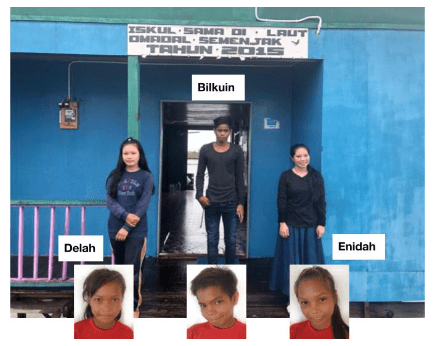
    Three stateless teenagers without access to education now empower their own community.

    YHSG 2020 has provided Iskul with enough funds to hire three of our graduates to teach the stateless children in their own community. They are Delah, Enidah, and Bilkuin. 

    The monthly allowance has enabled them to fully focus on the Iskul work in three main areas. First is to teach basic literacy to their friends five days a week.

    Second, we need to communicate and oversee the water tanks project. This project aims to improve water access for 30 households in the stateless community.

    Finally, identify 20 pregnant and nursing mothers. Also, identify 30 children. Administer supplements and multivitamins to them. Monitor their conditions.

    Furthermore, when Covid-19 hit Semporna and Sabah the worst in October 2021, they became the front-liners of the island. They were the mainstay in distributing food baskets to their community. They also became our communicator to convey the message of ways to fight Covid-19 to the community.

    We cannot be more proud of them!

    Perhaps their story is better captured in this Malaysiakini report.

  • Iskul’s On-Land Performance

    Iskul’s On-Land Performance

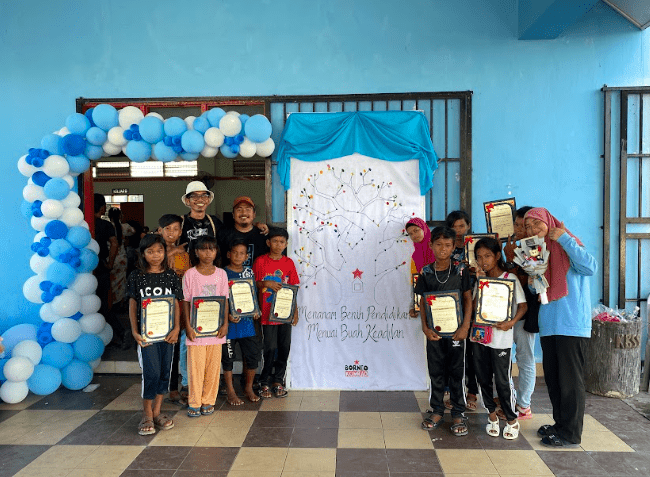
    In June 2022, 10 of our students performed in the graduation ceremony of Sekolah Alternatif, Borneo Komrad in Semporna.

    It was the first time the students left their home on water and stayed overnight on land. We have heard stories of land-sickness for those who have been living on the sea. We did not realise that it would happen to our students. We were unprepared and did not bring any anti-nausea medications.

    The students stayed a night in Semporna before the performance to rehearse. On the second day, a few of them started to feel land-sick. Yet it didn’t stop the children. They performed the wayang kulit “Omadal fights Corona” for the graduation ceremony of our friends. Some cried during the performance. A few vomited at the back stage right after the show.

    We cannot be more proud of the children’s spirit and sense of responsibility. They persevered and performed despite feeling unwell. They put on a brave front to perform in front of a full hall.

    They are no longer the *shy and timid children they were once known as. They are no longer the children that begs for food and money from the tourists. They are no longer the children known to be sniffing glue and idling during the day.

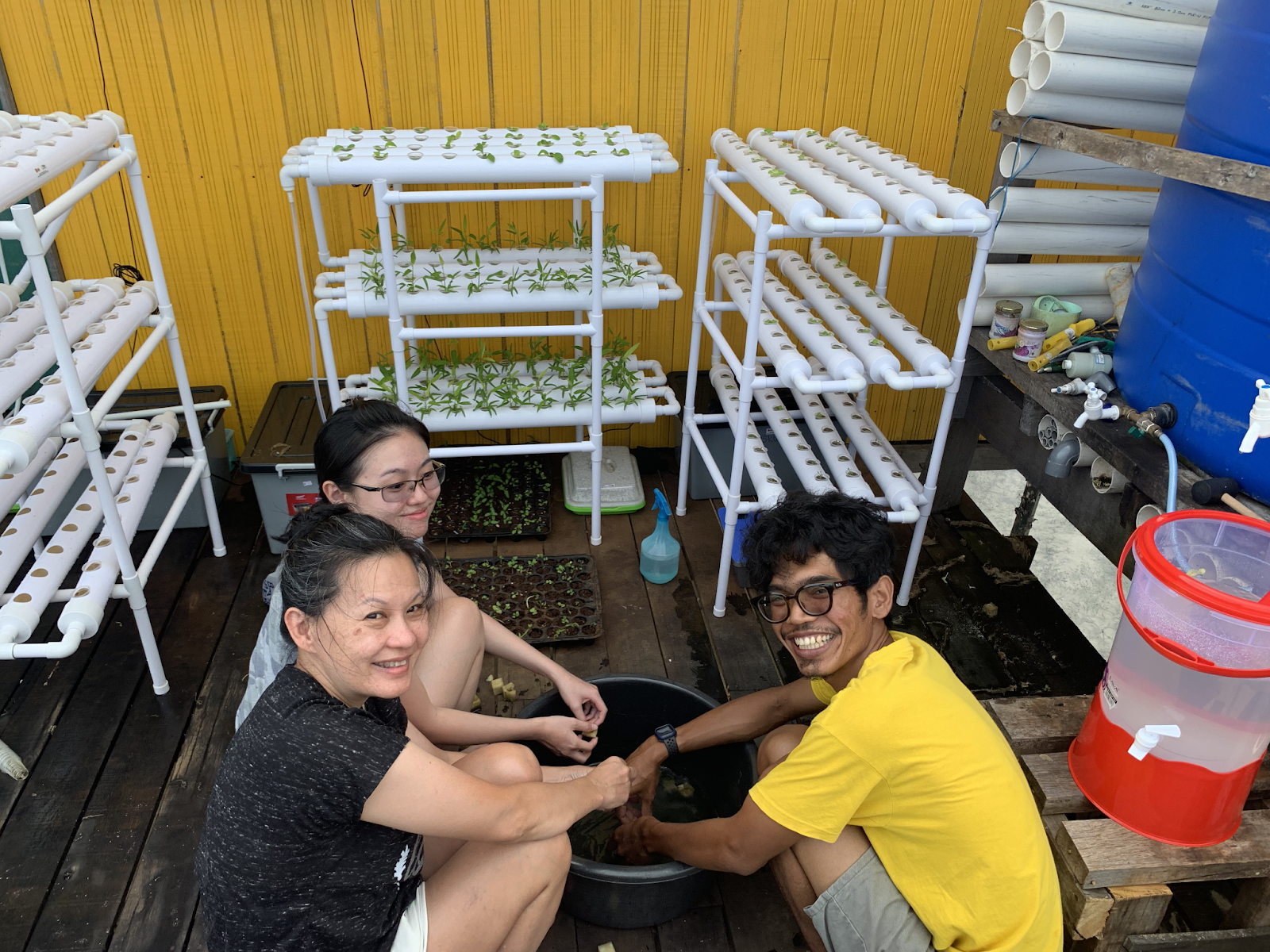
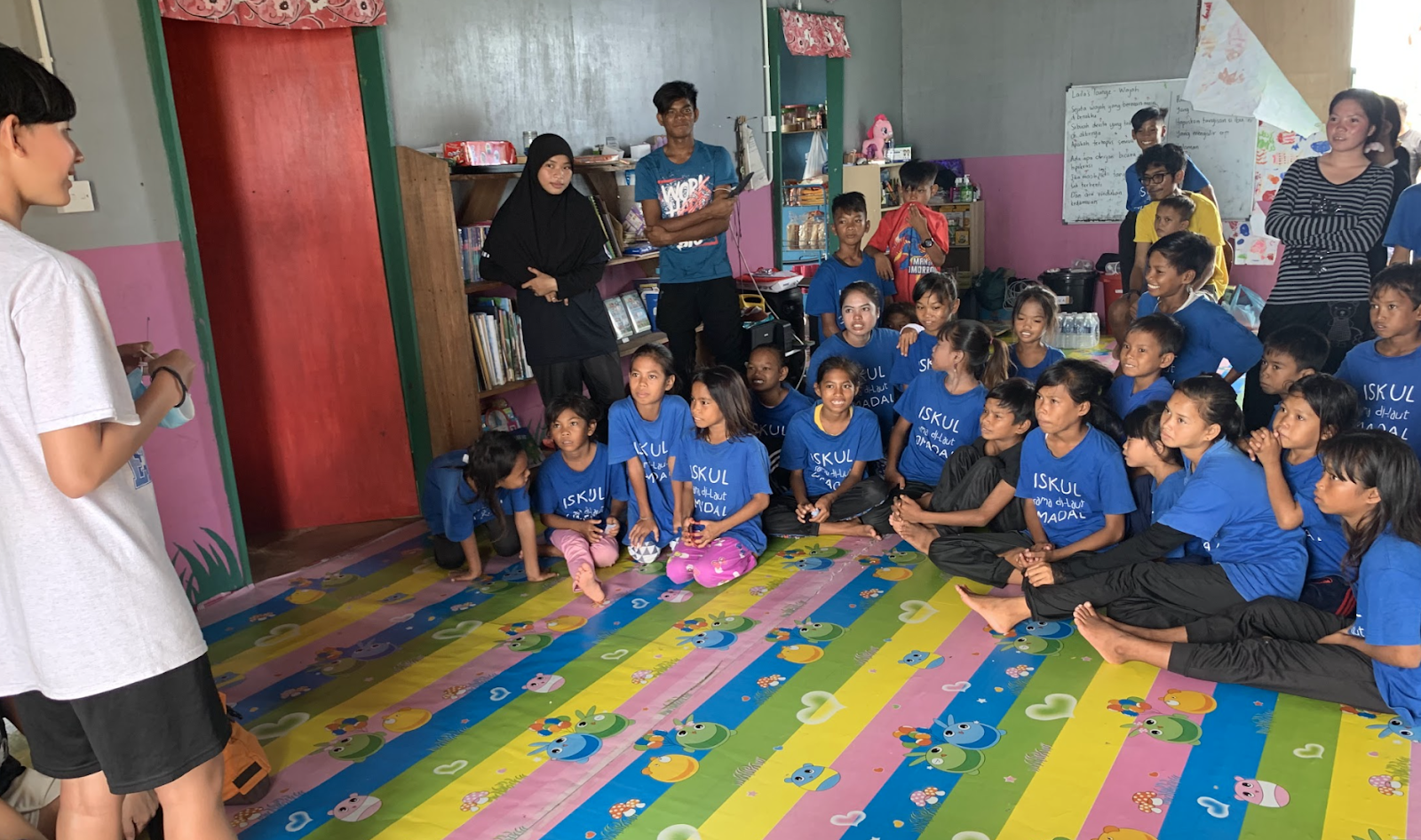
    These children spend their days in Iskul learning basic literacy skills. They learn to speak Bahasa Malaysia and basic Mathematic. They learned performing arts, dissecting films, drawing and painting and origami. They performed in Iskul’s monthly Full Moon Stage (Pentas Pulawak). They learn to play some musical instruments and board games. They started to learn about the basics of science as well as hydroponic gardening.

    They are no longer hungry and deprived of nutrition. They get two meals from Iskul for five days a week. Their body receives the nutrition they need to grow and to learn as a human being with dignity. For that, we are grateful for the Yayasan Hasanah grant.

    The students are Panadiah, Mustasli, Ratuan, Rendy, Nur Iman, Alini, Majali, Bayu, Jima dan Amaidah.

  • My first trip to Omadal Island

    My first trip to Omadal Island

    by Vince 

    During the summer break, My family and I went to Malaysia. We flew to Sabah state, then went to Omadal Island on July 17, 2022 by boat.

    I have heard stories about Bajau Laut (Sama DiLaut) ancestors who lived in the Coral Triangle (between Malaysia, Indonesia, and the Philippines) for generations but have received no recognition of citizenship from any of these countries.

    Some of the children that live in Omadal Island are stateless because both of their parents are undocumented. We were there to support Iskul,  a community school that offers basic education to these children. 

    After a forty five minutes boat ride to Omadal Island, we docked and saw the kids from Iskul school were waving at us from the school building! 

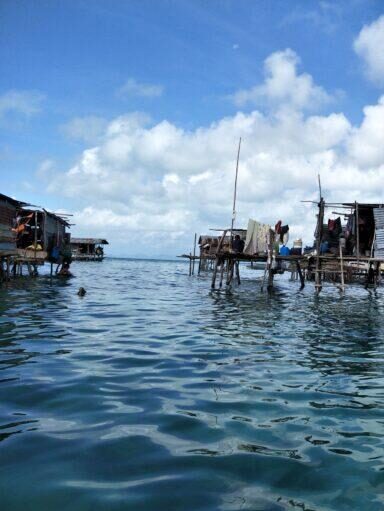
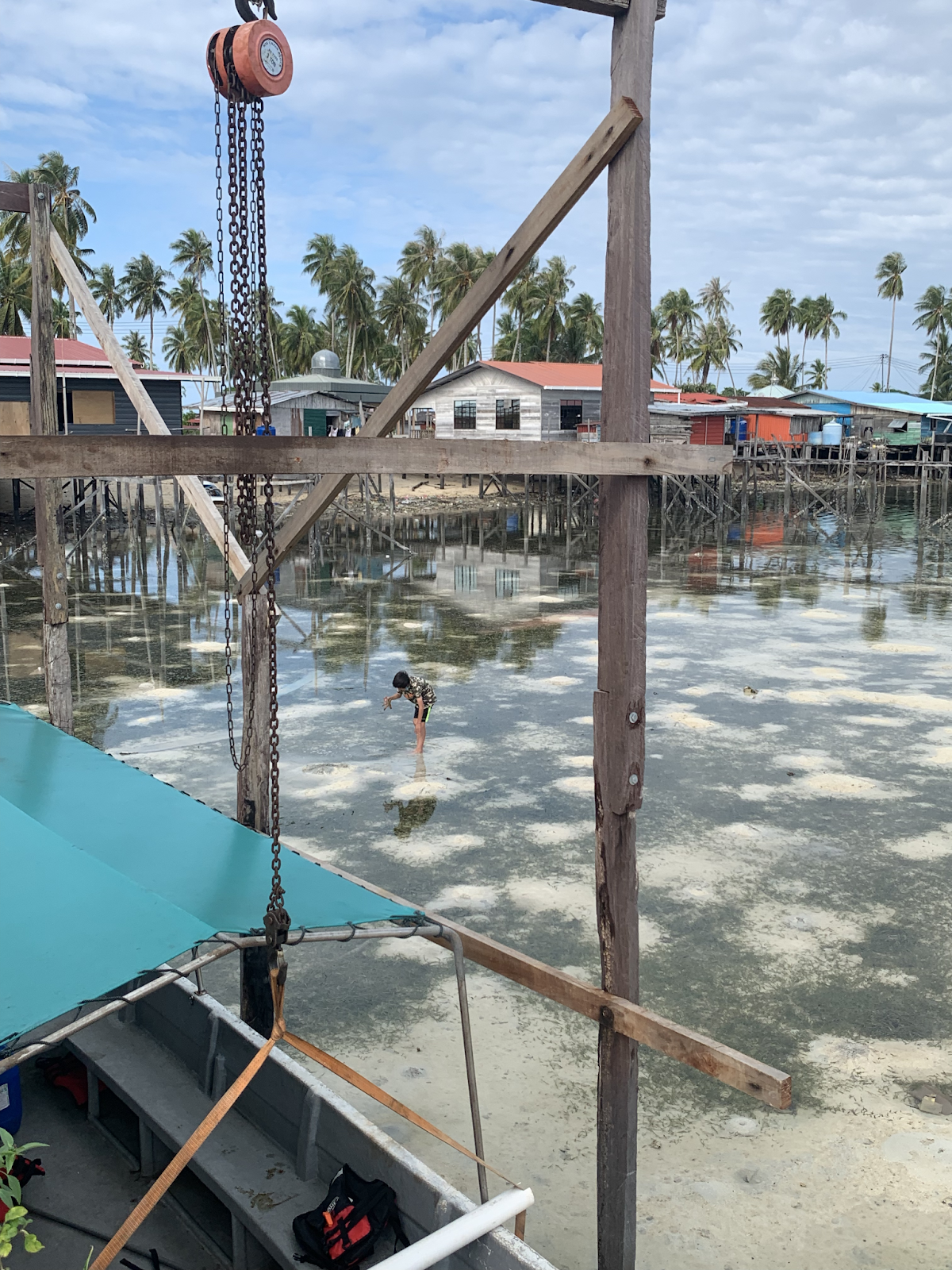
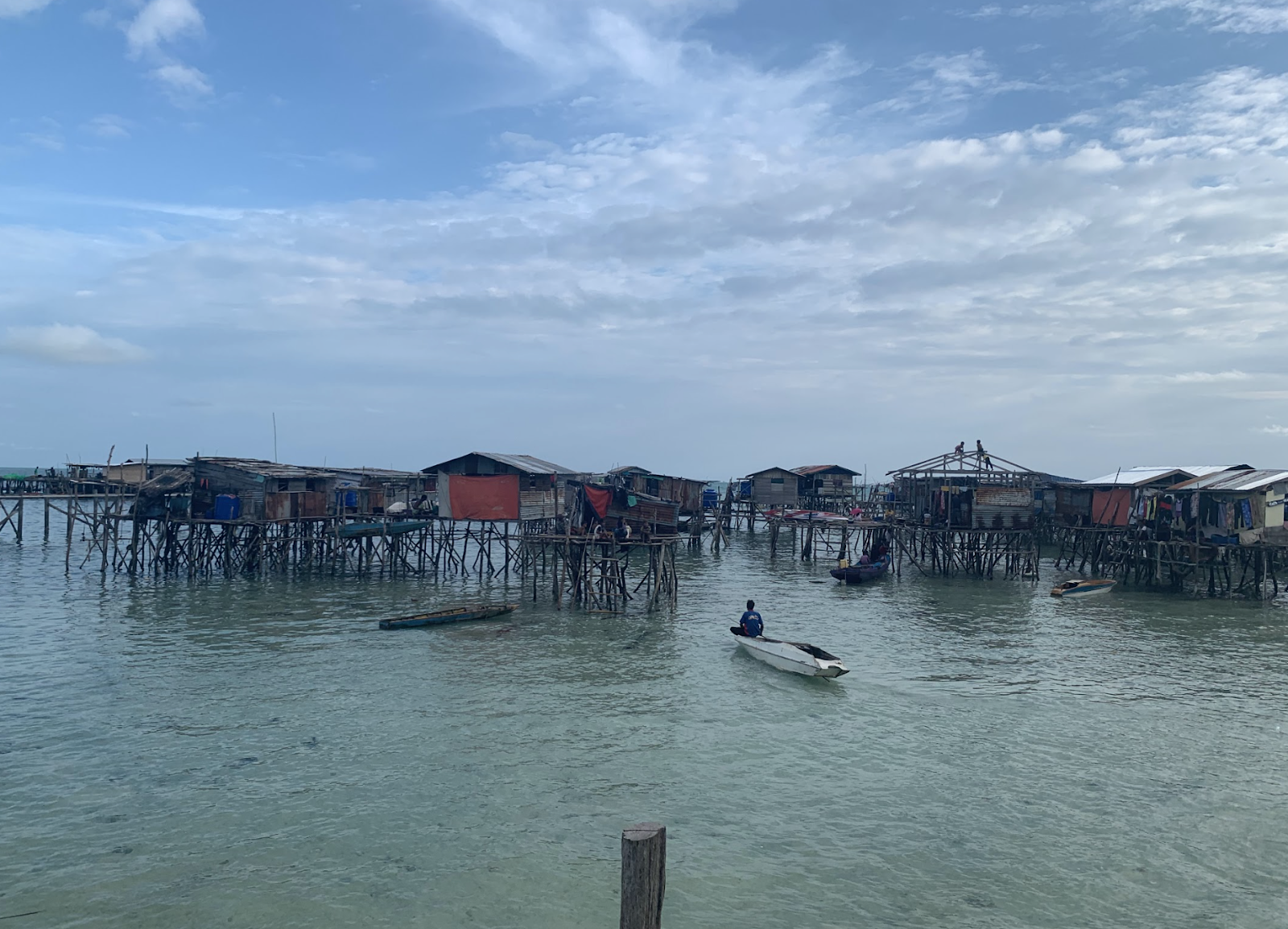
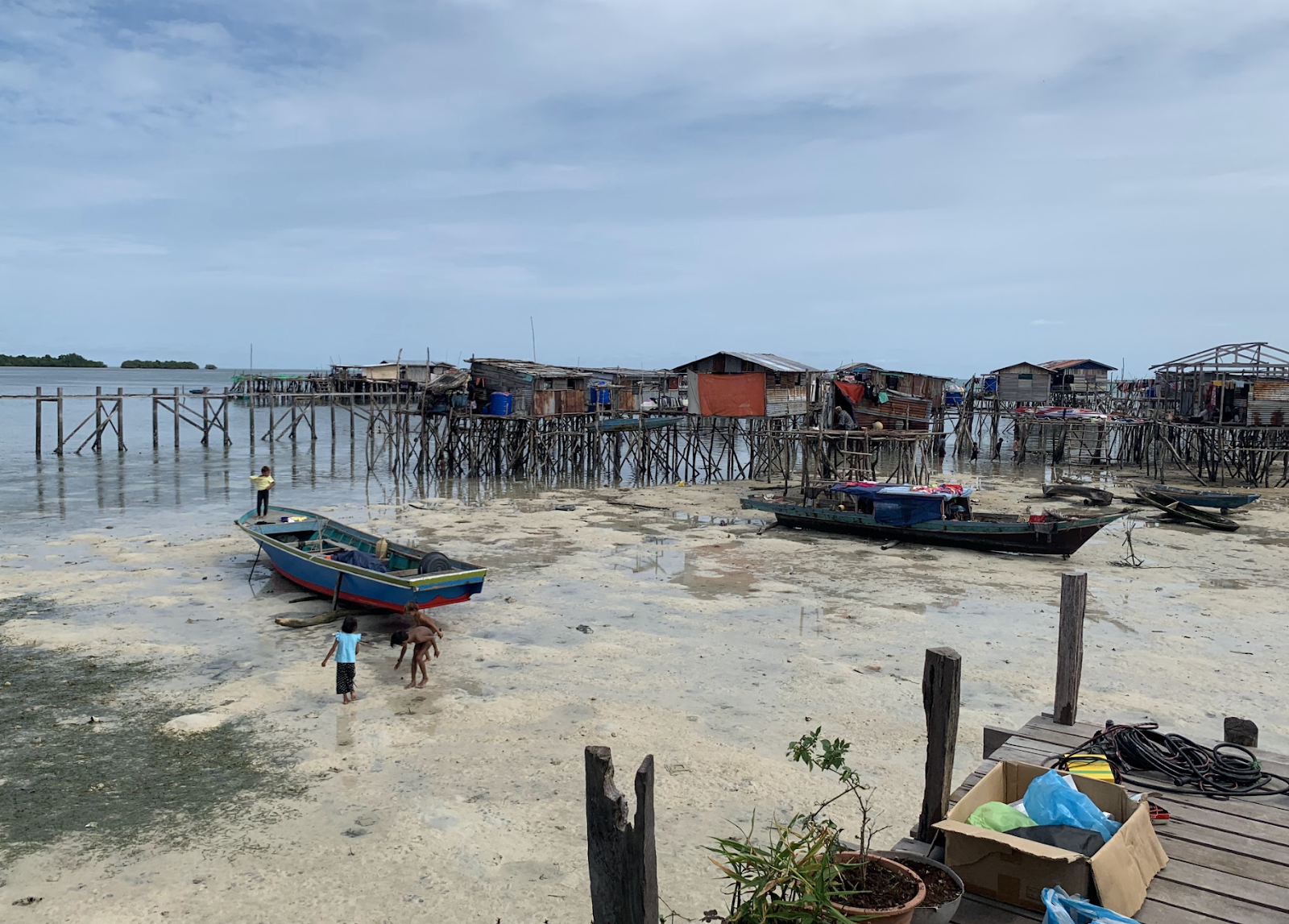
    I noticed a bunch of houses made out of wood and metal scrap. The school and houses were built on the sea. The kids were still having class when we came in, and we introduced ourselves to them.  After the school was over, we cleaned the school, fixed the tables, and planted new vegetables. When I heard all human waste in toilets there go directly into the sea because there is no sewage system, I was grossed out!  My parents explained that sewage solutions are needed to tackle the human waste problem in the island.  Later, I went down the ladder to the sea, and the water was up to my knees because it was at low tide. I saw a lot of trash floating around. 

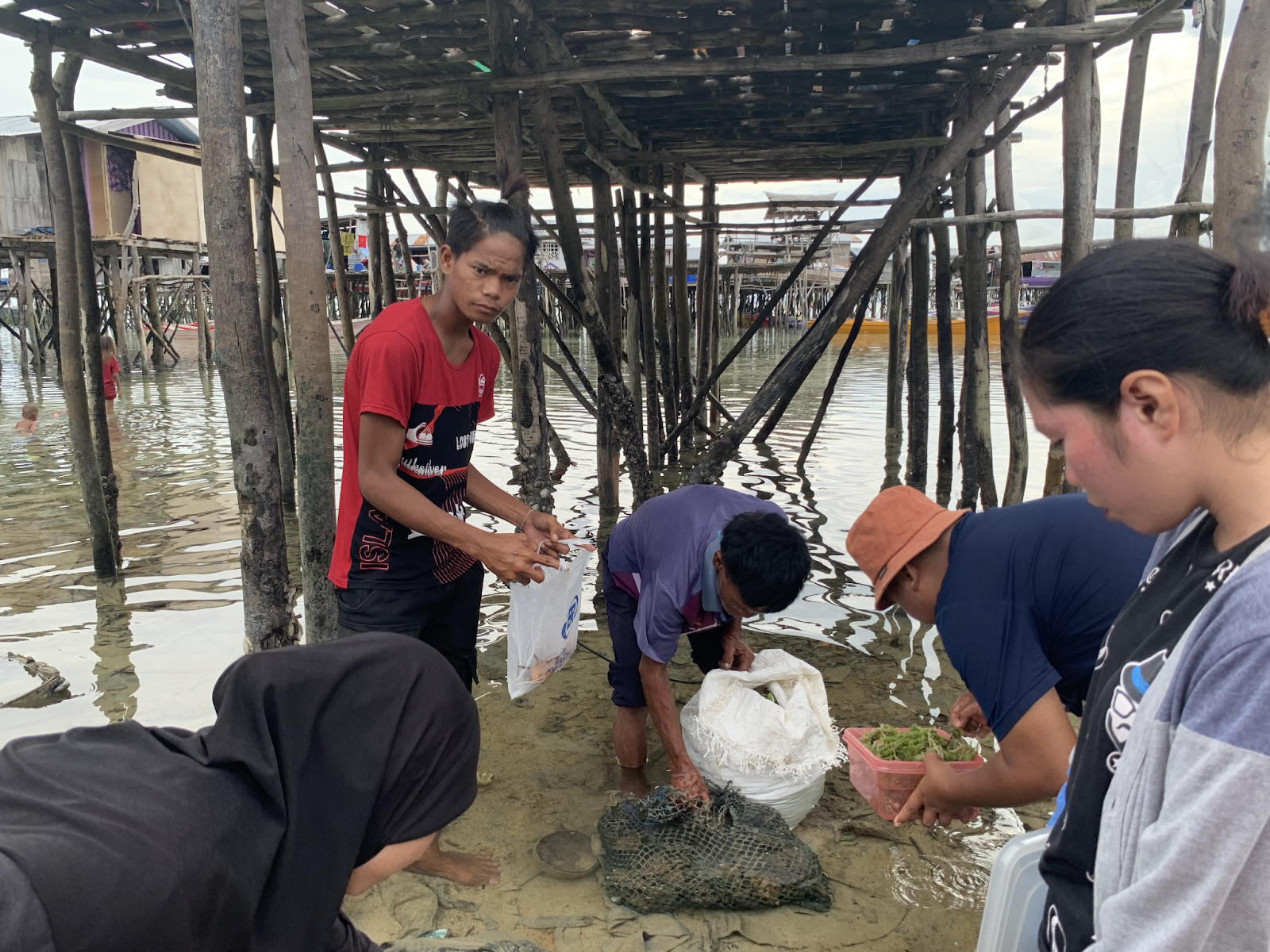
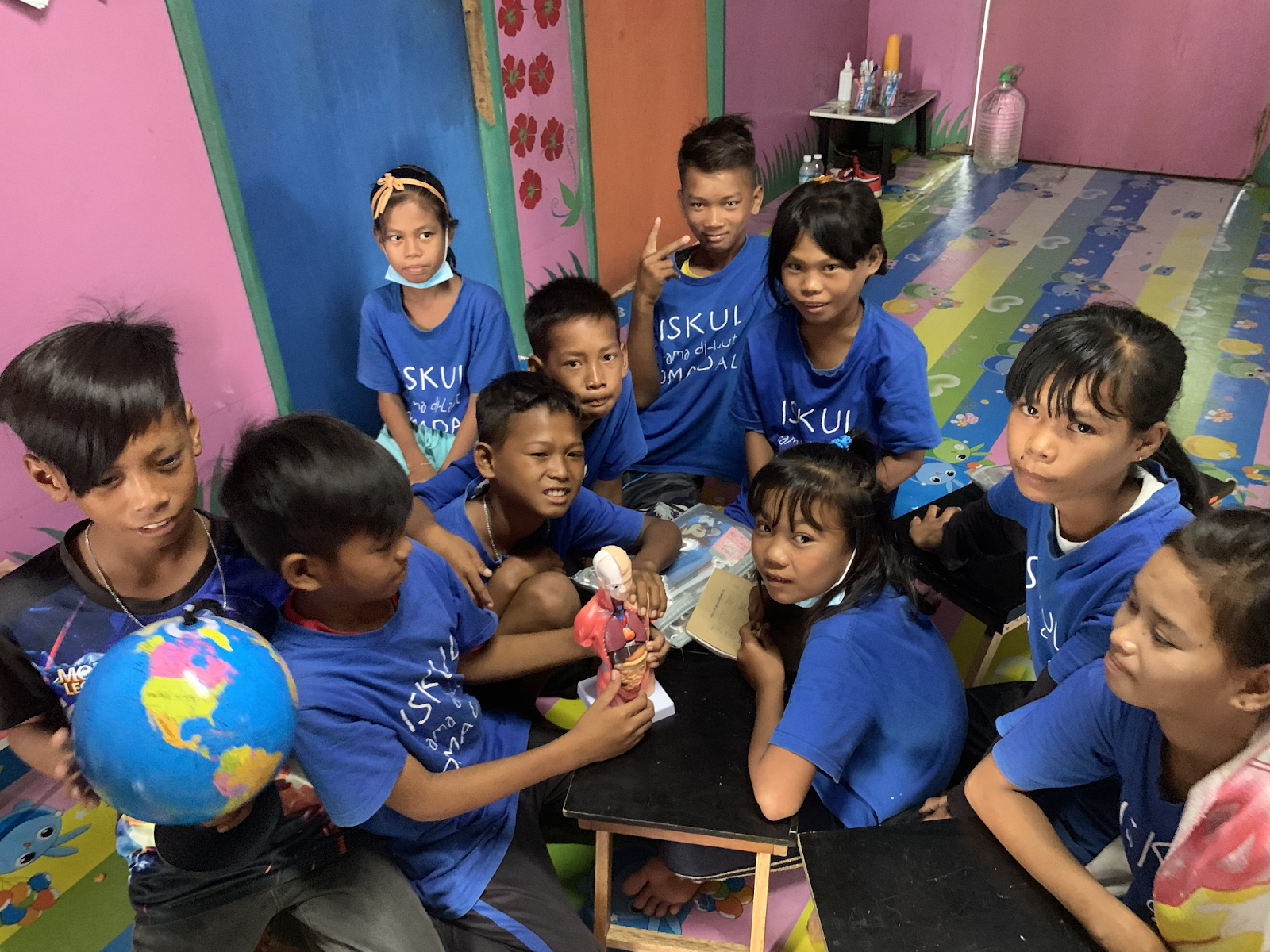
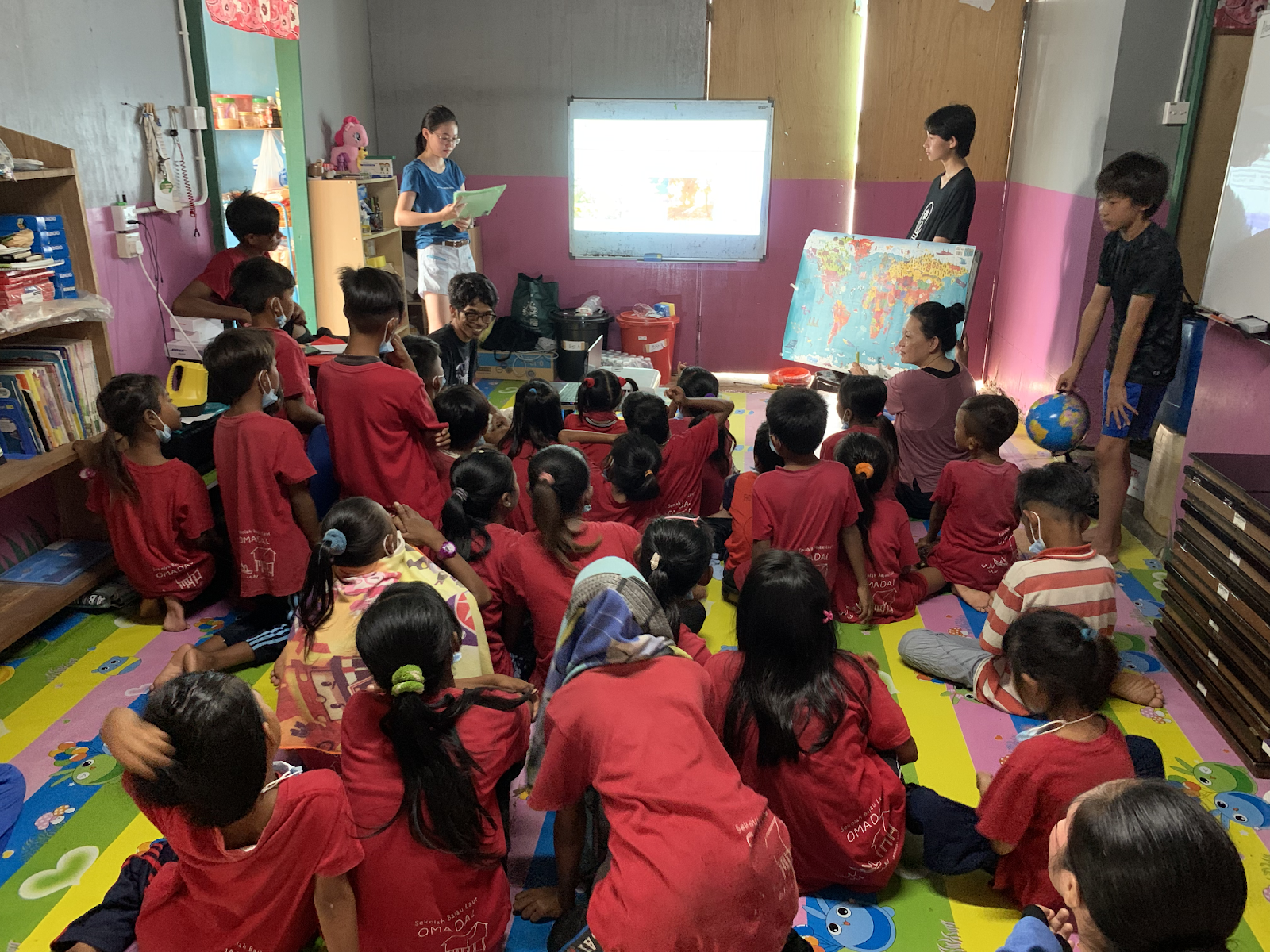
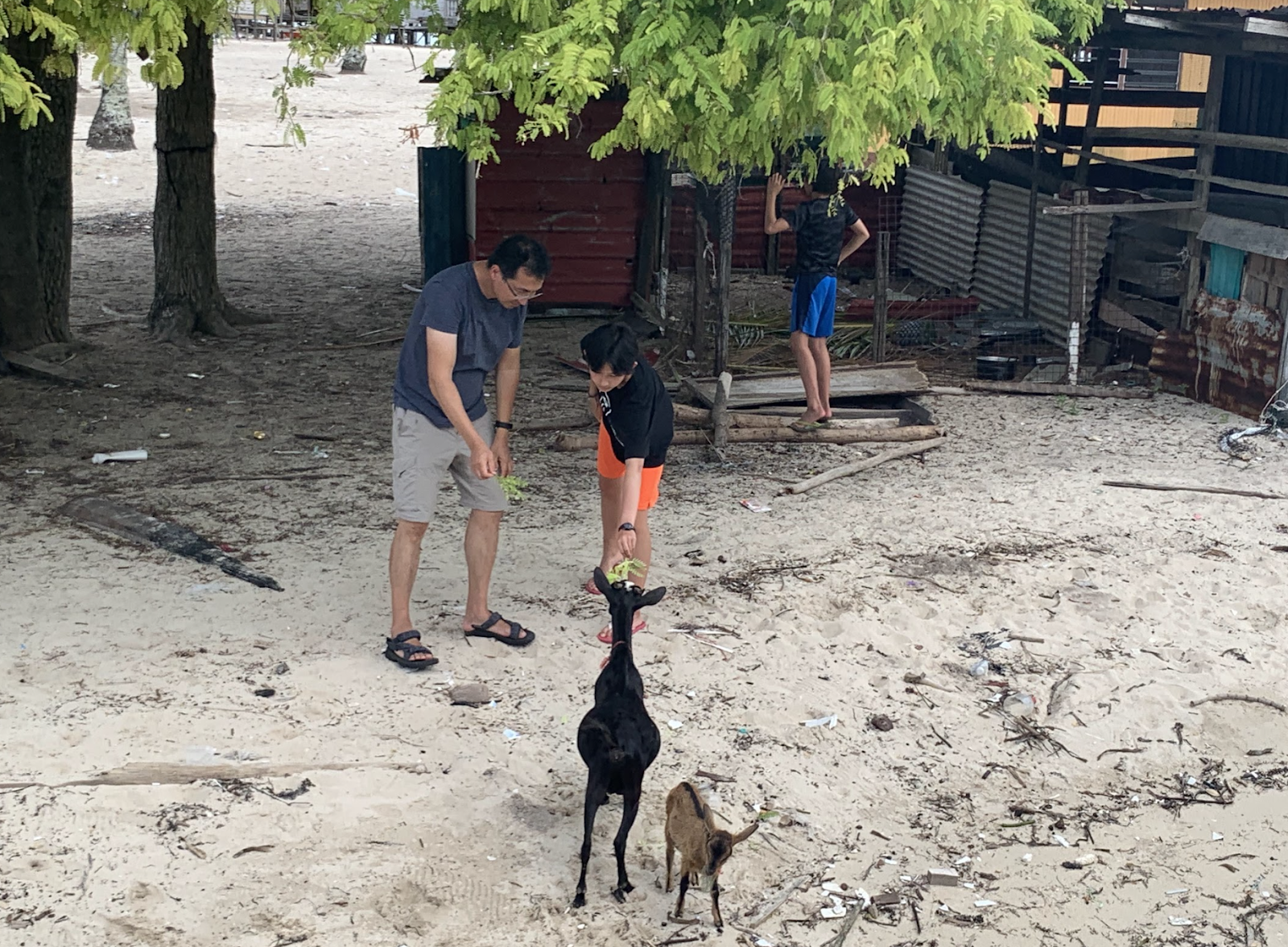
    The next day, when we went to the school again, the kids were brushing their teeth and dumping the used water into the sea. After brushing, they went back to the school and sat reading. When they were done, My sister did a presentation about “Exploring the world”. The kids had never heard of any place besides Malaysia. My mom gave stickers to the kids whenever they answered a question. They were jumping for joy because they like stickers! When the school dismissed, I went to play in the sea and caught crabs and sea stars. My family was busy labeling every book and putting some new things we brought from home, like a human body model, a globe, world map, legos, and some science kits on the shelves. I feel happy that the kids have something to play with now. After cleaning up, we went down the ladder with the teachers and walked to a stateless house at low tide to buy some sea grapes and shellfish. The sea grapes tasted like seawater, and it tasted better when dipped in spicy sauce! At night we stayed in a villager’s home that had electricity and fed some goats.

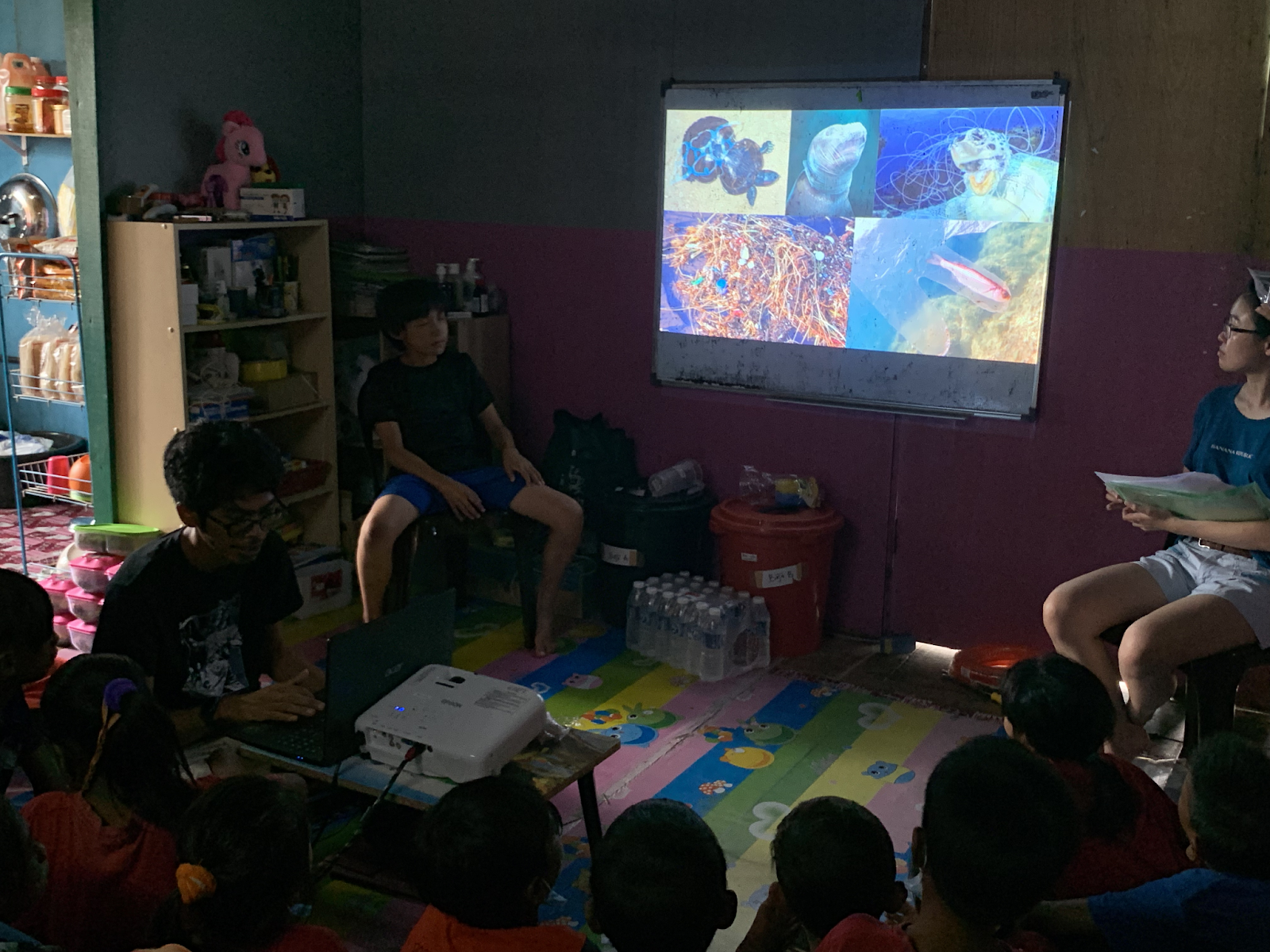
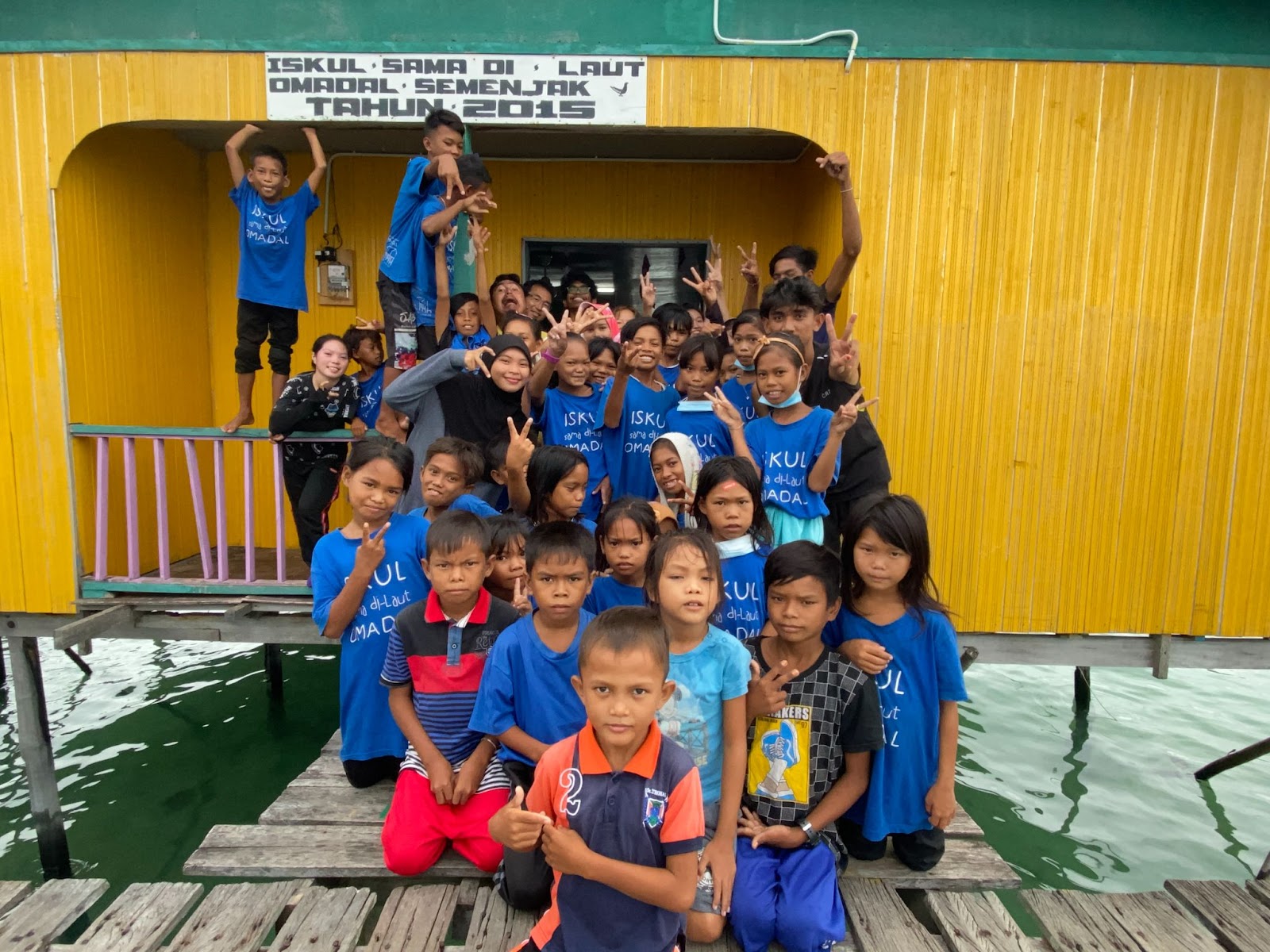
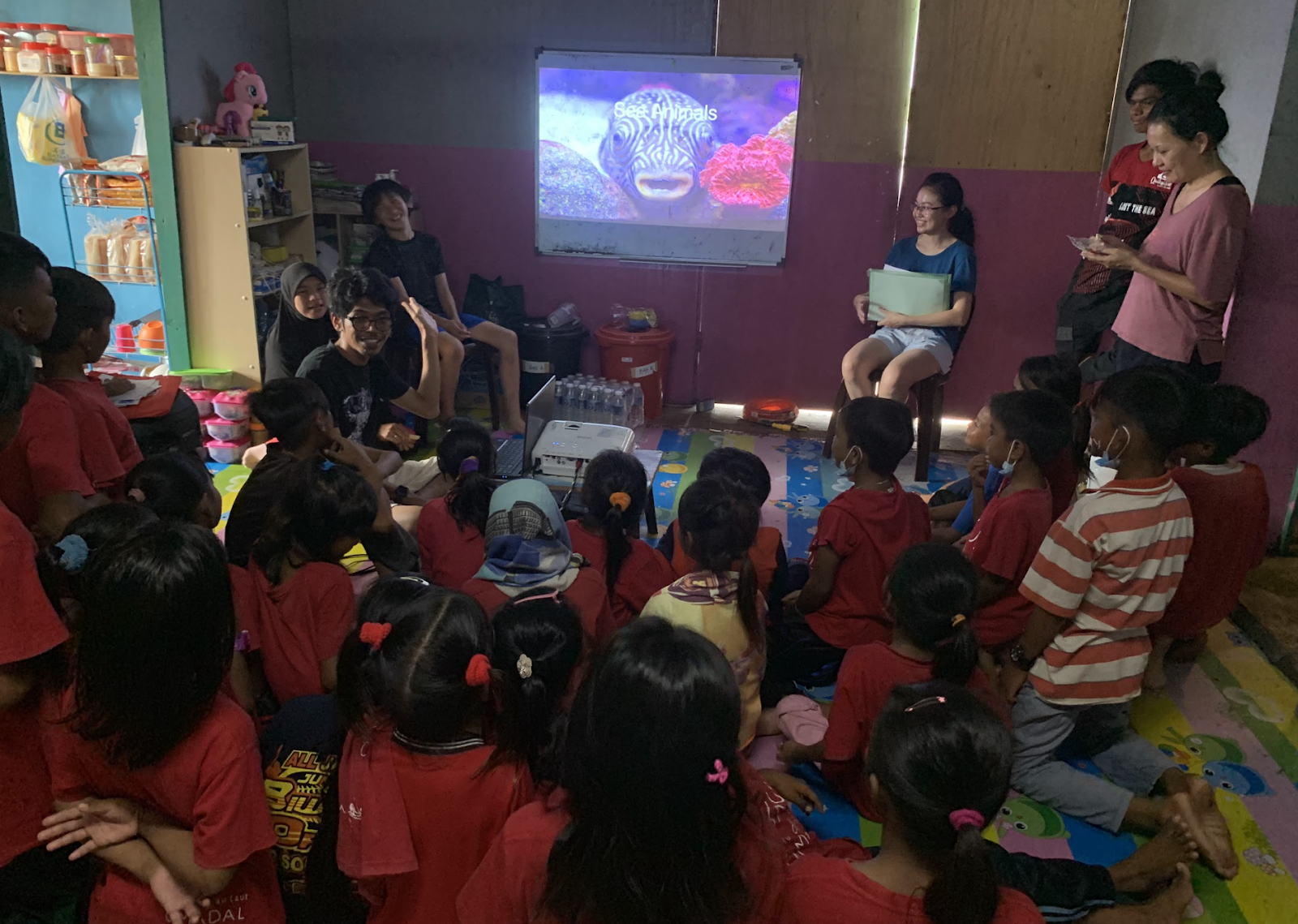
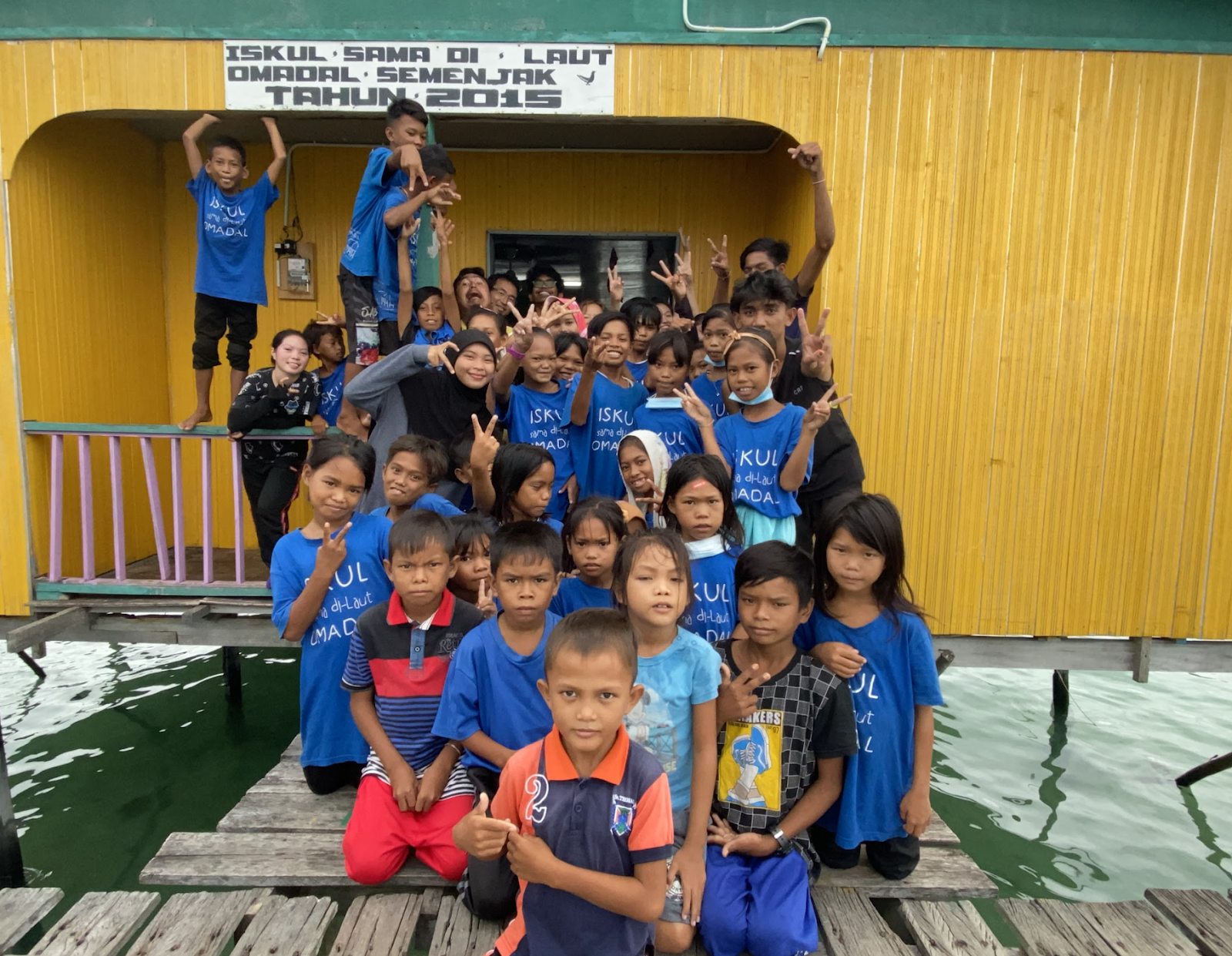
    On our second and last day at Omadal, We gave a presentation about sea animals, and a presentation about the human body. I spoke about not throwing trash in the ocean and I showed a model of the human body on the other presentation. There was a new stateless kid who came from Tawau, which was three hours away from Omadal! She came because they didn’t allow her in other schools because she was stateless. We took a photo with everyone in the school! The kids waved goodbye when we left Omadal. 

    You may be wondering how we can further help these children at Iskul? The children can benefit from more medical supplies, books, and toys such as legos and games. We can spread the word about Iskul, so other people can learn about the children and give them supplies and money. Volunteering as a teacher will also help make sure that the children will learn important skills to make a living for themselves. Lastly, your donations will enable Iskul to pay for more food and student activities for the children.

    Vince and family volunteered at Pondok Iskul, Omadal for 3 days where they shared their knowledge and culture with Iskul students and the students shared theirs with them. Vince and family helped Iskul in many ways such as bringing educational items, Lego and assisting with our inventory system. Below is a short recap of his experience at Iskul.

  • Trip to Omadal Island

    By Lindsey Luo

    Lindsey Luo and family volunteered at Pondok Iskul, Omadal for 3 days where they shared their knowledge and culture with Iskul students and the students shared theirs with them. Lindsey and family helped Iskul in many ways such as bringing educational items, Lego and assisting with our inventory system. Below is a short recap by Lindsey of the family’s experience at Iskul.

    We went to Omadal on July 17th, 2022 and stayed there for 2 nights and 3 days. It was very interesting for me because I had never done something similar before. My family and I went on the trip so we could help a school called Iskul located there. Iskul is a non-profit school in Malaysia founded by Chuah Ee Chia to provide basic education to stateless children. Some of their ancestors were sea gypsies, and some were refugees from the Philippines. Because of their nomadic lifestyle, they missed Malaysia’s citizenship registration in 1969, so now they are stateless. Without documents, these children are stuck in Omadal and can’t enroll in any public schools.

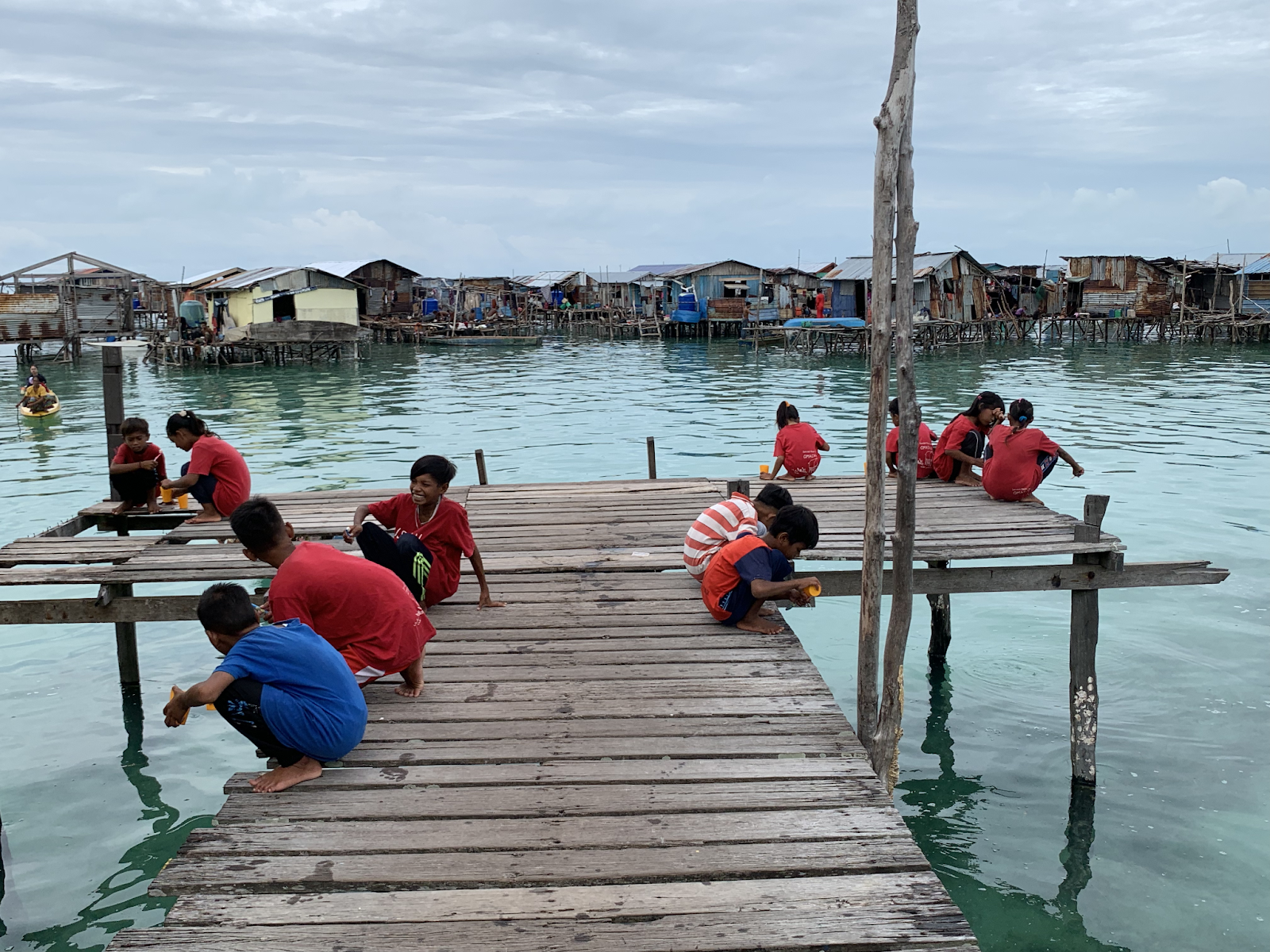
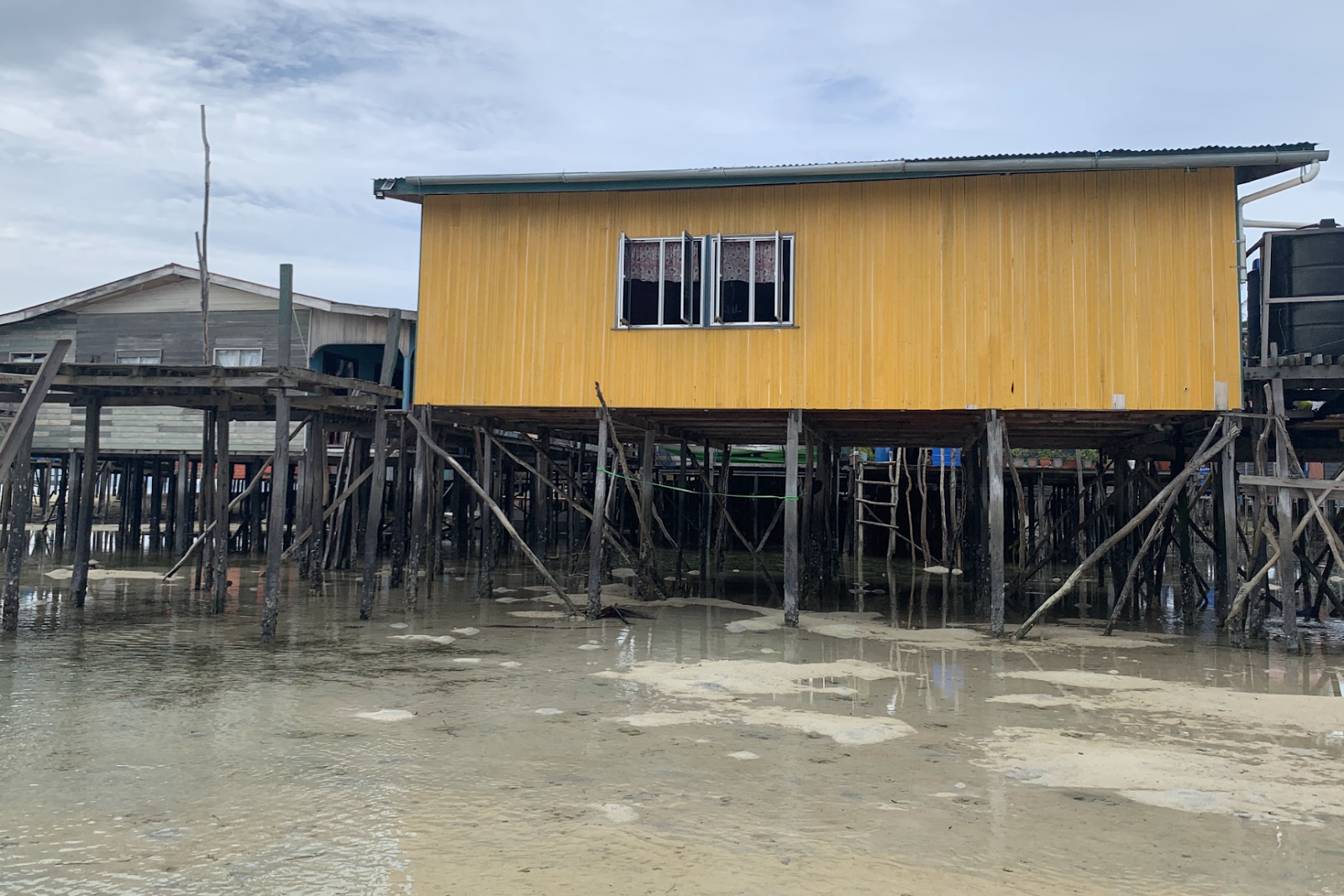
    We got to the island by a speedboat, and the first thing I noticed was the quality of the houses. All of them seemed very old, and they were built on top of the water. The school seemed like one of the better quality buildings, but it wasn’t like the buildings in mainland Malaysia. The school building was a lot smaller, and it was made out of planks of wood that had wallpaper on top. The second thing I noticed was how many people were in the water. A lot of the younger kids weren’t wearing clothes, and they were rowing boats, boogie boarding, playing volleyball, and running around. 

    The weather at Omadal wasn’t too hot, but it was pretty warm. During the days we were there, there was no rain. My mom told me that when it rained, people would put buckets out so they could use the rainwater for showering and drinking because they didn’t have a clean water system. In fact, the water we used to wash ourselves was rainwater.

    When we passed by the school’s window in the boat, some kids poked their heads out and waved at us. We waved back, and when we climbed up the ladder we saw the kids in the main room each drawing a dot-to-dot mouse. After the teacher gathered everyone into the main room, we introduced ourselves. The kids were asking us questions like our names, age, and where we came from. Soon after, the school was dismissed. A few kids stayed behind so the teachers could tend to some wounds that they had on their bodies. Later, the teachers explained that since Omadal had no clinics, the students and their families went to the teachers for medical help.

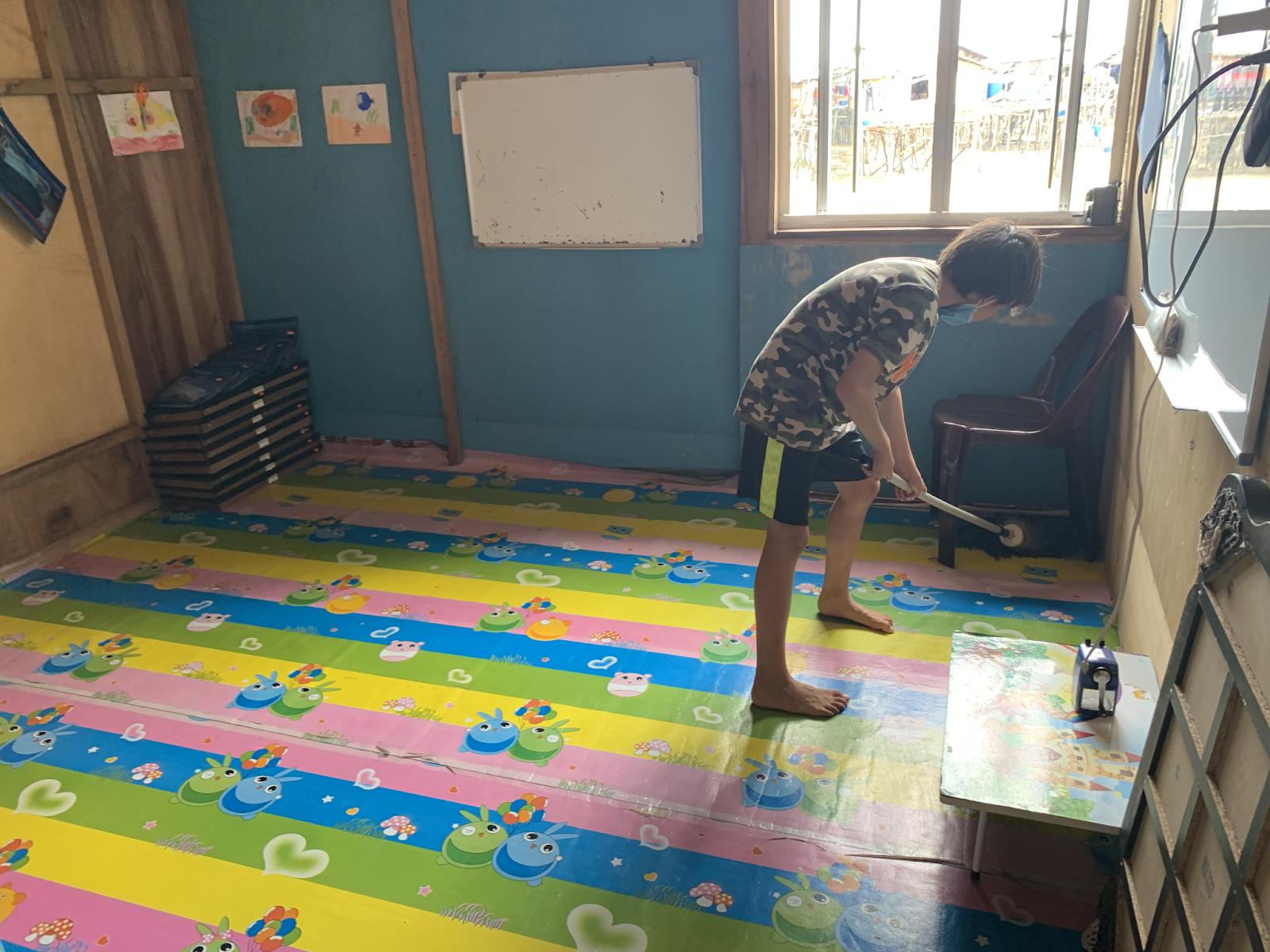
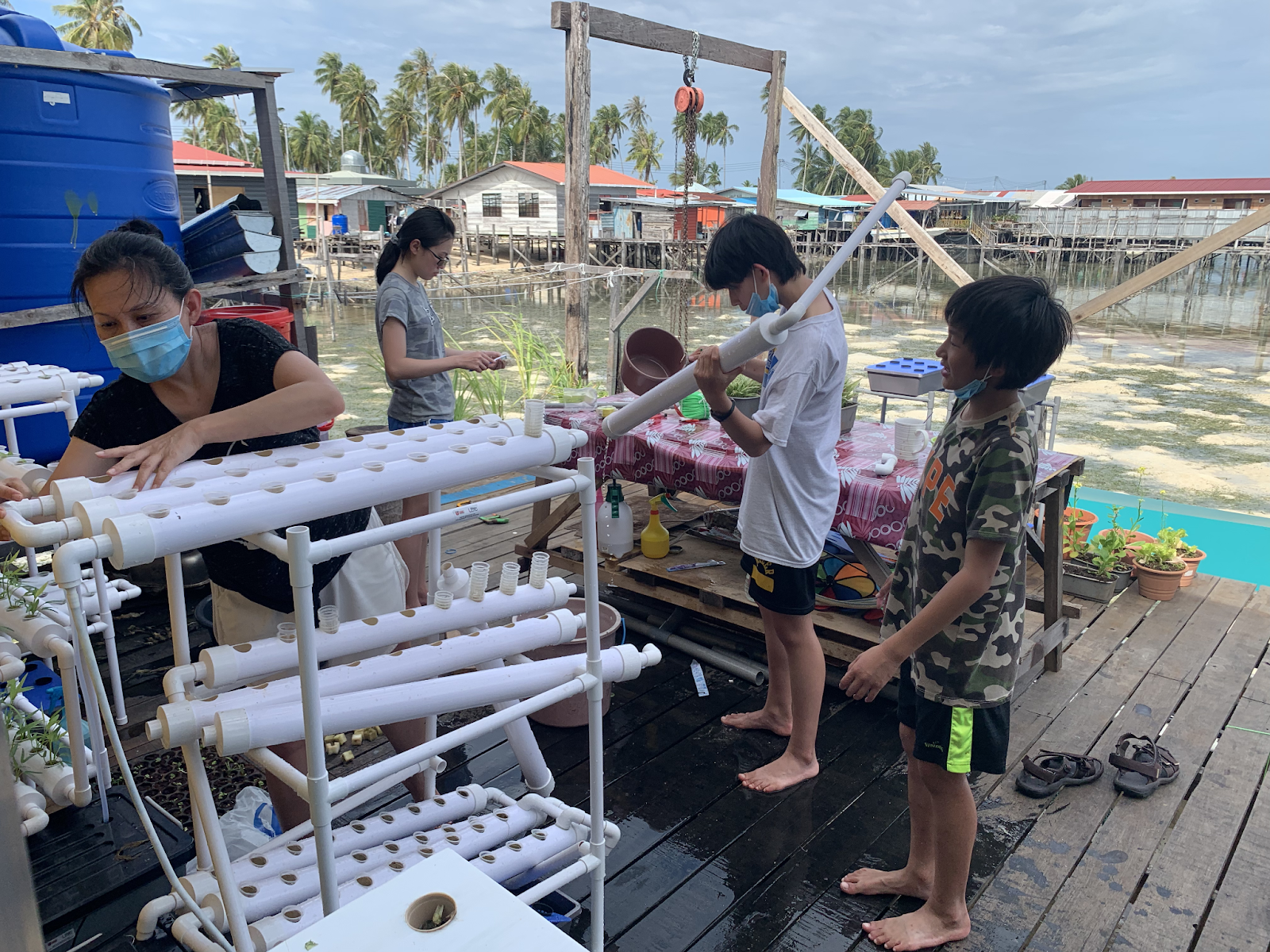
    We stayed behind to help sweep and mop the floor. We also cleaned some pipes with holes in it that were used to grow plants. My cousin helped the teacher remove old plant sprouts from some sponges and put in new ones. Jefry, the main teacher, told us that the plants were used for science projects, but they were also used for food for the students. My mom and I helped with inventory tracking by putting stickers with special numbers and words on objects around the classroom. When my brother and I were finished helping, we went down the ladder and into the ocean, and looked at sea cucumbers, starfish, and sea urchins inside. The tide was low during that time so the water was only up to our calves. We also watched two boys playing a game of volleyball in the water. Their makeshift net was a string tied between two poles that Iskul was built on.

    The place we stayed in was owned by a person who had identification, unlike most of the people on the island. He was allowed to leave the island since he had documents, while others had no choice but to stay. His house had water and some electricity, which the other people couldn’t afford. 

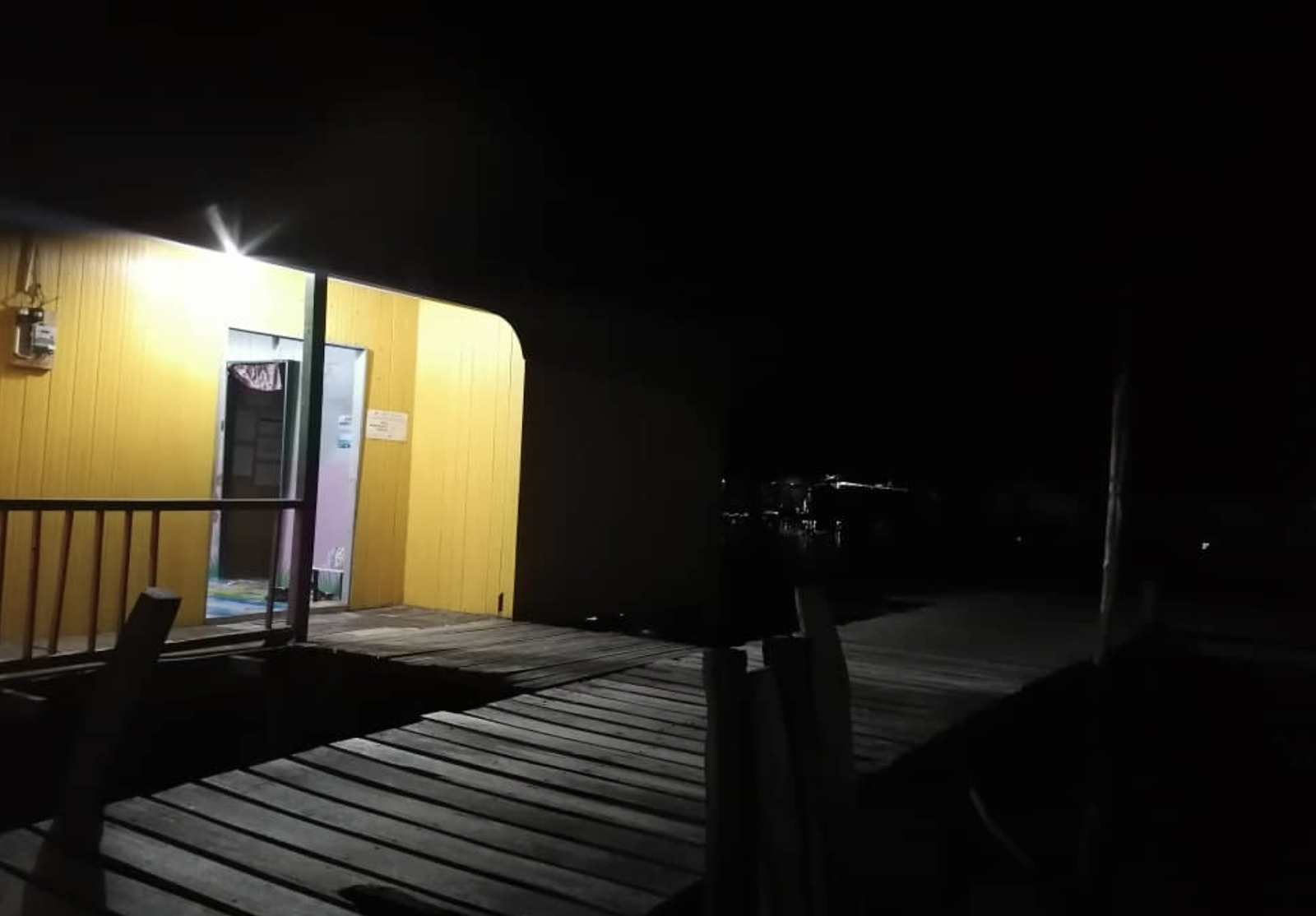
    At night, my family was surprised by how dark it was outside. We were so used to seeing city lights. 

    On the second day at Omadal, my brother and I showed two presentations that we made to the kids. The first one was called Around the World, and the second one was called Marine Environment Protection. The students in Iskul didn’t know any places besides Malaysia, so we taught them about continents, seasons, and animals that lived in different countries. The kids seemed very curious and excited to learn about new places. The students participated a lot and learned very quickly. The teacher would translate the words and have the students answer questions he asked.

    A lot of goats lived near the house we stayed at, so one day, I ripped leaves off a tree and fed them to a goat and its baby. Soon, about 3 or 4 goats noticed and came to eat from my hands. Sometimes, they fought over the food and headbutted each other with their horns. There were also some kids running around and playing volleyball outside. Two of them lured dogs into a square of closed fence and hosted dogfights. It was entertaining to me, but I worried the dogs might try to bite the kids once they were let out. The kids asked for our names, but we couldn’t communicate well because they didn’t know a lot of English.

    Before my trip to Omadal, I was skeptical about going because teaching was new to me and I was nervous about the lack of clean water and electricity there. But when it was time to leave, I sat in our boat and looked at all the kids waving at us. I thought, “I would really like to come back to Omadal someday!” This trip was a rewarding experience for me, and I felt grateful that we could offer to support Iskul.

    There are many ways you can help Iskul. You can help spread the word by sharing Iskul’s blogs or videos on social media, because the more that the world knows about Iskul, the more people who can potentially help the school. You can also donate money to help fundraise or donate items for the teachers. Another option is volunteering at Iskul by teaching the students or cleaning up the classroom. With your help, Iskul can get a clean water supply, a good sewage system, healthcare, and education.

  • COVID-19 Food Aid

    During the COVID-19 outbreak, Iskul ran a two-fold food aid programme for B40 residents in Omadal. Below is a brief overview of the beneficiaries of our food aid programme.

    Programme 1:

    52 B40 households and 158 stateless households in Omadal Island (Total: 210 households)

    Programme 2:

    54 B40 households and 167 stateless households in Omadal Island (Total: 221 households)

    Programme 1

    began on the 23rd of October when Iskul received the food supplies that we purchased in 2 boats from provided by Semporna Heroes. Our partner, Wanita Pulau Omadal (WAPO) then helped distribution the food baskets to Omadal’s Malaysian residents whereas Iskul took charge of distributing the food baskets to Omadal’s stateless population.

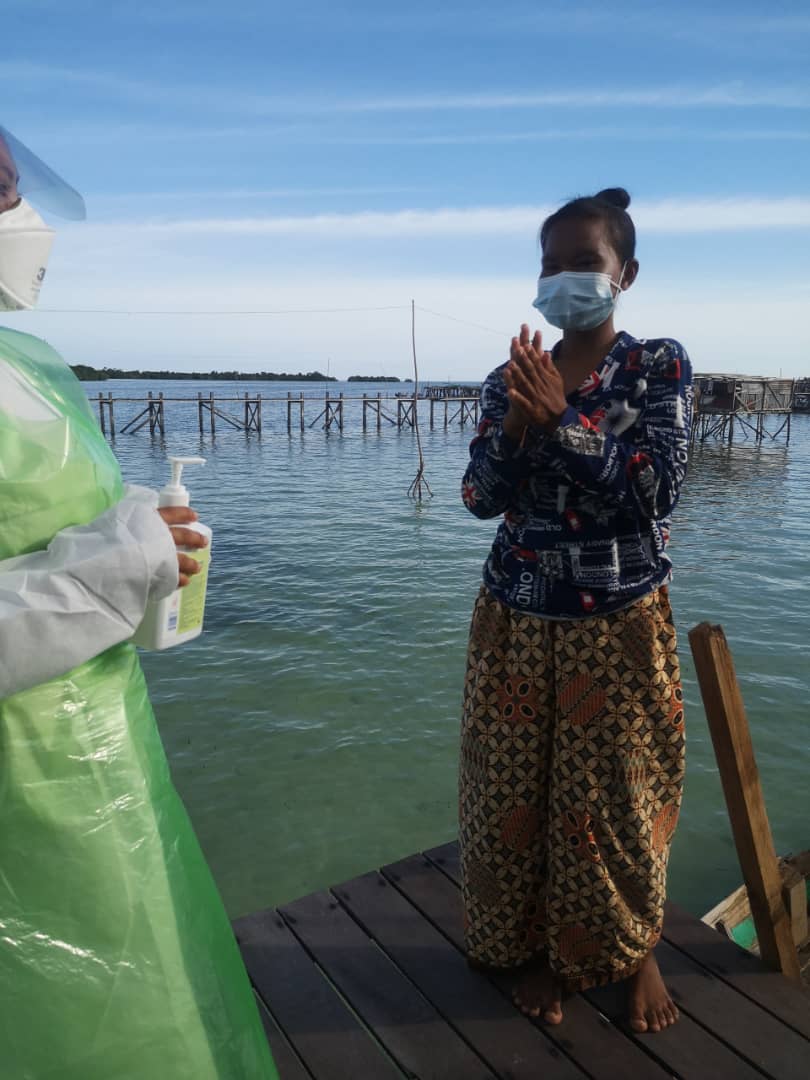
    In a two for one attempt to combat the pandemic and to ensure Omadal’s residents have access to basic necessities, Iskul collaborated with Imaret and Pejabat Kesihatan Daerah Semporna (PKD) to provide food baskets for the stateless people who agreed to Covid-19 screening. Once, a stateless person underwent the screening, he/she then collected his/her food baskets in Pondok Iskul for his/her household.

    On the 25th of October, the 210 cartons of 1.5L drinking water sponsored by F&N Malaysia and 210 bottles of 500mg Vitamin C arrived in Omadal and were distributed immediately by the Iskul team.

    Following the first week’s success, Iskul resumed our food air programme the following week. On the 30th of October, food baskets arrived from our partner, Borneo Komrad, who packed the food supplies on the mainland. Iskul rushed to deliver the food supplies to 122 stateless families on Omadal Island and the remaining households collected their food basket in Pondok Iskul the next day. Our efforts have rippled across the island and on November 5th, the Semporna District Officer provided food baskets to all residents in Omadal. The Iskul Team helped to distribute the food baskets to the stateless families.

    Programme 2

    began on the 20th of November when the Iskul team distributed food supplies, Vitamin C and mineral water to the residents of Omadal. Similarly, Wanita Pulao Omadal collaborated in distributing the food supplies to the Malaysian households while the Iskul team distributed the food supplies to the stateless families. Our food baskets included one pack of Panggi Kayu 6.5kg, one pack of Rice 5kg, one tray of eggs, 1 comb of banana, 1 watermelon, 1 can of condensed milk and 1 box of tea bags.

    We sincerely thank our partners (Semporna Heroes, Wanita Pulau Omadal, Imaret and Pejabat Kesihatan Daerah Semporna (PKD), F&N Malaysia, Borneo Komrad) for their efforts and contributions to the Omadal community during these trying times. We couldn’t have done it without your help!